Guangzhou Attractions 7 min read
Baomo Garden Guangzhou: Lingnan Art, Carvings & Guide
Visit Baomo Garden in Panyu, Guangzhou. Explore classic Lingnan water-village gardens, Guinness record brick carvings, koi ponds, and transit from Shiqiao.

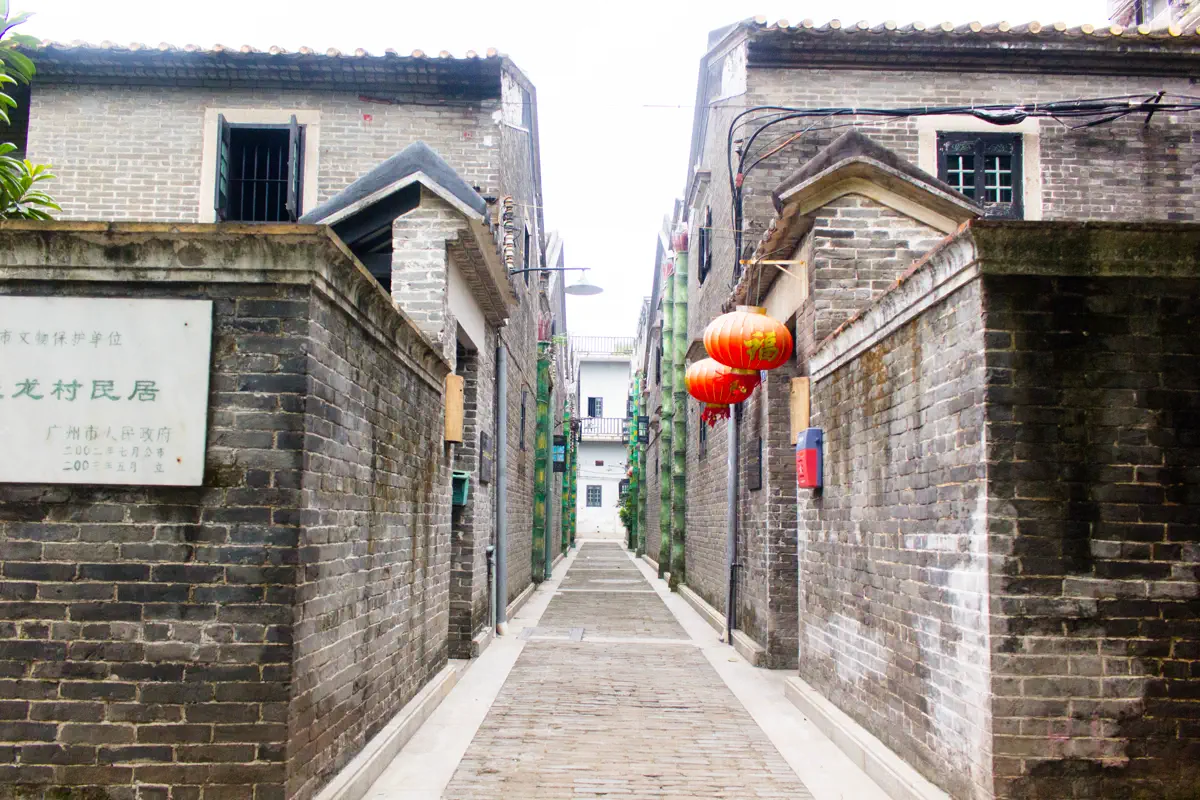
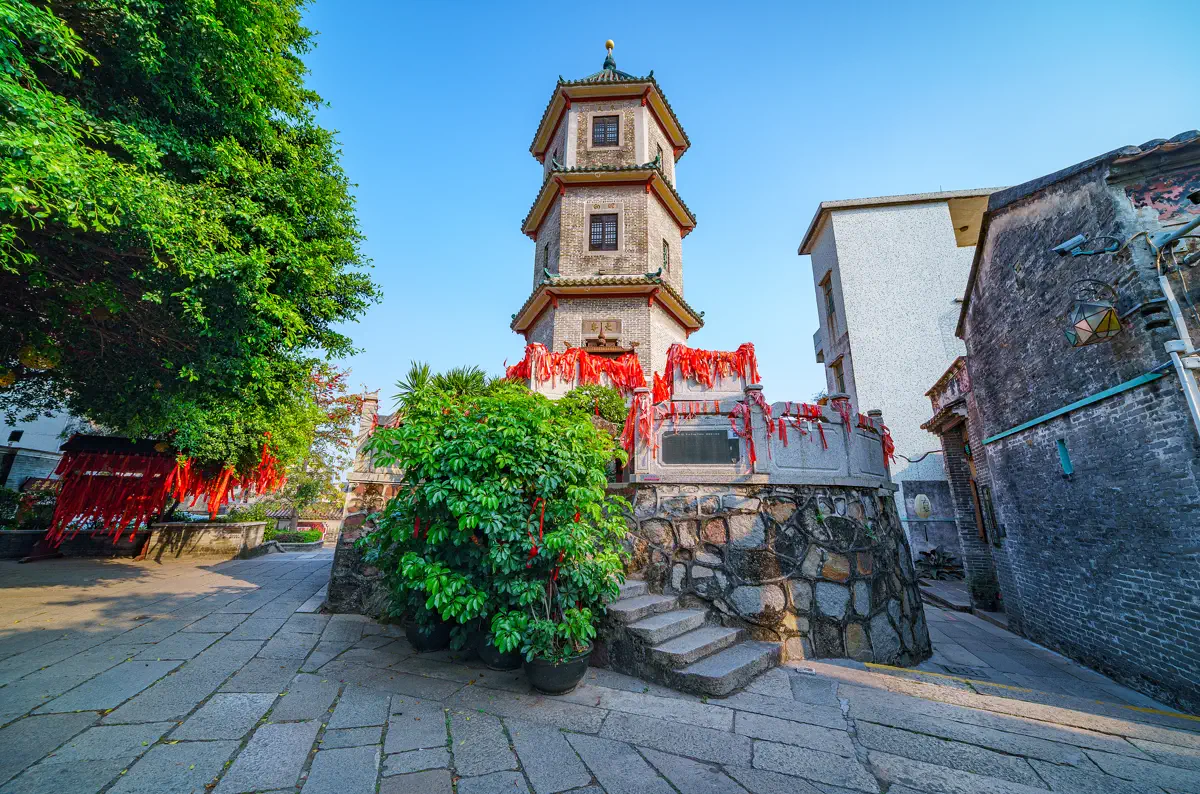
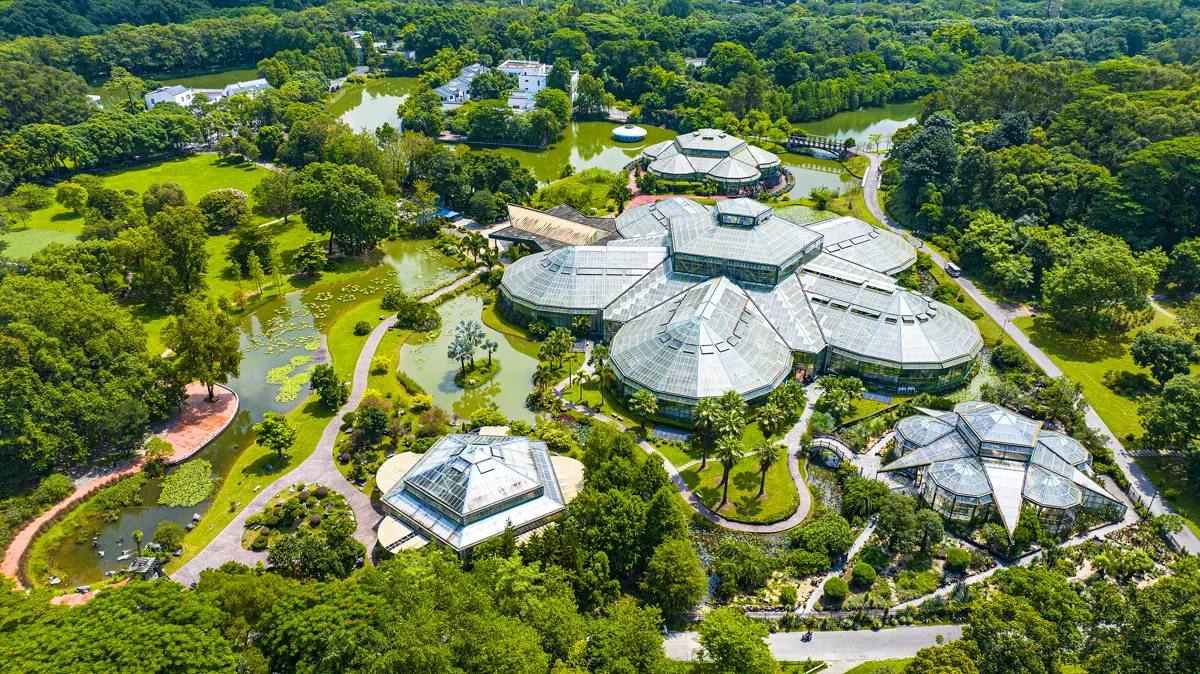
When travelers search for classical Chinese gardens in Guangzhou, most think of urban city parks or the historic courtyards of the Chen Clan Ancestral Hall. However, for the most expansive showcase of Pearl River Delta water-village garden design, head south to Panyu District. Located in Zini Village near Shawan, Baomo Garden (宝墨园) spans roughly 100,000 square metres (over 24 acres). Networked by natural stream channels and sheltered by a continuous 1,000-metre roofed corridor, the garden is renowned for hundreds of thousands of swimming koi and two masterwork wall murals certified by the Guinness Book of World Records.
The Chinese name is 宝墨园, and navigation apps list it as Baomo Garden or Baomo Classical Garden. The official address is Cunnan Road, Zini Village, Shawan Town, Panyu District. Search the Chinese characters when booking taxis or plotting transit directions.
How to get to Baomo Garden
Situated in southwestern Panyu, Baomo Garden lies approximately 40 kilometres from central Tianhe or Yuexiu. The transit journey is straightforward:
Take Metro Line 3 to Shiqiao Station (市桥站). Leave via Exit B and proceed to the adjacent bus station to board Route Panyu 67 (番67路). This bus travels directly to the terminus at Baomo Garden Bus Terminal in about 45 to 50 minutes for 3 RMB. Route Panyu 12 also reaches the garden.
If traveling with family or carrying camera gear, hailing a taxi or ride-share car from Shiqiao Station takes about 20 minutes via Shiliang Road, costing approximately 40 to 50 RMB.
For self-driving visitors, navigate directly to "Baomo Garden Parking Lot." A spacious ground-level ecological parking lot sits right outside the south gate, with a flat parking fee of roughly 10 RMB per entry.
Guinness World Record brick and porcelain murals
Baomo Garden was originally established during the late Qing Dynasty to honor Bao Zheng (Lord Bao), the Northern Song Dynasty magistrate celebrated across Chinese history for uncompromising integrity and justice. The original memorial hall fell into ruin in the 1950s. Beginning in 1995, local authorities and civil donors invested nearly a decade reconstructing and massively expanding the complex into a premier living museum of Lingnan folk arts.
The garden’s greatest artistic treasures are two monumental screen walls that hold Guinness World Records for craftsmanship scale:
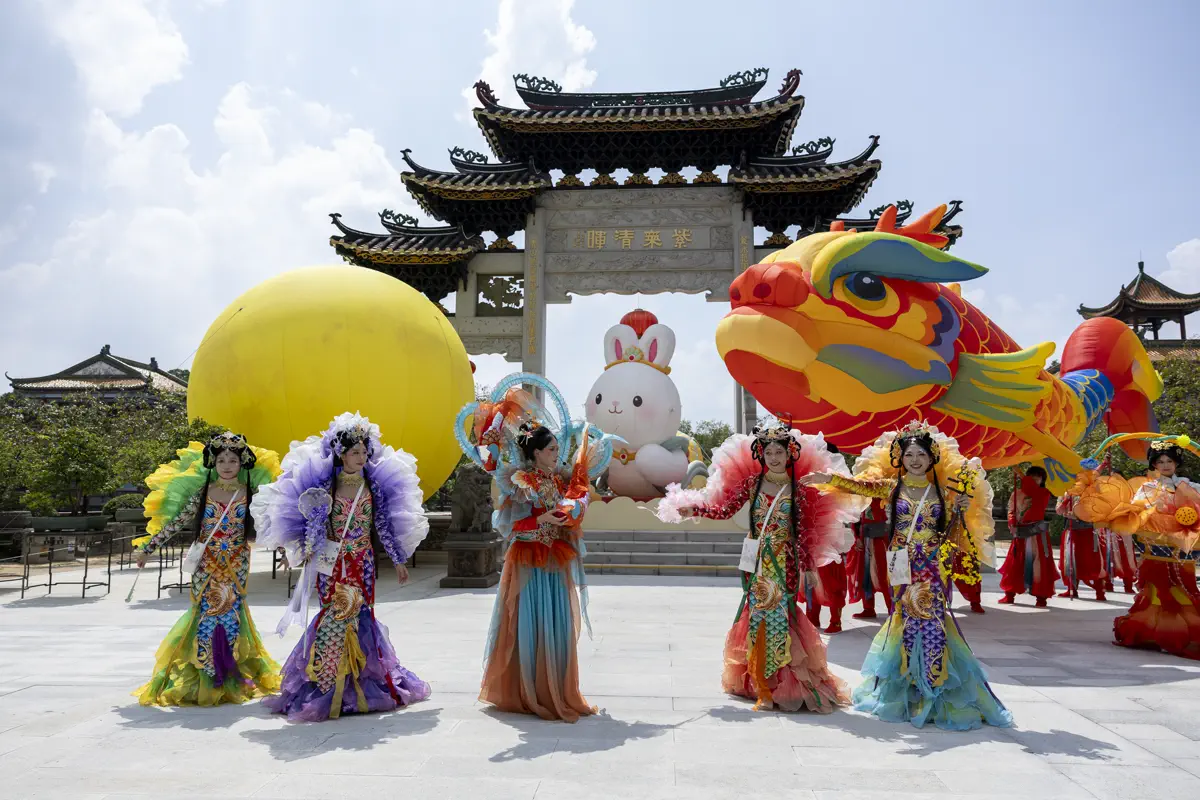
The first masterpiece is the massive grey brick relief titled The Blooming and Singing Wall (吐艳和鸣壁), positioned directly behind the Jiulong (Nine-Dragon) Bridge. Measuring 22.8 metres long, 5.83 metres high, and over a metre thick, this relief took brick-carving master He Shiliang and a team of craftsmen three full years to sculpt from more than 30,000 individually carved blue bricks. The mural depicts "a hundred flowers in bloom and a hundred birds in harmonious song," featuring over 600 distinct birds and 50 botanical varieties. The central flying phoenix boasts a two-metre wingspan, while tiny dragonflies and water beetles on perimeter branches measure only fingernail-size, combining high-relief, openwork fretwork, and round-sculpture techniques.
The second record-holder is the porcelain relief wall of Riverside Scene at Qingming Festival (清明上河图). Extending 62.8 metres in length and standing 7.3 metres high, this monumental work reconstructs Northern Song court painter Zhang Zeduan’s legendary scroll using thousands of custom-fired glazed ceramic tiles. Every detail—from the busy canal barges and arched wooden bridge to wine taverns, camel caravans, and hundreds of individually rendered townsfolk—is faithfully translated into multi-colored relief.
Water pavilions, arch bridges and thousands of koi
Water forms the true soul of Baomo Garden. Lakes, canals, and lotus ponds cover nearly one-third of the entire property, crossed by more than thirty stone arch bridges.
Passing the entrance gate, visitors cross the Jiulong (Nine-Dragon) Bridge, carved with coiled dragons along white marble balustrades. Further along the waterway sits the Zidong Boat (紫洞舫), a two-storey floating banquet barge inspired by Qing Dynasty imperial cruisers. Inside the barge, the timber interiors are fitted entirely with fragrant golden Phoebe zhennan (jin-si nanmu) and polished blackwood, featuring layered openwork fretwork of birds, blossoms, and river landscapes.
The garden's lakes are fed by circulating river channels and home to roughly 100,000 colorful Japanese koi. At Zidai Bridge and the waterfront pavilions, purchasing a bag of feed brings hundreds of vibrant orange, white, and golden carp splashing to the surface in synchronized waves. It is an engaging highlight for families and photographers alike.
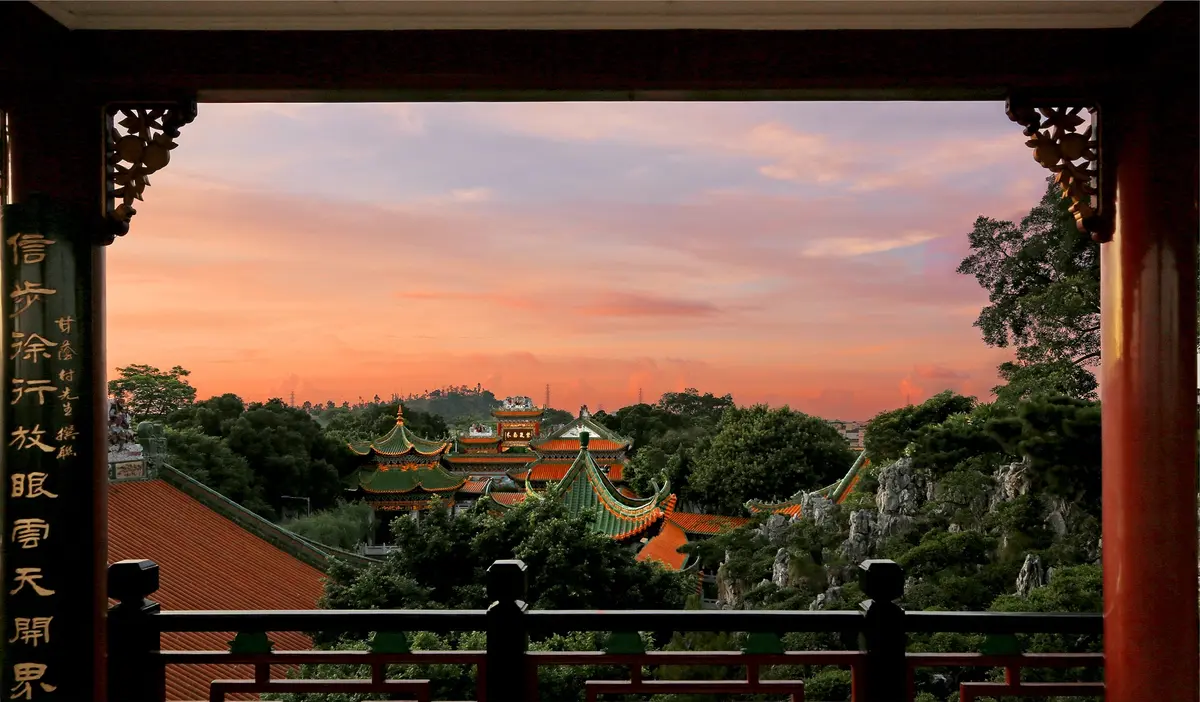
Connecting every sector is the Qianxiang Corridor (千象回廊), an unbroken, covered walkway stretching over 1,000 metres. Lined with vermilion timber pillars and glazed emerald ceramic tiles, this winding arcade lets visitors stroll comfortably through sun and rain without opening an umbrella.
Lord Bao memorials and heritage art collections
Beyond natural landscaping, Baomo Garden serves as an open-air center for traditional administrative ethics and antique collections.
At the spiritual heart stands Baomo Hall, the primary ancestral sanctuary honoring Lord Bao. In front of the hall rests the Qingxin Pavilion, while inside sits a solemn statue of the iron-faced magistrate holding his official court tablet. Surrounding stone tablets and wooden friezes detail famous courtroom legends, such as Bao Zheng hurling his prized inkstone into the river to demonstrate freedom from graft.
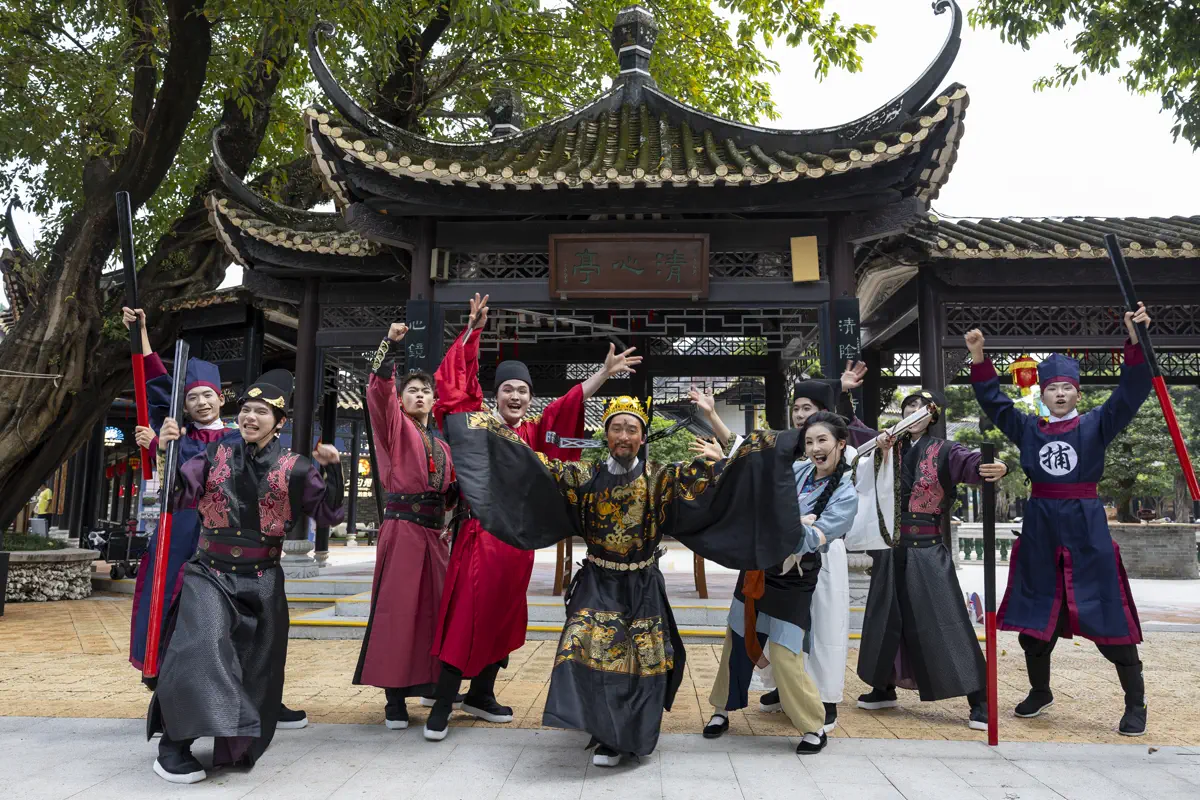
Next to the hall, the Longtu Museum presents life-sized waxwork dioramas recreating legendary judicial cases from historical folklore. On the western grounds, modern cultural galleries—including the Zhao Tailai Art Collection Hall—display thousands of ancient bronzes, Song dynasty ceramics, jade carvings, and calligraphic scrolls donated by patriotic overseas collectors.
How to plan a perfect Panyu day trip
Because Baomo Garden is located outside central Guangzhou, pairing it with neighboring cultural landmarks makes for a rewarding full-day southern excursion:
Depart central Guangzhou at 9:00am via Metro Line 3 to Shiqiao, transferring to Bus Panyu 67 to arrive at Baomo Garden around 10:00am. Spend two hours walking the Qianxiang Corridor, feeding the koi, and examining the record-holding murals.
At 12:15pm, exit the garden to dine at local village eateries along Zini Village. Sample authentic Shawan ginger milk curd, hand-rolled fish-skin dumplings (鱼皮角), and pan-fried dace fish cakes at local prices.
At 1:30pm, hail a taxi for the seven-kilometre (15-minute) ride east to Shawan Ancient Town. Spend the afternoon exploring 800-year-old cobblestone alleys, oyster-shell walls, and the grand Liugeng Ancestral Hall. This combines palatial water-gardens with authentic, lived-in Cantonese heritage. The pairing also links with our recommendations for the 10 best Lingnan attractions and integrates seamlessly into Day 3 of our 3–4 day itinerary.
By 5:00pm, take Bus Panyu 6 or 68 back to Shiqiao Station to catch Line 3 back to Tianhe. For broader citywide navigation, see our complete Guangzhou travel guide.
When to go
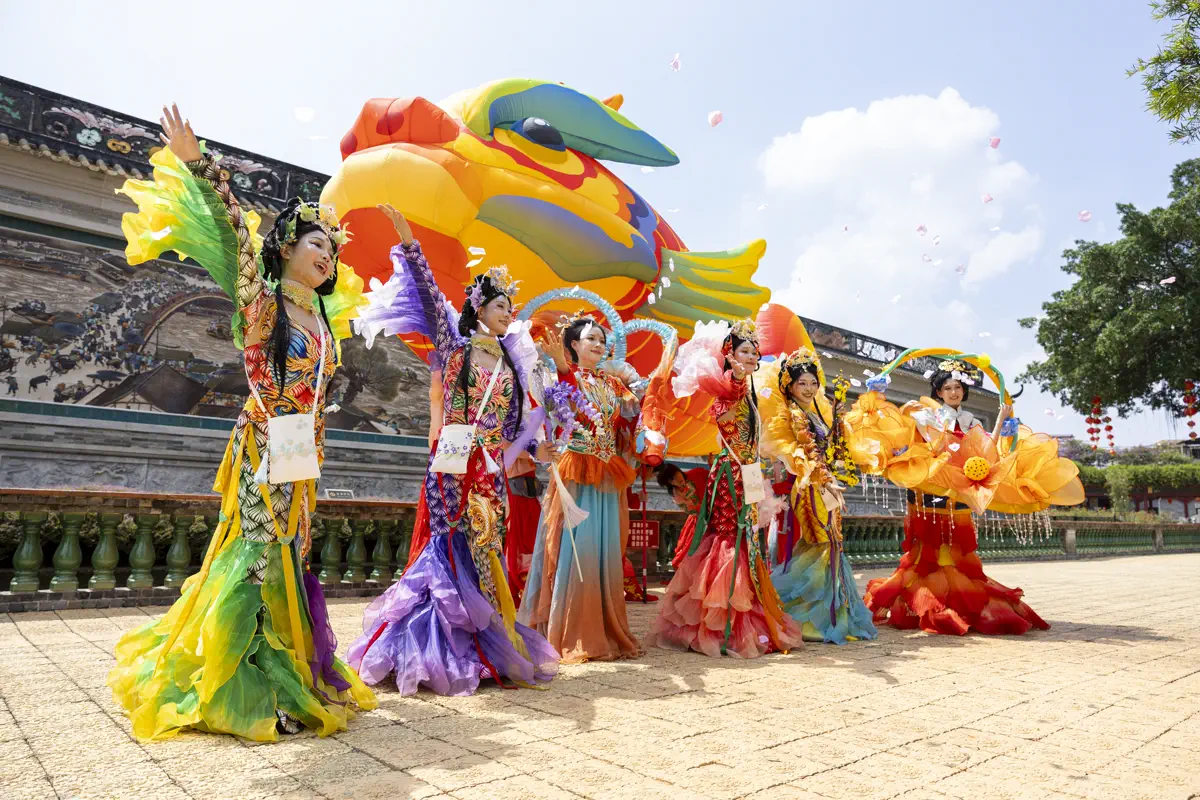
Spring (March to April) is especially picturesque, as cherry blossoms bloom along the canals against grey brick walls during the annual Hanfu festival. Autumn (October to December) offers mild, dry weather and pleasant breezes along the outdoor corridors.
Avoid midsummer midday heat when possible. Weekends draw family crowds around the fish-feeding bridges; visit on a weekday morning to enjoy the quiet, meditative pace of traditional garden life.
Baomo Garden questions, answered
How much is admission to Baomo Garden?
Standard adult tickets cost 54 RMB at the gate, with online advance booking typically around 46 to 48 RMB. Seniors aged 65 and above enter free with valid passport or ID, while those aged 60 to 64 receive a half-price discount.
Can I buy a combo ticket with Nanyue Garden?
Yes. The ticket office sells combined tickets covering both Baomo Garden and nearby Nanyue Garden (a companion royal-style garden 500 metres away) for around 80 RMB.
Is the garden accessible for strollers and wheelchairs?
Most main corridors and lake promenades feature paved ramps, but crossing historical arched bridges requires navigating steps or detouring via flat side paths.
How long does a typical visit take?
Expect to spend 2.5 to 3.5 hours to thoroughly explore the gardens, art halls, and scenic pavilions without rushing.
Schedules and admission terms reflect 2026 guidelines and may adjust during holiday events. Garden boundaries and heritage classifications follow official publications from the Panyu District Bureau of Culture, Radio, Television, Tourism, and Sports. Mural dimensions and certification records cross-reference the Shanghai Great World Guinness archives. Transit routes align with Guangzhou Panyu Public Transport timetables.