Guangzhou Attractions 7 min read
Julong Village: Historic Mansions & Comb-Style Alleys
Explore Julong Village in Liwan, Guangzhou. 19 preserved Qing Dynasty brick mansions, comb-style stone alleys, Manchu windows, and metro access from Shachong.
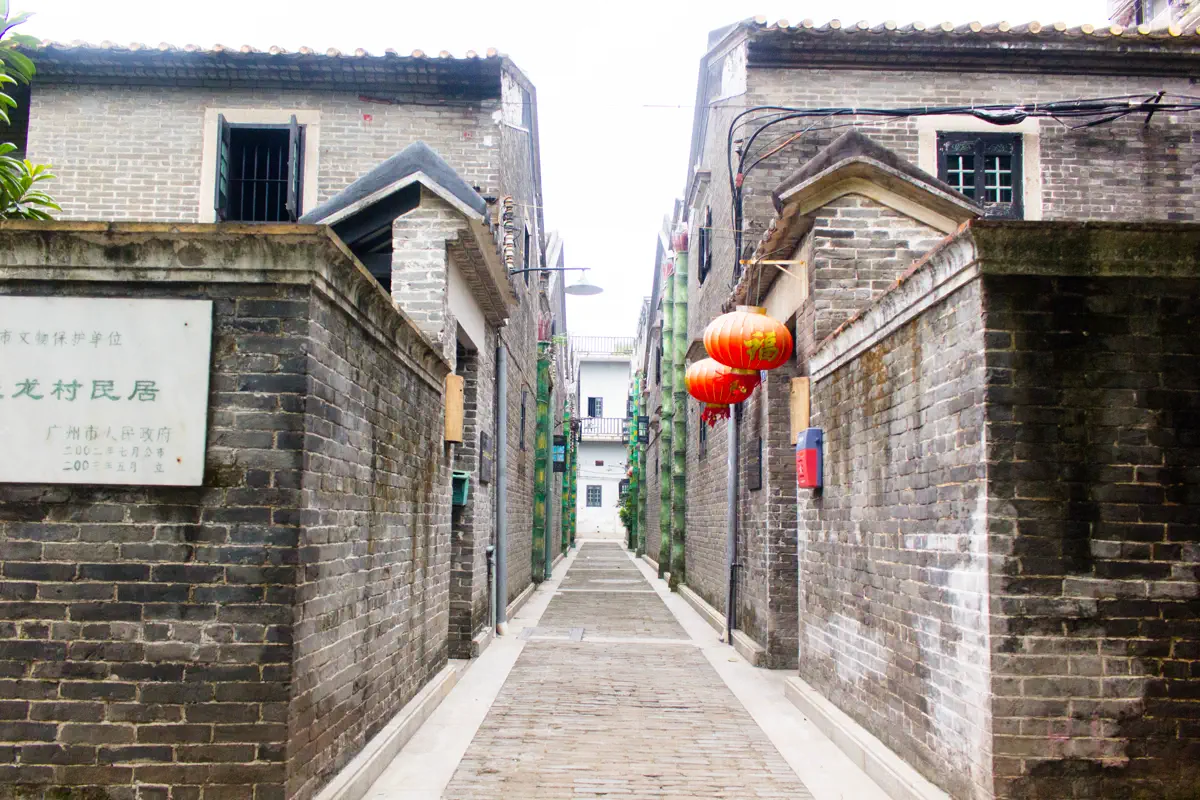
While travelers flock to the restored qilou arcades of Yongqing Fang or the colonial riverfront villas on Shamian Island, one of Guangzhou’s most extraordinary residential complexes sits tucked quietly beside the Dachongkou Canal in Fangcun. Julong Village (聚龙村), also called Kuang Family Village (邝家村), was founded in 1879 during the reign of Emperor Guangxu in the late Qing Dynasty. Spanning over 20,000 square metres, it contains 19 remarkably uniform two-storey gray-brick mansions arranged in a disciplined geometric grid.
Rather than developing haphazardly like a typical farming hamlet, Julong Village was master-planned from scratch by wealthy Cantonese merchants returning from overseas ventures. Today, it remains an authentic, low-density neighborhood shielded from commercial hype, offering an intimate window into late 19th-century Lingnan bourgeois life and waterfront calm.
Getting to Julong Village
Julong Village is located on the western bank of Dachongkou Canal in the Chongkou subdistrict of Liwan, roughly 8 kilometres southwest of central Yuexiu.
- Metro: The easiest access is via the Guangfo Metro Line to Shachong Station (沙涌站). Take Exit C, walk north along Fangcun Avenue East for roughly 500 metres, then turn left into Xinghua Main Street beside the canal. The walk takes about 8 to 10 minutes. Alternatively, take Guangzhou Metro Line 1 to Fangcun Station (芳村站) Exit B2 and ride a local bus two stops south to Dachongkou.
- Bus: Numerous bus lines stop at Dachongkou Stop (大冲口站) right outside the neighborhood, including routes 19, 52, 64, 181, 202, 206, and 217. From the bus platform, cross the stone bridge over Dachongkou Canal, and you will reach the entrance gate within two minutes.
- Taxi and ride-hailing: Set your destination to "Julong Ancient Village" (聚龙古村). A Didi ride from central spots such as Beijing Road, Shamian Island, or the Chen Clan Ancestral Hall takes roughly 20 to 25 minutes and costs 25 to 35 RMB.
- Parking: Outdoor paid parking lots operate along the canal banks and near the adjacent creative business parks, with hourly rates typically between 4 and 8 RMB.
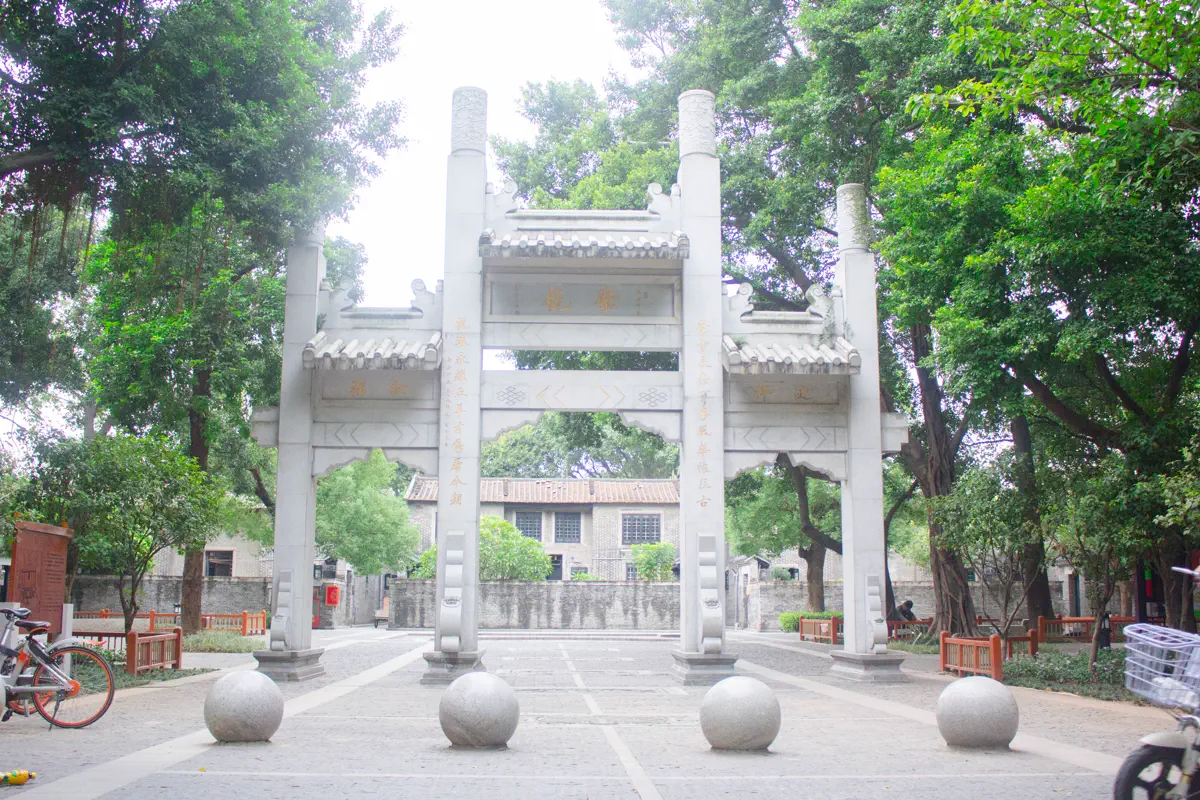
The Kuang clan and the comb-style layout
During the late 19th century, three brothers of the Kuang lineage—Kuang Jinghe, Kuang Jinggeng, and Kuang Jingtong—amassed substantial fortunes in Taishan, Guangzhou, and overseas through international trade, gold bullion, timber concessions, and pawn brokering. Seeking a permanent family seat near Canton’s river networks, the clan acquired an expansive alluvial sandbar by the Dachongkou riverbank and hired master craftsmen and feng shui consultants to build an exclusive enclave for their extended family.
The settlement was constructed strictly according to the classic Cantonese “comb-style” layout (梳式布局). All 19 existing mansions face due south to capture cool summer breezes from the South China Sea and shield interior living quarters from harsh winter north winds.
The village follows an exact grid of three longitudinal lanes and seven transverse cross-alleys. Each residential plot measures approximately 200 square metres, creating a unified architectural rhythm rarely seen in rural China. The exterior masonry was assembled with water-polished gray bricks (水磨青砖), bonded using a historic mortar recipe of slaked lime, cooked sticky rice slurry, and brown sugar. The joints are so razor-thin that a knife blade cannot slip between them.
Beneath the flagstone pavement lies a sophisticated brick drainage culvert system. Designed in 1879 to drain directly into the adjacent canal on tidal rhythms, the drainage network has protected Julong Village from monsoon street flooding for over 140 years.
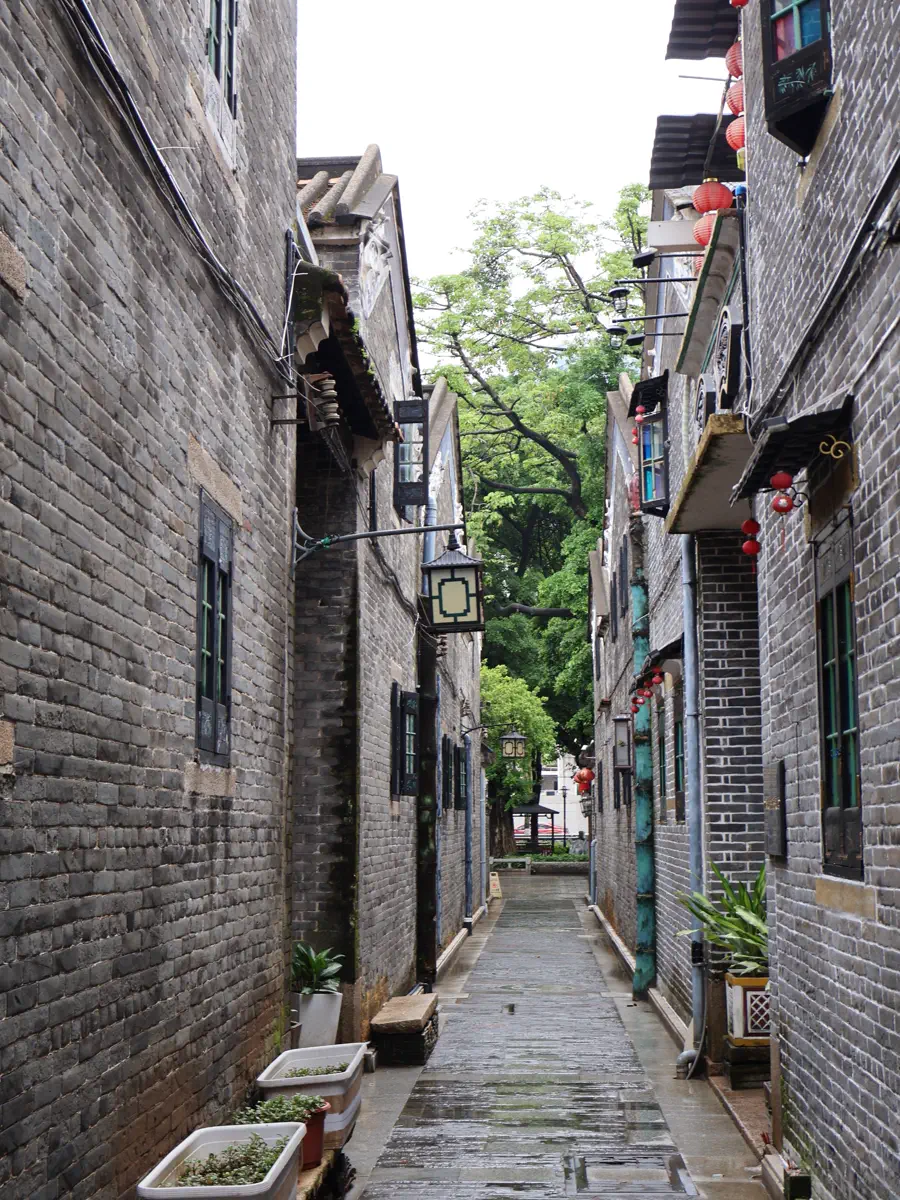
East meets West: architectural details of the mansions
Because the Kuang family traded extensively with Southeast Asia and Europe, their mansions blend classical Cantonese pedigree with fashionable Western decorative flourishes.
Every front entrance features the traditional Lingnan “three-tier security door” (三件头):
- Waist-high swing screen (矮脚吊扇门): Half-height folding saloon shutters that allow cross-ventilation and daylight while preserving household modesty from passersby.
- Sliding timber grille (趟栊门, *Tanglong*): A heavy gate made of over a dozen thick, polished *kundur* hardwood logs sliding horizontally along bronze runners. It provided robust defensive security while letting fresh night air circulate freely through the compound.
- Solid timber main door (大门): Massive double hardwood doors secured by iron deadbolts.
Step inside the courtyards, and the spatial arrangement follows the traditional “three bays and two corridors” (三间两廊) plan with ceilings rising over five metres. Yet modern Western elements appear everywhere. Upper-storey balconies feature imported European cast-iron filigree railings and louvered shutters. Window openings are framed with vibrant Manchu stained glass (满洲窗)—enameled panes in ruby red, sapphire blue, and emerald green etched with Chinese seasonal floral patterns that cast kaleidoscope reflections across the interior brickwork on sunny afternoons.
Several mansions have been sensitively restored as tranquil tea houses, traditional guqin music studios, painting academies, and cultural salons, where visitors can step inside to examine the carved timber corbels and central skywells up close.
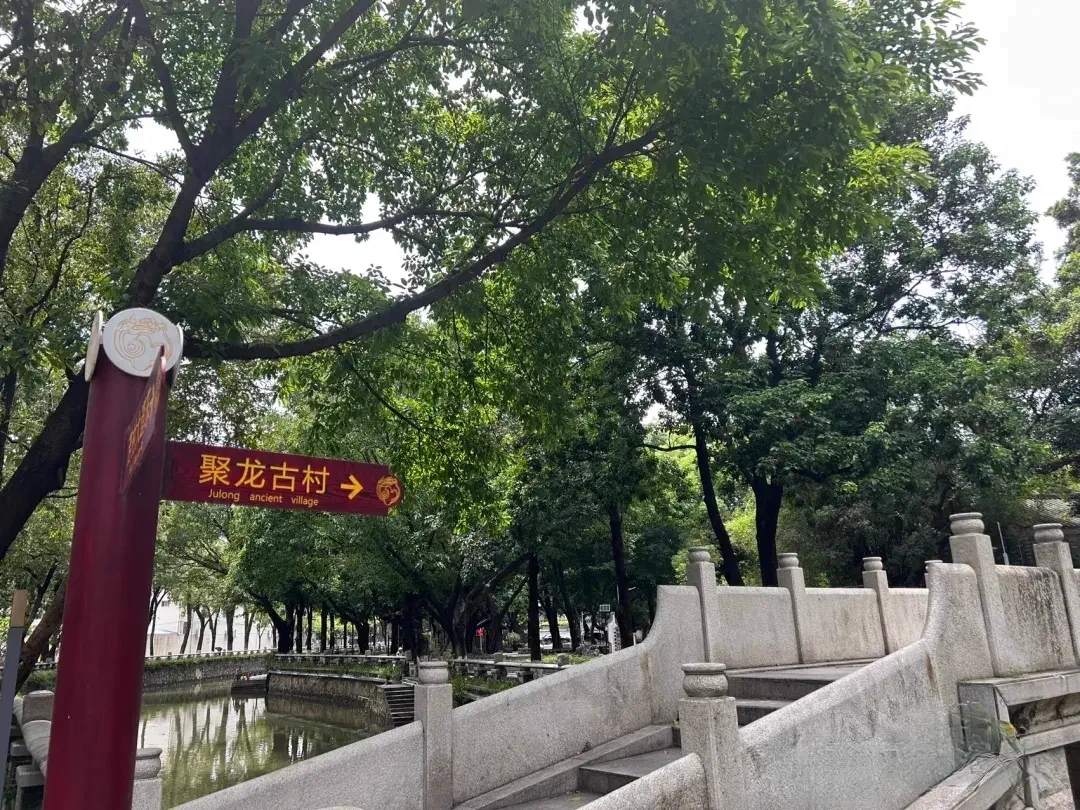
Canal bridges, banyan shade and village tranquility
Water is the soul of Julong Village. The Dachongkou Canal flows right past the front gates, where massive weeping banyans and metasequoia trees dip their branches toward the water.
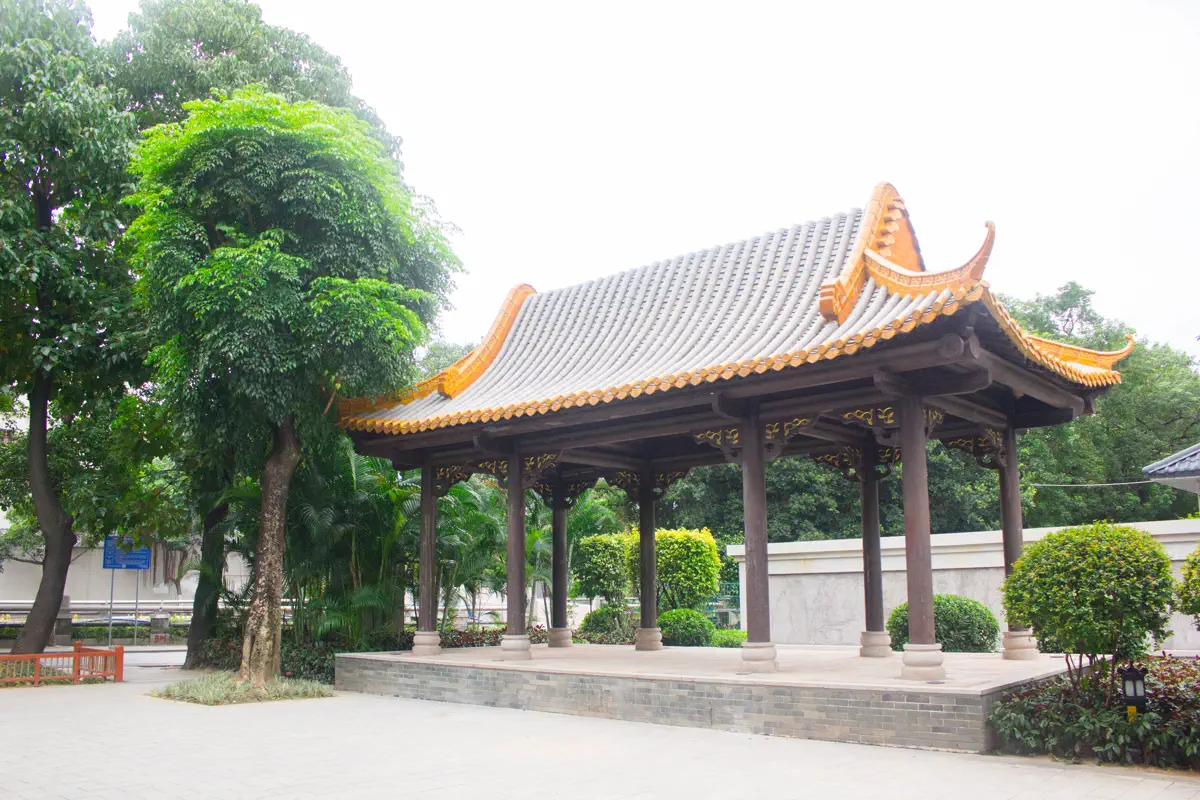
An arched granite bridge connects the village to the eastern bank, framing reflections of gray tiled eaves and green foliage. Nearby, an official wooden pavilion exhibits an illustrated orientation map documenting the village’s conservation history and building preservation grades.
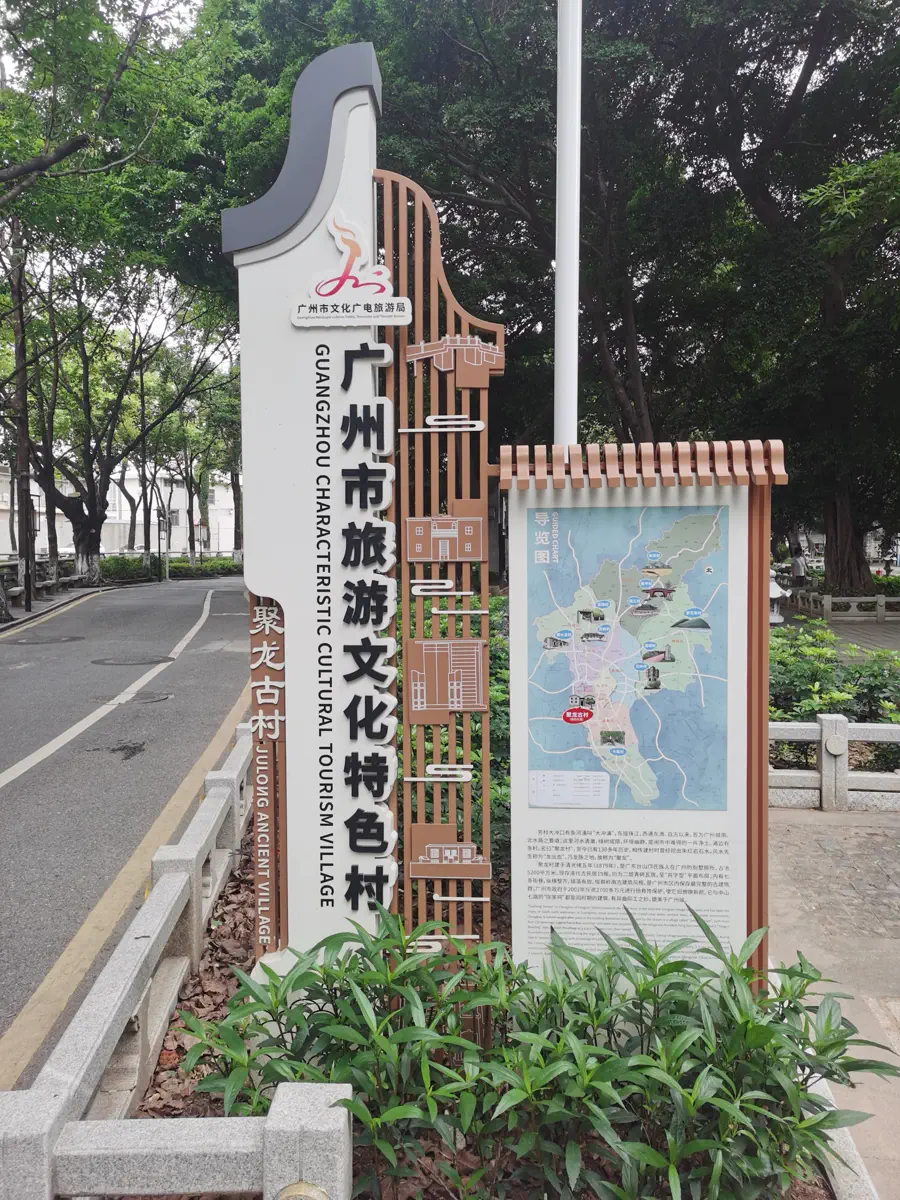
Unlike commercial pedestrian streets, Julong Village has not been overrun by loud megaphone tour groups or souvenir vendors. Local seniors chat peacefully in the waterfront timber pavilion, stray neighborhood cats doze on sun-warmed stone stairs, and laundry dries quietly on courtyard balconies. It feels like an authentic time capsule where the slow pace of Old Canton endures.
How to plan your visit and nearby attractions
Julong Village is completely free to enter 24/7 without tickets or advance reservations. Most cultural studios and tea salons inside the mansions welcome casual walk-in visitors between 10:00 and 18:00.
Recommended walking itinerary
Plan for roughly 1 to 2 hours to explore the village alleys thoroughly:
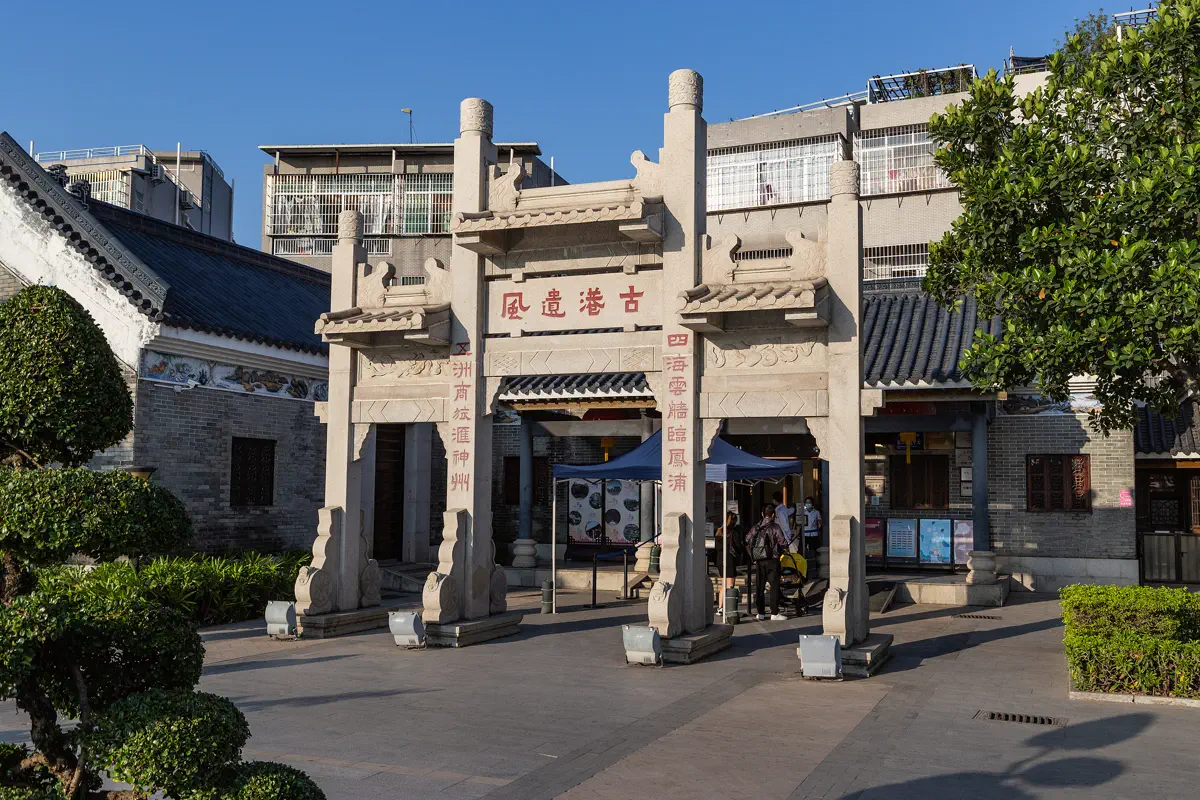
- Morning (09:30 – 11:30): Arrive at Shachong Metro Station and cross the canal bridge into the main square. Walk through the white stone paifang gateway and stroll slowly from Lane 1 to Lane 7. Admire the water-polished brick masonry, examine the three-tier doors, and photograph the Manchu stained-glass balconies.
- Midday break: Drop into one of the courtyard tea spaces for a pot of Phoenix Dancong oolong tea, or relax in the waterfront timber pavilion by the canal.
- Afternoon extension: Walk 10 minutes east along the canal to explore the **1850 Creative Park** and **Xinyi International Club**, two former industrial shipyard and refrigeration plant complexes transformed into modern sculpture parks and riverside cafes. From there, head to the Baietan waterfront promenade for sunset river views, or take Metro Line 1 across the Pearl River to visit Yongqing Fang and the Chen Clan Ancestral Hall. For a broader village comparison, read our guides to Shawan Ancient Town in Panyu and Huangpu Ancient Port in Haizhu, or consult our 3–4 day Guangzhou itinerary and complete Guangzhou travel guide.
Frequently asked questions about Julong Village
Is Julong Village suitable for interior photography?
Yes. Exterior alleys and public canal banks are completely open for street and architectural photography. Several restored mansion courtyards operate as tea houses or art spaces that permit polite interior photos if you order a beverage or ask permission first.
How does Julong Village differ from the Chen Clan Ancestral Hall?
The Chen Clan Ancestral Hall is a monumental 1890s clan academy dedicated to ancestor worship and imperial examination preparation, decorated with elaborate roof sculptures. Julong Village is a living clan residential neighborhood built in 1879, showcasing practical two-storey family homes, alleyway defenses, and domestic merchant lifestyle.
Are there good dining options inside the village?
While Julong Village itself maintains a quiet ambiance with only a few tea salons and modest cafes, the surrounding Fangcun and Chongkou neighborhoods are legendary for traditional Cantonese dining. Within a 10-minute walk, you will find authentic dim sum halls, roast goose shops, and claypot rice eateries frequented by local families. Discover more dining recommendations in our guide to what to eat in Guangzhou.