Guangzhou Attractions 8 min read
South China National Botanical Garden: Greenhouses & Guide
Visit South China National Botanical Garden in Guangzhou. Explore giant greenhouse domes, Longdong Qilin cypress lake, tickets, hours, and metro directions.
Sprawled across more than 300 hectares in northern Tianhe District, the South China National Botanical Garden (华南国家植物园) is one of the world’s most comprehensive botanical sanctuaries. While many casual visitors think of it simply as a magnificent urban park, it is in truth a premier scientific institution with over nine decades of pioneering plant conservation history. Together with the China National Botanical Garden in Beijing, it forms the dual core of China's national botanical garden system.
Home to more than 17,000 documented species of living tropical and subtropical plants, this vast garden invites travelers to journey across planetary biomes in a single afternoon. From mist-shrouded indoor waterfalls and giant prickly desert succulents to serene lakes where winter bald cypresses turn a rich caramel-red, the garden combines cutting-edge botanical science with classical Cantonese landscape artistry.
The Chinese name is 华南国家植物园 (Huánán Guójiā Zhíwùyuán), formerly known as the South China Botanical Garden, Chinese Academy of Sciences (中科院华南植物园). The main entrance is at No. 1190 Tianyuan Road, Tianhe District, Guangzhou (广州市天河区天源路1190号). Use the Chinese characters when using ride-hailing apps or searching transit routes.
How to get to South China National Botanical Garden
Located in northern Tianhe, the garden is straightforward to reach using the city’s rapid transit system:
- By Metro (Fastest & Most Convenient): Take Metro Line 6 to Botanical Garden Station (植物园站). Take Exit A. Once on street level, walk west along Tianyuan Road for approximately 370 metres (about 5 minutes). You will arrive directly at the grand main entrance gate.
- By Public Bus: Numerous bus lines, including B12, 30, 39, 83, 84, 345, 494, and 564, terminate or stop at the Botanical Garden Main Gate Station (植物园正门站) directly in front of the ticket office.
- By Taxi or Didi: A direct ride from downtown Tianhe (Tianhe Sports Center or Zhujiang New Town) takes approximately 20 to 30 minutes (costing ¥30 to ¥45). Direct the driver to “华南国家植物园-正门”. Ample open-air parking is available at both the Main Gate and the West Gate.
Ninety years of plant science: From CAS to national botanical status
The garden was founded in 1929 by the revered Chinese botanist Professor Chen Huanyong (Woon-Young Chun) as the Institute of Agriculture and Forestry of National Sun Yat-sen University. During the mid-20th century, it came under the stewardship of the Chinese Academy of Sciences (CAS), expanding into a world-class center for plant taxonomy, ecology, and endangered species recovery.
In 2022, the State Council of China formally approved its elevation to the South China National Botanical Garden, cementing its role as the national repository for tropical and subtropical flora. Its living collections serve as a vital genetic ark, protecting over 600 rare and critically endangered plant species, including ancient cycads, magnolias, and carnivorous flora facing habitat loss across Southeast Asia and southern China.
The Giant Greenhouse Complex: Four climate domes in bloom
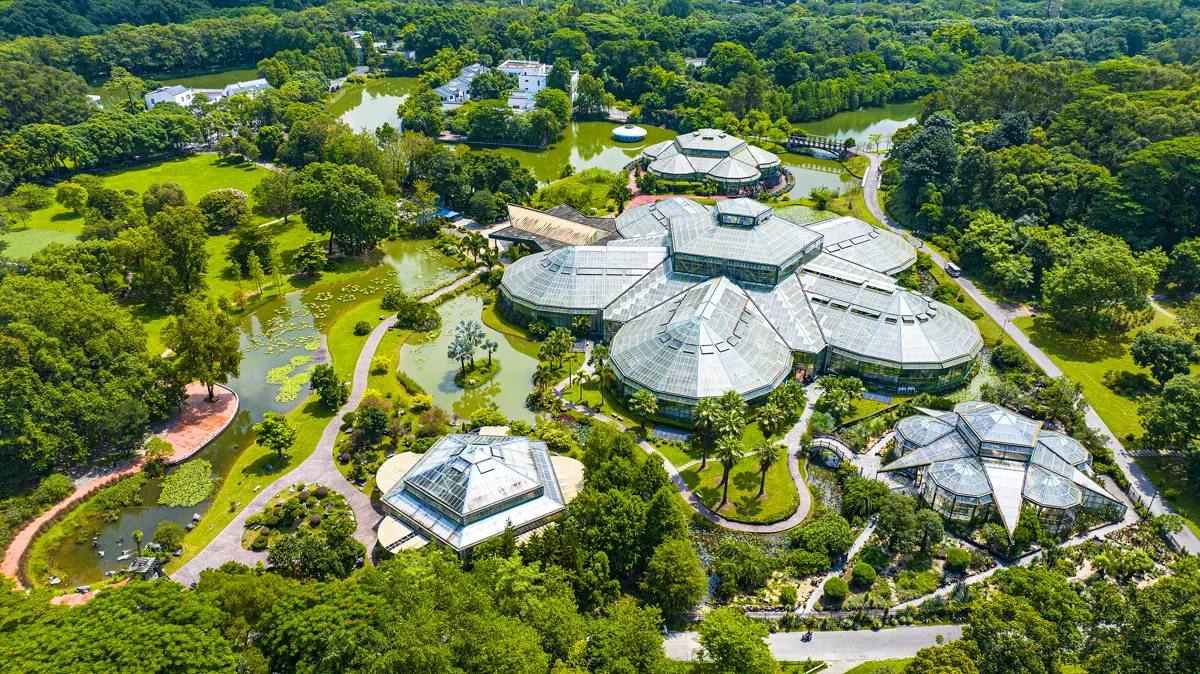
The crowning architectural centerpiece of the botanical garden is the Giant Conservatory Complex (温室群景区). Viewed from above, its interconnected curved steel-and-glass pavilions resemble the spreading petals of a red kapok flower (the official municipal blossom of Guangzhou). Encompassing tens of thousands of square metres, it ranks among the largest indoor conservatory complexes in all of Asia.
The complex is divided into four distinct climate exhibition zones:
- Tropical Rainforest Dome (热带雨林室): The largest dome recreates the lush, humid interior of a virgin equatorial jungle. A cascading 10-metre artificial waterfall drops into a misty pool, surrounded by strangler figs, giant bird-nest ferns, and epiphytic "hanging gardens" suspended from towering trees. Visitors can walk elevated gangways to inspect the canopy flora up close.
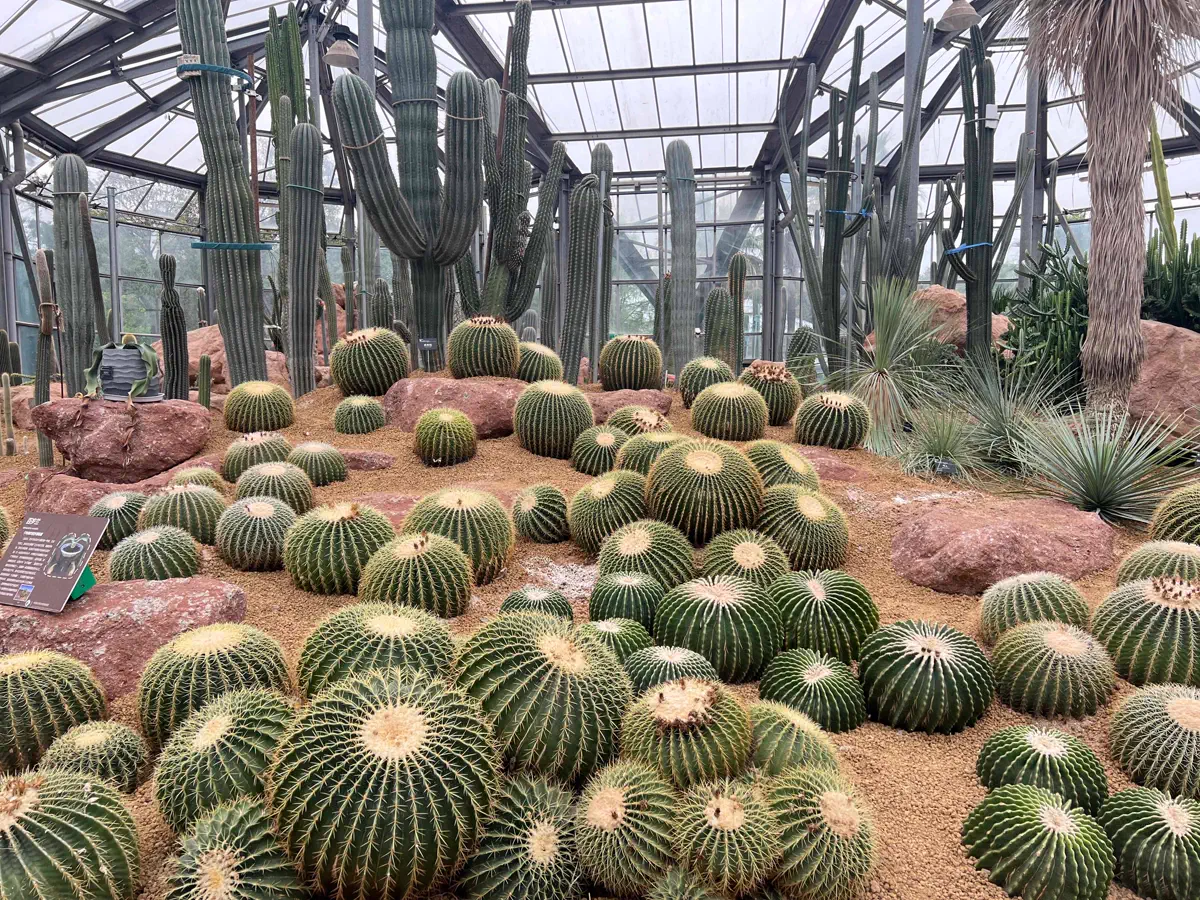
- Desert Plants Dome (沙漠植物室): Bathed in dry sunlight, this pavilion houses over a thousand species of arid-climate succulents from the Americas, Africa, and Madagascar. Massive golden barrel cacti (Echinocactus grusonii) sit in golden ranks like carved jade orbs, flanked by multi-metre saguaro columns and rare living rock plants (Lithops).
- Alpine & Polar Plants Dome (高山与极地植物室): Chilled by specialized refrigeration systems, this gallery simulates the crisp, thin air of high montane peaks and polar fringes, sheltering delicate rhododendrons, alpine gentians, and subarctic mosses.
- Exotic & Carnivorous Plants Dome (奇异植物室): A favorite for families and naturalists, featuring pitcher plants, Venus flytraps, sundews, and sensitive telegraph plants that move their leaves in response to acoustic vibrations.
Longdong Qilin: The iconic eight scenes of Guangzhou landscape
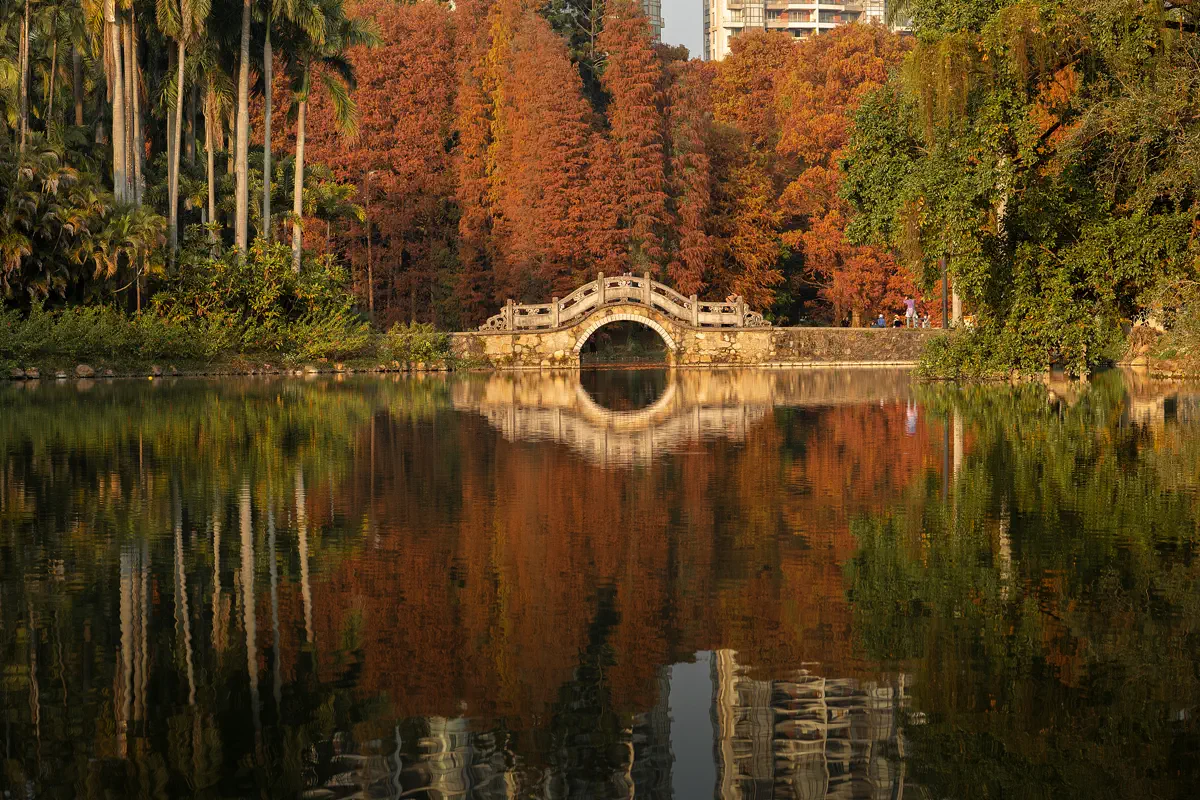
If the conservatories demonstrate scientific prowess, the historic lake known as Longdong Qilin (龙洞琪林) represents the pinnacle of Chinese landscape design. In classical literature, Qilin signifies a mythical grove of jade-like immortal trees. In 1986, this scenic corner was voted into the celebrated "Eight Sights of Guangzhou" (羊城八景).
The design brilliance of Longdong Qilin lies in its concept of "one water, two landscapes" (一水分两带). Along one shore of the central lake stand rows of towering evergreen palms, oil palms, and royal king palms, evoking the languid, tropical romance of a South Pacific lagoon.
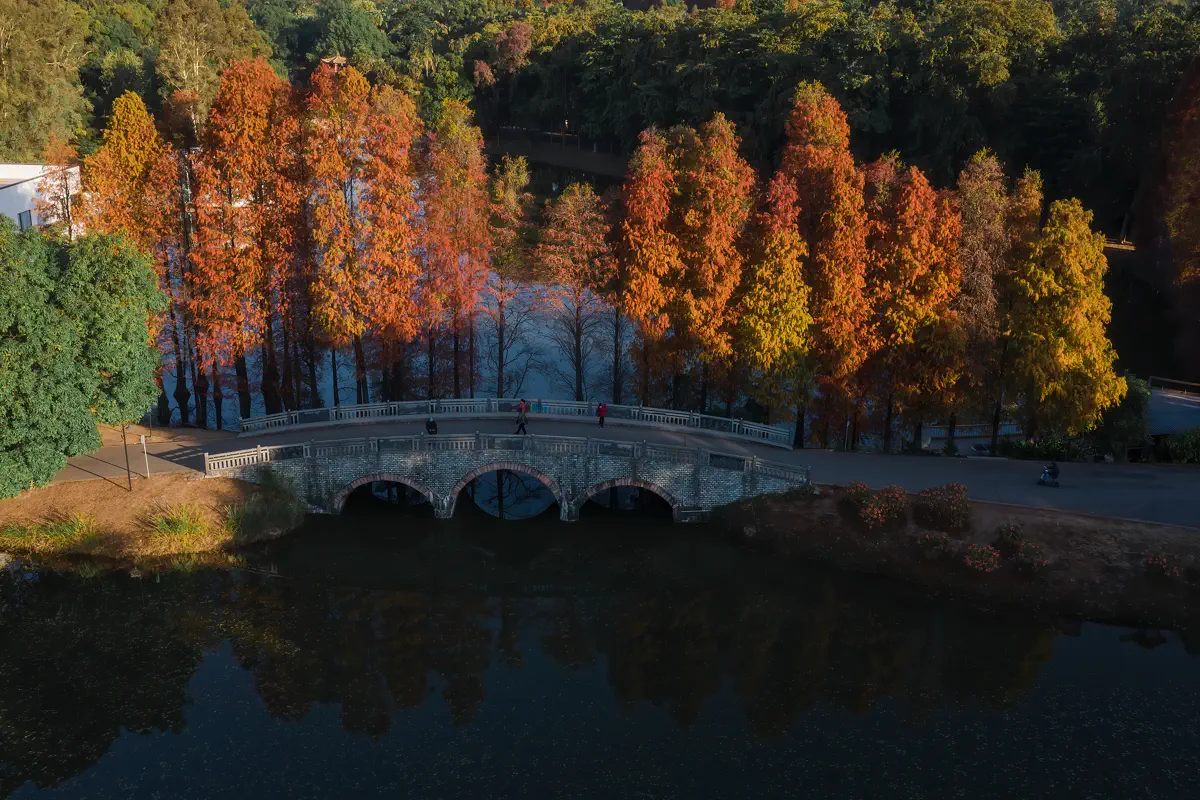
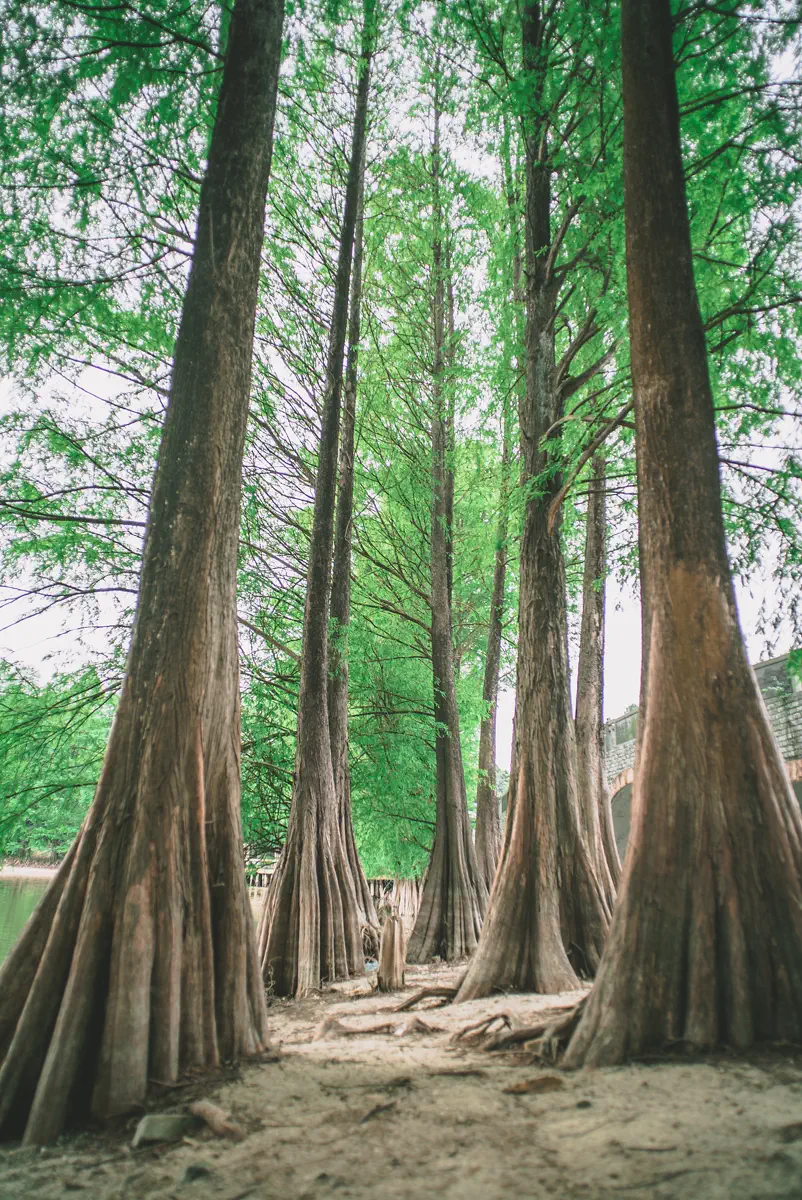
Across the water on the opposite bank grows a dense woodland of bald cypresses (Taxodium distichum) and pond cypresses. These water-loving conifers undergo dramatic seasonal transformations. In summer, their feathery needles glow vibrant lime-green. From late December through January, dropping winter temperatures trigger a breathtaking color shift: the foliage turns amber-gold and then a deep, fiery caramel-red. Arched stone bridges cast perfect circular reflections across the mirror-like waters, creating one of Guangzhou's most photographed winter panoramas.
Giant water lilies and living botanical collections
Beyond the greenhouse and central lake, the garden features more than 30 specialized plant collections:
- Aquatic Garden & Giant Water Lilies (王莲): In the summer and early autumn (July to September), the aquatic pools showcase magnificent Amazonian and Santa Cruz water lilies (Victoria). Their circular leaves can exceed two metres across, with upturned rims like emerald serving platters. The ribbed, air-filled vein structure on the underside can support weights up to 35 kilograms, making the annual "baby sitting on a water lily" photo events famous nationwide.
- Magnolia Garden (木兰园): Boasts the world’s most comprehensive collection of Magnoliaceae species, erupting in fragrant white, pink, and purple blossoms each February and March.
- Cycad Garden (苏铁园): Preserves ancient "living fossil" cycad species that coexisted with dinosaurs millions of years ago.
- Bamboo Garden & Ginger Garden: Features hundreds of bamboo varieties and medicinal gingers thriving along shaded creeks.
Guangzhou First Village: Prehistoric roots in the forest
Tucked onto the forested slopes of Feieling in the southern section of the grounds lies the archaeological site known as Guangzhou First Village (广州第一村). In the 1950s, archaeological digs uncovered polished stone adzes, pottery shards, and burial remains dating back more than 4,000 years to the late Neolithic period. It is recognized as one of the earliest documented prehistoric human settlements within modern Guangzhou’s municipal boundary.
Walking the stone paths beneath massive banyans and paperbark trees, with strange knee-like respiratory roots protruding from damp soil, visitors feel entirely removed from the concrete metropolis buzzing just beyond the gates.
Opening hours, tickets and practical visiting tips
Plan your day smoothly with these essential logistical details:
- Ticket Options:
- General Park Admission: ¥20 per person (access to outdoor gardens, Longdong Qilin, and specialized plant zones).
- Greenhouse Conservatory Ticket: ¥50 per person.
- Combo Ticket (Park + Greenhouses): ¥50 per person (Recommended). Buying the combo ticket is much cheaper than purchasing park admission and conservatory entry separately.
- Discounts: Half-price tickets are available for full-time students and seniors aged 60–65 with valid ID. Children under 1.2 metres (or under 6) and seniors aged 65+ enter free.
- Operating Hours:
- Main Park Grounds: 7:30am to 5:30pm daily (last ticket entry 5:30pm). Open 365 days a year.
- Greenhouse Complex: 8:00am to 5:30pm daily (last entry 5:00pm; extended to 6:00pm during peak summer).
- Recommended Duration: Allocate at least 3 to 4 hours for a leisurely visit including the conservatories and Longdong Qilin. Plant lovers can easily spend a full day here.
- Sightseeing Electric Carts: Given the 300-hectare footprint, hop-on electric shuttle carts operate along the main loop, stopping at key intersections for a small per-ride or day-pass fee.
- Comfort & Preparation: Wear supportive walking shoes. Bring insect repellent, sunscreen, and water. Shaded lawns provide popular spots for afternoon picnics.
Pair it with nearby Guangzhou attractions
The botanical garden makes an ideal starting point for a natural escape in northern Guangzhou:
- Baiyun Mountain (白云山): Located just a 15-minute taxi ride to the west, combine the botanical garden with a hike up Baiyun Mountain for bird's-eye city panoramas.
- Haizhu National Wetland Park (海珠湿地): Contrast northern mountain forests with the expansive southern river delta at Haizhu Wetland Park.
- Yuexiu Park & City Centre: Take Metro Line 6 into central Yuexiu to visit the Five Rams Sculpture at Yuexiu Park.
- Comprehensive Planning: Check our full Guangzhou travel guide and curated Guangzhou 3-4 days itinerary to weave eco-tourism with authentic Cantonese food tours.
South China National Botanical Garden questions, answered
Should I buy the combo ticket with the greenhouse conservatories?
Yes. The combo ticket costs ¥50, the exact same price as the conservatory ticket alone. The four climate biomes (rainforest, desert, alpine, and exotic flora) are arguably the most impressive indoor botanical displays in southern China and well worth the extra cost.
When is the best time of year to see the red cypress trees?
The bald cypress needles at Longdong Qilin begin changing color in mid-December and typically reach peak caramel-red vibrancy between late December and mid-January.
Which metro station is closest to the garden?
Take Metro Line 6 to Botanical Garden Station (Exit A). The Main Gate is just 370 metres west along Tianyuan Road (about a 5-minute walk).
Can I bring pets or bicycles into the garden?
Pets and private bicycles are not permitted inside the botanical garden to safeguard delicate plant collections and wildlife. Visitors can walk on paved trails or take the garden's electric sightseeing shuttle carts.