Guangzhou Attractions 9 min read
Huangpu Ancient Port: Canton Trade History, Village & Food
Explore Huangpu Ancient Port in Guangzhou. Discover the Maritime Silk Road harbor, Yuehai Customs House, ancient village ancestral halls, and street food.
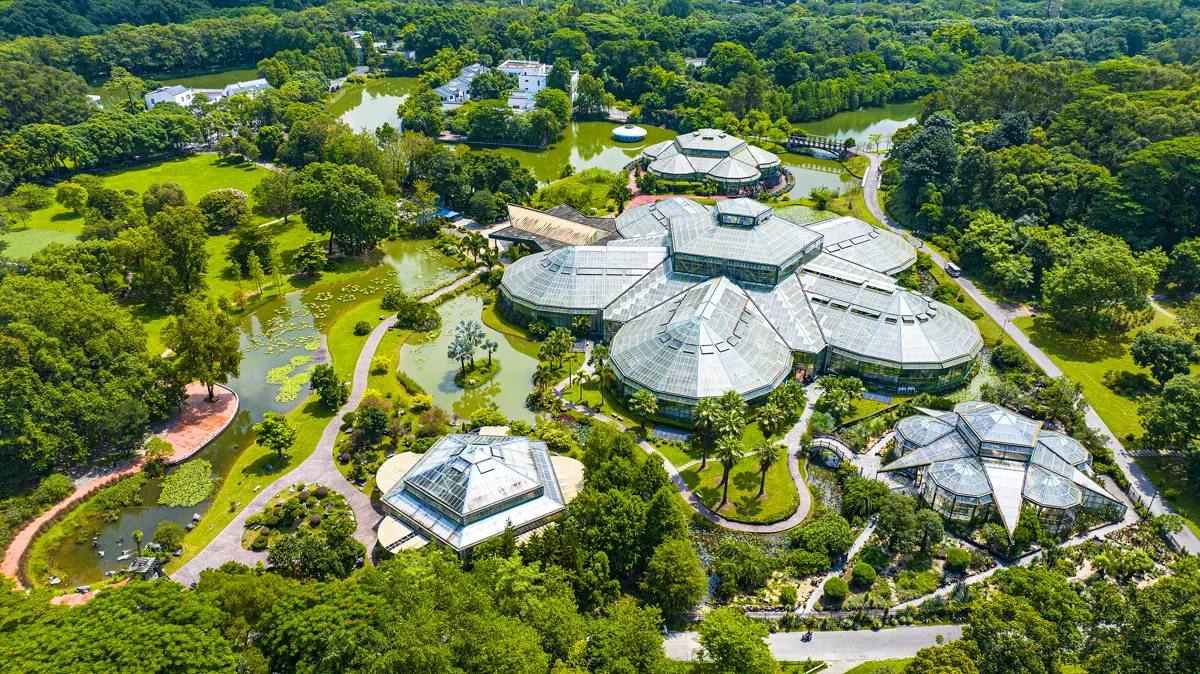
Every spring and autumn, international business travelers flock to the modern glass exhibition pavilions of the Canton Fair Complex on Pazhou Island. Yet just two kilometres further east along Xingang East Road, an idyllic riverside sanctuary hides in plain sight. Tucked behind orchards of carambola and tranquil banyan trees lie Huangpu Ancient Port (黄埔古港) and Huangpu Ancient Village (黄埔古村).
For more than eight decades during the Qing Dynasty, this peaceful fishing hamlet served as the premier maritime gateway to the Chinese empire. Under the strict "Single-Port Commerce" policy (the Canton System), every Western merchant sailing vessel entering China was legally required to drop anchor, register cargo, and pay customs duties right here. Today, the bustling fleets of three-masted tall ships have long since vanished, leaving behind shaded granite alleys, grand ancestral halls, oyster-shell walls, and some of the most beloved street food stalls in all of Guangzhou.
The Chinese name is 黄埔古港 (Huángpǔ Gǔgǎng) or 黄埔古村 (Huángpǔ Gǔcūn). The waterfront district is located at Shiji Village, Pazhou Sub-district, Haizhu District, Guangzhou (广州市海珠区琶洲街道黄埔村/石基村). Use the Chinese characters when booking Didi rides or navigating public transit apps.
How to get to Huangpu Ancient Port and Village
Situated in the eastern corner of Haizhu District, Huangpu Ancient Port is straightforward to reach using Guangzhou's metro and surface transit networks:
- By Metro and Bus (Most Popular): Take Metro Line 4 or Line 8 to Wanshengwei Station (万胜围站). Leave via Exit B. Cross to the bus stop and board bus route 229 or Tourist Bus Line 3 (旅游公交3线). Ride 4 stops (about 8–10 minutes) directly to the terminus at Huangpu Ancient Village Bus Station (黄埔古村总站) or Huangpu Ancient Village South Gate.
- By Metro and Shared Bike: From Wanshengwei Station (Exit B), unlock a shared public bicycle (Meituan or Hello Bike) and pedal east along Xingang East Road and Shiji Road for 1.8 kilometres (about 8–10 minutes). The route is flat, paved, and shaded by roadside trees.
- By Haizhu Tram (THZ1): Wanshengwei serves as the eastern terminus of the picturesque Haizhu Tram (THZ1), which runs along the Pearl River from Canton Tower. Riding the scenic tram to Wanshengwei and then continuing to the village makes for a delightful combined afternoon outing.
- By Taxi or Didi: A direct ride from Tianhe District or Zhujiang New Town takes roughly 20 to 25 minutes (costing ¥30 to ¥45). Set your navigation destination to “黄埔古港” (for the river wharf) or “黄埔古村-南门” (for the ancestral village).
The Canton System: China's sole gateway for Western sailing ships
To grasp the international importance of Huangpu Ancient Port, one must look back to the mid-18th century. In 1757, Emperor Qianlong issued an imperial decree closing the maritime customs houses in Jiangsu, Zhejiang, and Fujian, establishing Guangzhou as the sole lawful port open to Western maritime trade (一口通商, the Canton System).
Because the inner Pearl River waterways approaching the Thirteen Hongs trading factories in western Guangzhou were too shallow for deep-draught European ocean vessels, all foreign ships were compelled to cast anchor in the deepwater roadsteads outside Huangpu Village, known historically as the Whampoa Anchorage.
Here, imperial officers from the Yuehai Customs (Guangdong Maritime Customs) boarded foreign vessels to measure tonnage, verify manifests, and levy duties. Foreign supercargoes and captains had to deposit all shipboard weapons and gunpowder on shore for safekeeping before boarding small native sampans and passenger river barges to travel upstream to the foreign factories. Between 1758 and 1838, more than 5,000 foreign vessels anchored at Whampoa, including the famous Swedish East Indiaman Götheborg (which made three journeys here) and the Empress of China, which completed the maiden voyage between the newly independent United States and China in 1784.
Key sights: Yuehai First Customs Museum and the ancient wharf
The modern riverside scenic area clusters around the old docks of Shiji Village, bringing centuries of maritime commerce to life:
1. Yuehai First Customs Memorial Hall (粤海第一关纪念馆)
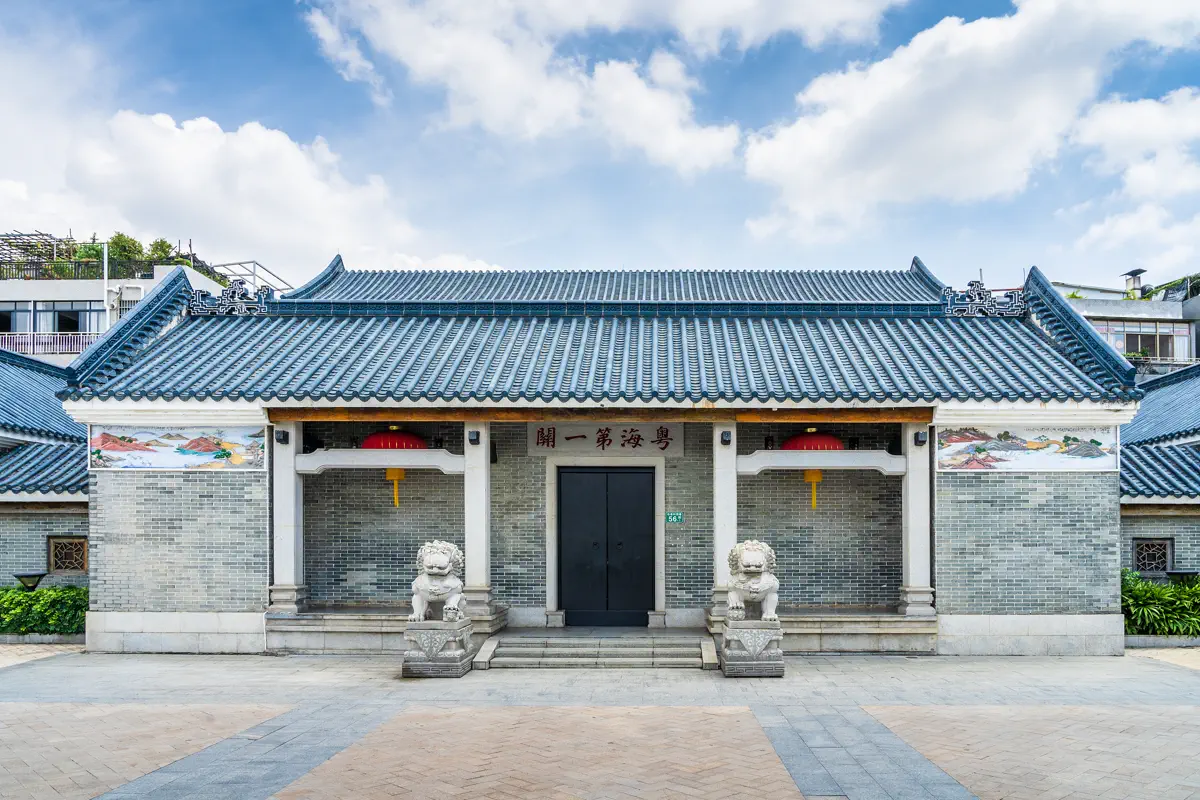
Constructed on the authentic historical site of the Qing Dynasty customs station, this walled grey-brick administrative compound features sweeping gabled roofs, stone guardian lions, and vivid Cantonese plaster reliefs. The permanent exhibits showcase imperial customs registers, silver bullion scales, antique porcelain export wares, and detailed scale models of European merchant frigates. Visitors can explore the recreated customs inspection hall where imperial clerks weighed tea crates and stamped clearance permits.
2. The Historic Wharf & Gothenburg Monument
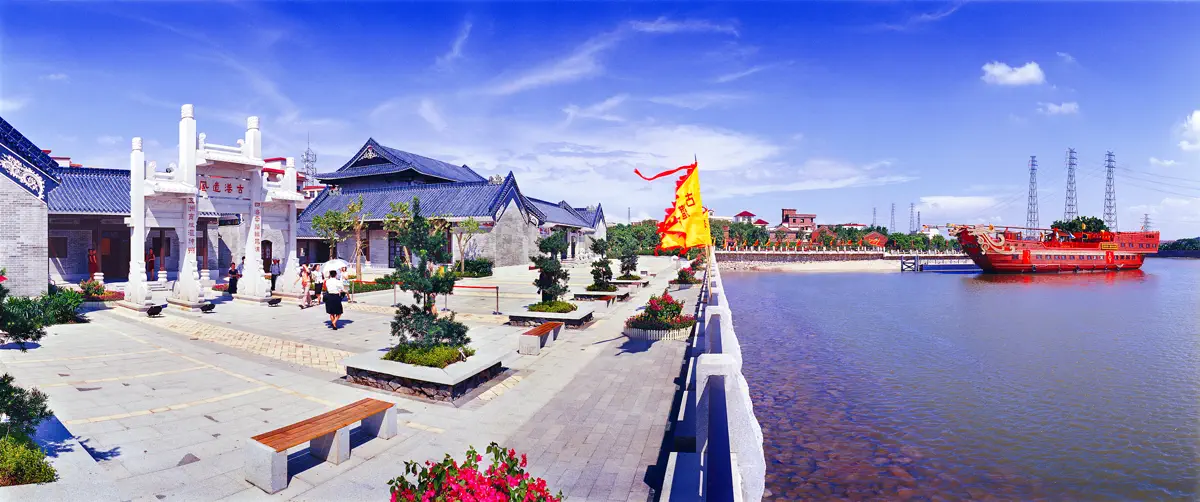
Stretching down to the water's edge are the authentic polished granite steps of the ancient ferry slipway, worn smooth by generations of stevedores loading tea boxes, raw silk bundles, and Jingdezhen porcelain. Beside the wharf stands the commemorative stone stele for the 2006 historic voyage of the reconstructed Swedish tall ship Götheborg, which retraced its 18th-century journey from Gothenburg to Guangzhou. Moored in the river bend is a full-sized replica of a traditional red-headed trading junk, its banners fluttering in the river breeze.
3. "Legacy of the Ancient Port" Stone Archway
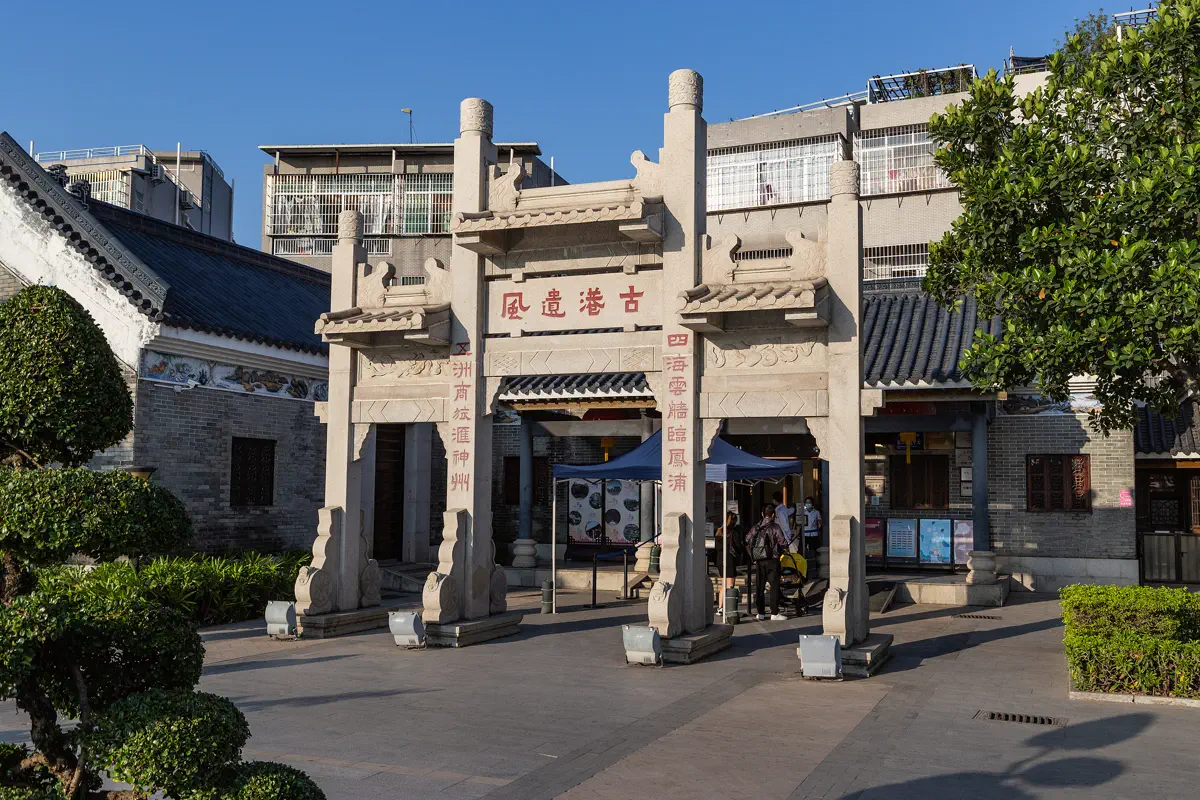
Standing tall in the waterfront plaza is the monumental four-pillar granite archway inscribed with the characters Gu Gang Yi Feng (古港遗风, Legacy of the Ancient Port). Couplets carved into the central stone columns celebrate the era when "sails from four seas arrived at Fengpu, and merchants from nine continents converged on China."
Exploring Huangpu Ancient Village: Oyster-shell walls and clan halls
Heading inland through the granite gatehouse brings you into Huangpu Ancient Village, originally founded in the Northern Song Dynasty under the name Fengpu (凤浦). Note for travelers: Do not confuse Huangpu Ancient Village in Haizhu District with the Whampoa Military Academy, which sits on Changzhou Island across the Pearl River in Huangpu District.
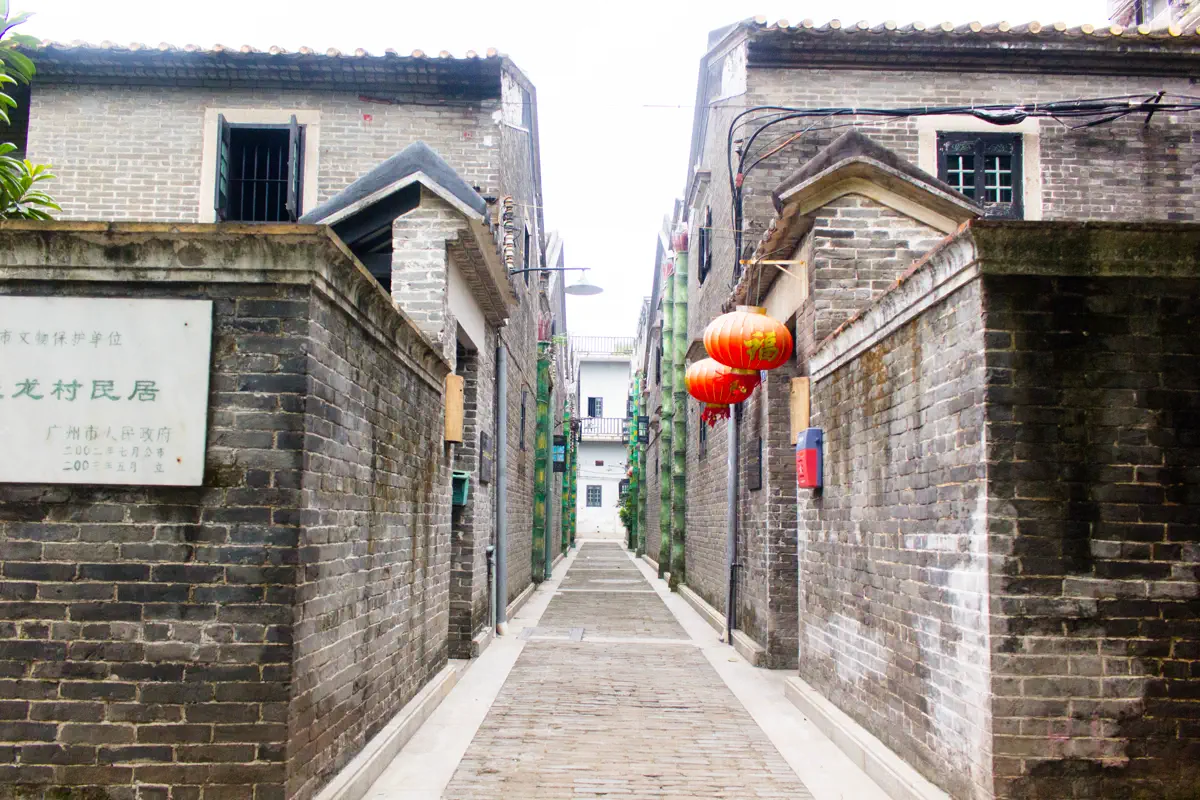
The village retains the quintessential "comb-style" layout (梳式布局) characteristic of the Lingnan water country. Long, straight granite-flagged alleys run parallel to each other like comb teeth, lined with traditional grey-brick courtyard homes. Scattered throughout the alleys are rare oyster-shell walls (蚝壳墙), built centuries ago by mixing sturdy sea-oyster shells with lime and brown sugar mortar. These distinctive textured walls are naturally fireproof, pest-resistant, and provide superior insulation against southern humidity.
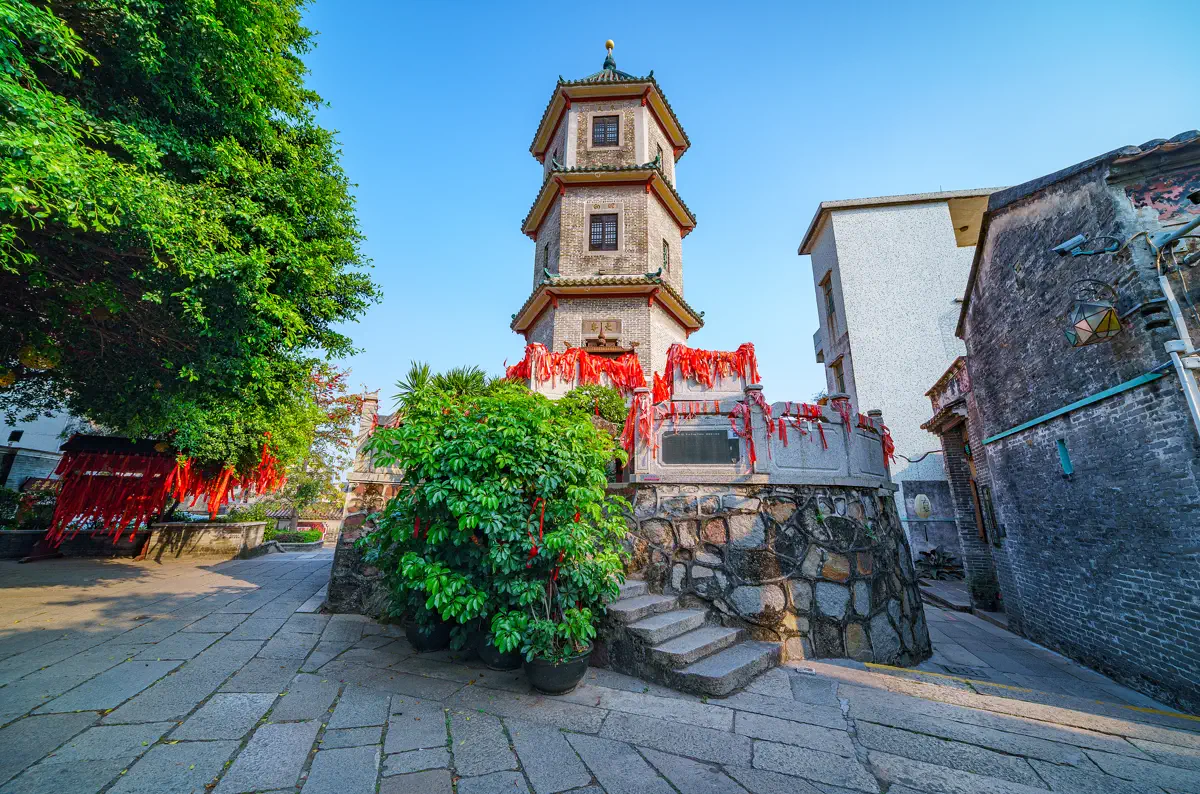
The village was home to four prominent clan families: Liang, Hu, Feng, and Luo. Over a dozen ancestral halls survive, distinguished by soaring wok-ear gables (镬耳山墙) and exquisite wood-carved eaves. Key highlights include:
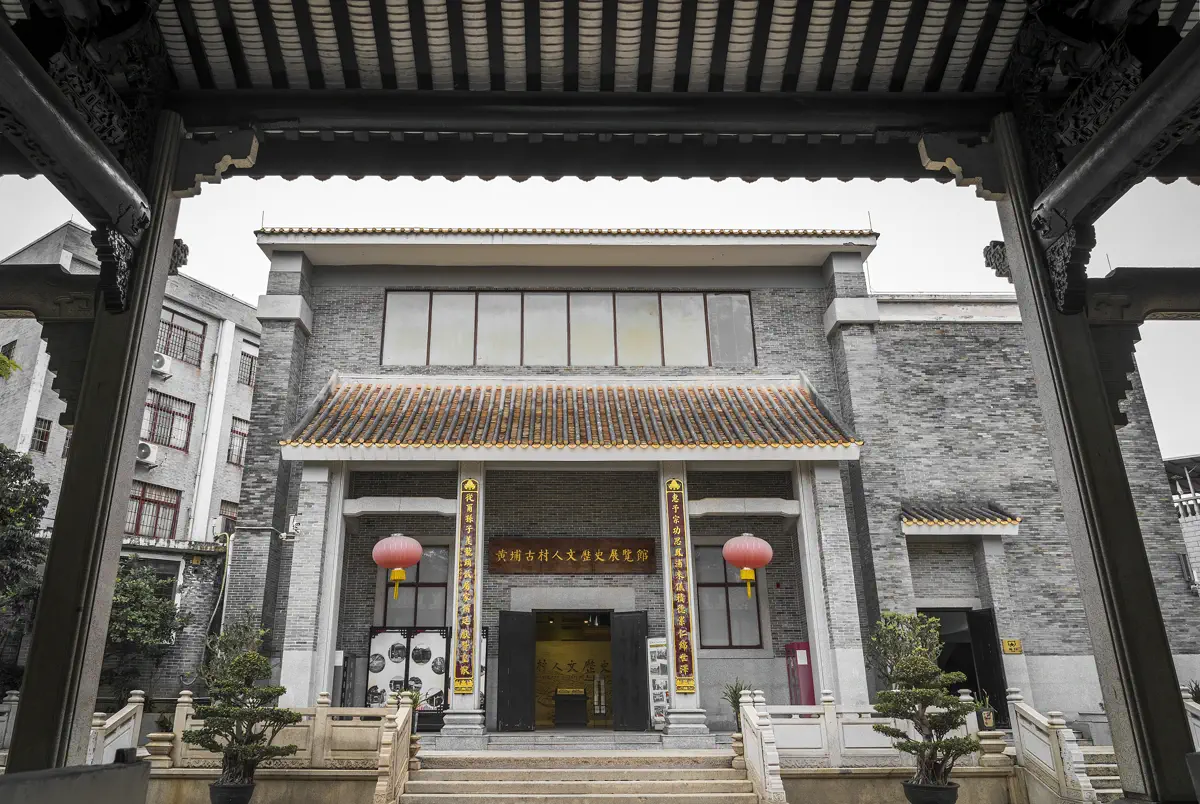
- Huangpu Village Museum (黄埔古村人文历史展览馆): Housed inside an expansive brick mansion with traditional courtyards, this free museum documents the lives of prominent village native sons.
- Liang Clan Ancestral Hall & Liang Jingguo: Honors Liang Jingguo, founder of the famous Tianbao Hong (天宝行) merchant firm within the Thirteen Hongs, who amassed a vast maritime fortune while funding local schools and charities.
- Minister Liang Cheng (梁诚): A village native who served as Qing imperial envoy to the United States and famously negotiated the remission of the Boxer Indemnity funds, which financed the establishment of Tsinghua University in Beijing.
- Hu Xuanze (胡璇泽, Whampoa Mr. Hoo): A 19th-century diplomat from the Hu clan who accomplished the unique feat of simultaneously serving as the official consul to Singapore for China, Great Britain, and Russia.
Legendary street food: Tingzai porridge and ginger milk curd
For Guangzhou locals, making a weekend pilgrimage to Huangpu Ancient Port is as much about culinary indulgence as history. The village is home to two legendary Cantonese food institutions:
1. Maoji Tingzai Porridge (猫记艇仔粥)
Decades ago, the owner operated a small wooden sampan on the Shiji River, cooking hot bowls of porridge for local fishermen. Now operating a bustling landside eatery, Maoji retains its beloved street-stall charm. Guests grab a table while staff wheel steaming stainless-steel carts laden with delicacies through the aisles. The signature Tingzai boat porridge features a rich, bubbling rice congee base flash-cooked with fresh squid, fish slices, deep-fried peanuts, crunchy dough fritters, jellyfish skin, pork skin, and shredded egg. Order it alongside a plate of wok-tossed sweet potato leaves (炒番薯叶) and stir-fried fresh river clams (炒蚬肉) for an unforgettable, incredibly affordable feast.
2. Naipo Ginger Milk Curd (奶婆姜撞奶)
Just across the small stone footbridge in Shiji Village lies Naipo, celebrated for authentic water buffalo milk desserts sourced from nearby Panyu Shawan pastures. When you order their signature Ginger Milk Curd (姜撞奶), spicy fresh-grated ginger juice is poured into the bottom of a porcelain bowl before steaming hot buffalo milk is poured from a height. Covered with a small saucer for two minutes, the natural enzymes cause the rich milk to curdle into a silky pudding firm enough to support a porcelain spoon. The delicate balance of sweet, creamy milk and warming ginger is heavenly. Don't miss their classic Double-Skin Milk (双皮奶) and crispy Deep-Fried Milk (炸牛奶).

Opening hours, tickets and practical visiting tips
Make the most of your visit with these essential logistical tips:
- Admission: Free admission. Huangpu Ancient Village and the port scenic belt are open public districts requiring no entry tickets or reservations.
- Museums: The Yuehai First Customs Memorial Hall and Huangpu Village Museum are both free to enter upon presenting your physical passport or Chinese ID card. Both museums open Tuesday to Sunday, 9:00am to 5:00pm (last admission 4:30pm) and are closed on Mondays.
- Best Time to Visit: Weekday mornings or early afternoons offer the most peaceful atmosphere for admiring the ancestral architecture. Weekends bring lively crowds of local foodies and family strollers.
- Recommended Duration: Plan for 3 to 4 hours to leisurely explore the customs museum, wander the ancestral village alleys, and enjoy a sit-down lunch at Maoji and Naipo.
- Local Fruit Treats: Along the river promenade, local villagers sell freshly picked Shiji carambola (starfruit), guavas, and crispy Cantonese chicken biscuits (鸡仔饼) straight from the oven.
Pair it with nearby Guangzhou attractions
Huangpu Ancient Port fits effortlessly into a broader southern Guangzhou itinerary:
- Pazhou Exhibition Island: Just 5 minutes west by bus or car, home to the Canton Fair Complex and modern commercial waterfront.
- Haizhu National Wetland Park (海珠湿地): Combine maritime history with nature walks at Haizhu Wetland Park, located just a short ride west along Xinjiao Road.
- Canton Tower & Tram: Take the Haizhu Tram (THZ1) from Wanshengwei along the riverfront to the base of Canton Tower for panoramic evening city views.
- Explore More of Guangzhou: Refer to our comprehensive Guangzhou travel guide, Guangzhou 3-4 days itinerary, and our guide on what to eat in Guangzhou to plan your complete trip.
Huangpu Ancient Port questions, answered
Is Huangpu Ancient Port the same as Whampoa Military Academy?
No. While both share the name "Whampoa" (Huangpu), they are distinct sites in different administrative districts. Huangpu Ancient Port is in Haizhu District on the south bank of the Pearl River, while Whampoa Military Academy is situated across the water on Changzhou Island in Huangpu District.
Is Huangpu Ancient Port free to visit?
Yes. The village and waterfront scenic area are entirely free and open to the public without advance reservations. The museums within the area are also free with valid ID.
What is the most famous food to try here?
The two must-try culinary landmarks are Maoji Tingzai Porridge (for seafood congee and stir-fried clams) and Naipo (for freshly curdled hot ginger milk and double-skin milk pudding).
How do I travel between Huangpu Ancient Port and Canton Tower?
Take bus 229 or cycle 8 minutes to Wanshengwei Metro Station. From there, board the scenic Haizhu Tram Line 1 (THZ1), which cruises directly along the riverfront to the foot of Canton Tower in about 30 minutes.