Guangzhou Attractions 9 min read
Haizhu Wetland Park: Urban Oasis, Birdwatching & Guide
Explore Haizhu National Wetland Park in Guangzhou. Discover boardwalk trails, Canton Tower lake views, seasonal blooms, tickets, and metro access.
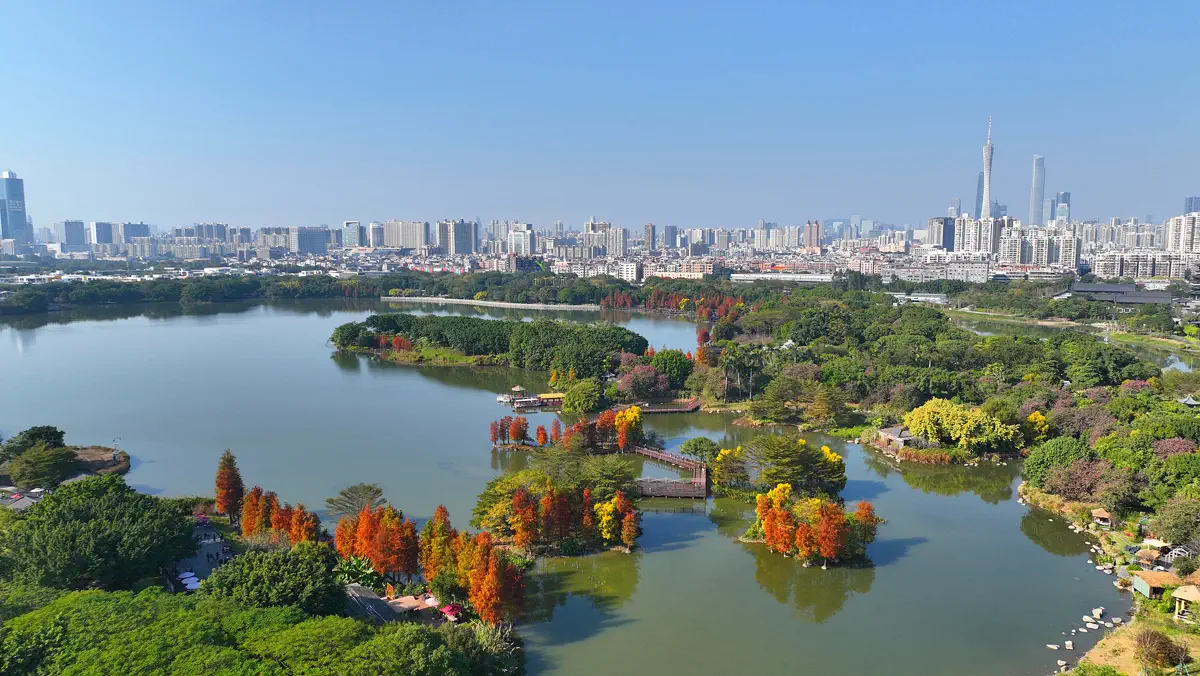
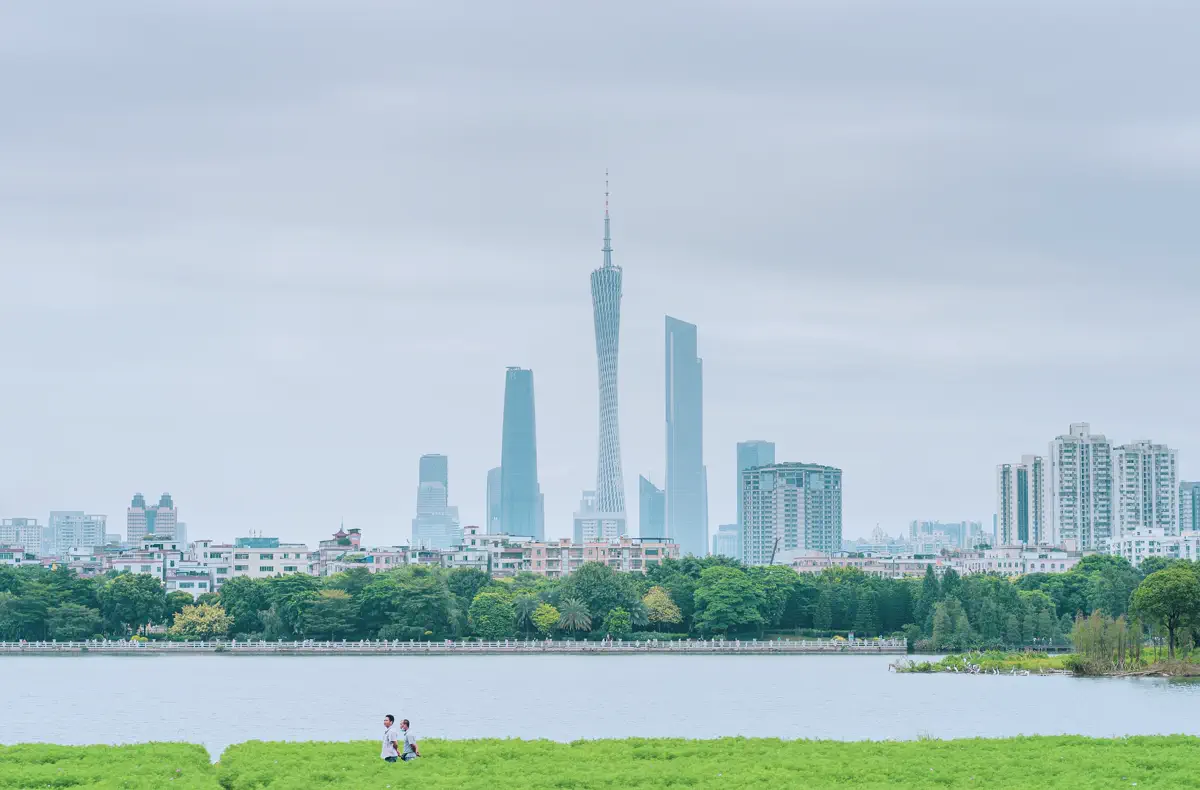
Gazing south from the dizzying observation decks of Canton Tower or the glass towers of Huacheng Square, visitors are often astonished by what unfolds along Guangzhou's central urban axis. Instead of concrete sprawls stretching endlessly to the horizon, the city's modern spine gives way to an enormous emerald sea of waterways, tidal channels, and ancient fruit groves. This is Haizhu National Wetland Park (海珠国家湿地公园), affectionately known by locals as the "Green Heart" and "Southern Lung" of Guangzhou.
Covering more than 1,100 hectares (over 16,500 Chinese mu) with 380 hectares of pristine open waters, it ranks as the largest central urban national wetland park in any Chinese megacity. Officially designated as a Wetland of International Importance under the Ramsar Convention in 2023, this massive sanctuary acts as a natural air filter, urban coolant, and flood mitigation buffer. For international travelers seeking a breath of fresh air, serene nature walks, or the ultimate postcard view of modern skyscrapers framed by lotus ponds, Haizhu Wetland delivers an unforgettable escape.
The Chinese name is 海珠国家湿地公园 (Hǎizhū Guójiā Shīdì Gōngyuán), often referred to simply as 海珠湿地 (Hǎizhū Shīdì). The main gate address for Phase I is No. 168 Xinjiao Middle Road, Haizhu District (广州市海珠区新滘中路168号). Use the Chinese characters when searching rides on Didi or consulting metro route planners.
How to get to Haizhu Wetland Park
Situated in southern-central Haizhu District, the park is smoothly connected to Guangzhou's rapid metro transit system. Because the park encompasses multiple separate entry sectors, choosing the correct station depends on which section you intend to explore first:
- For Haizhu Lake (Free Entry): Take Metro Line 3 to Datang Station (大塘站). Take Exit B. Walk directly east for roughly 100 metres, and you will arrive at the main entrance gate of Haizhu Lake Park.
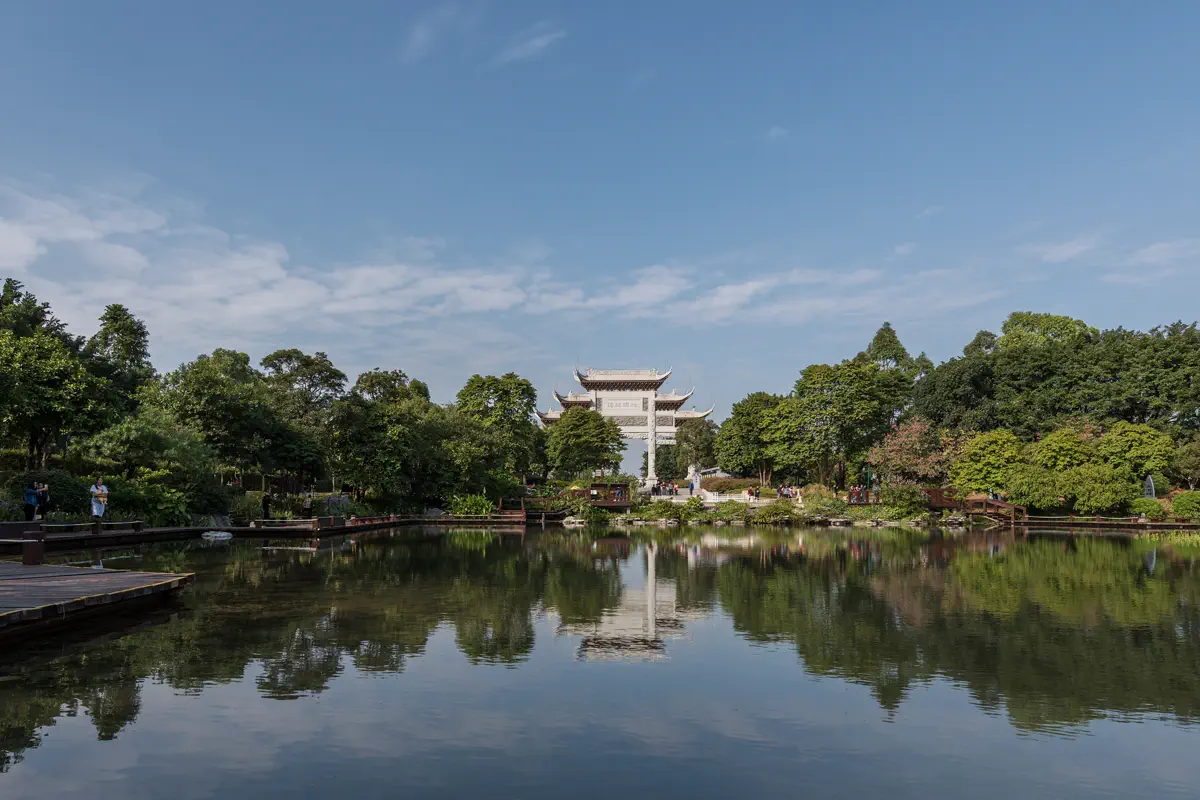
- For Wetland Phase I (North Gate, Paid Area): Take Metro Line 18 (the express metro line) to Longtan Station (龙潭站). Take Exit D. Walk east along Xinjiao Middle Road for approximately 500 metres (around 7 minutes) to reach the grand stone archway of the North Gate. Alternatively, exit Datang Station (Line 3, Exit B) and ride a shared bicycle east for 5 minutes.
- For Wetland Phase II (South Gate, Deep Nature Area): Take Metro Line 3 to Lijiao Station (沥滘站), then hail a 5-minute taxi or transfer to local shuttle bus routes heading toward Haizhu Wetland South Gate.
- By Taxi or Didi: A direct ride from downtown Tianhe or Yuexiu takes roughly 15 to 25 minutes (costing ¥25 to ¥40). Set your navigation destination to “海珠湖公园” for the lake, or “海珠湿地-北门” for the botanical trails of Phase I.
From fruit orchards to a Ramsar wetland of international importance
Long before Guangzhou evolved into a global trading metropolis, the alluvial islands of the Pearl River delta were shaped by tidal ebb and flow. Generations of Cantonese farmers developed an ingenious, self-sustaining agricultural method known as the dike-pond system (基塘农业). Farmers dug low-lying wetlands into fishponds, piling the excavated fertile silt onto embankments to plant flood-tolerant tropical fruit trees.
For centuries, this vast agricultural delta was celebrated as the "Ten-Thousand-Mu Orchard" (万亩果园). It yielded prized cultivars of Lingnan heritage fruits, including succulent Shixia longans, fragrant lychees, carambola starfruits, and Huangpu guavas. As Guangzhou expanded rapidly southward in the late 20th century, urban developers cast an eager eye on this prime real estate. Recognizing the catastrophic ecological loss that paving over the orchards would bring, the municipal government enacted strict ecological red lines, preserving the entire basin for public conservation.
Through careful hydrological engineering, silted ancient waterways were reopened to natural Pearl River tidal forces. Today, the restored wetland functions as an ecological sanctuary of global renown. Over 190 bird species have been recorded here, alongside newly discovered insect species such as the Haizhu flea beetle. During winter migratory seasons, thousands of wild waterfowl, including grey herons, spot-billed ducks, and endangered yellow-breasted buntings, roost among its tidal shallows.
Park zones: Haizhu Lake vs. Wetland Phase I & II
First-time visitors frequently confuse Haizhu Lake with the broader wetland park. Understanding the distinct character of each zone helps you allocate your time wisely:
1. Haizhu Lake (海珠湖) - Free & Open Access
Positioned on the northwest boundary right beside Datang Metro Station, Haizhu Lake is a massive man-made water reservoir spanning roughly 150 hectares. It is completely free to enter, features paved walking loops of over 2.6 kilometres, and provides unobstructed panoramic sightlines. It is the premier gathering place for morning runners, weekend family picnics, and sunset photography.
2. Wetland Phase I (海珠湿地一期) - Heritage Water Towns & Flower Gardens
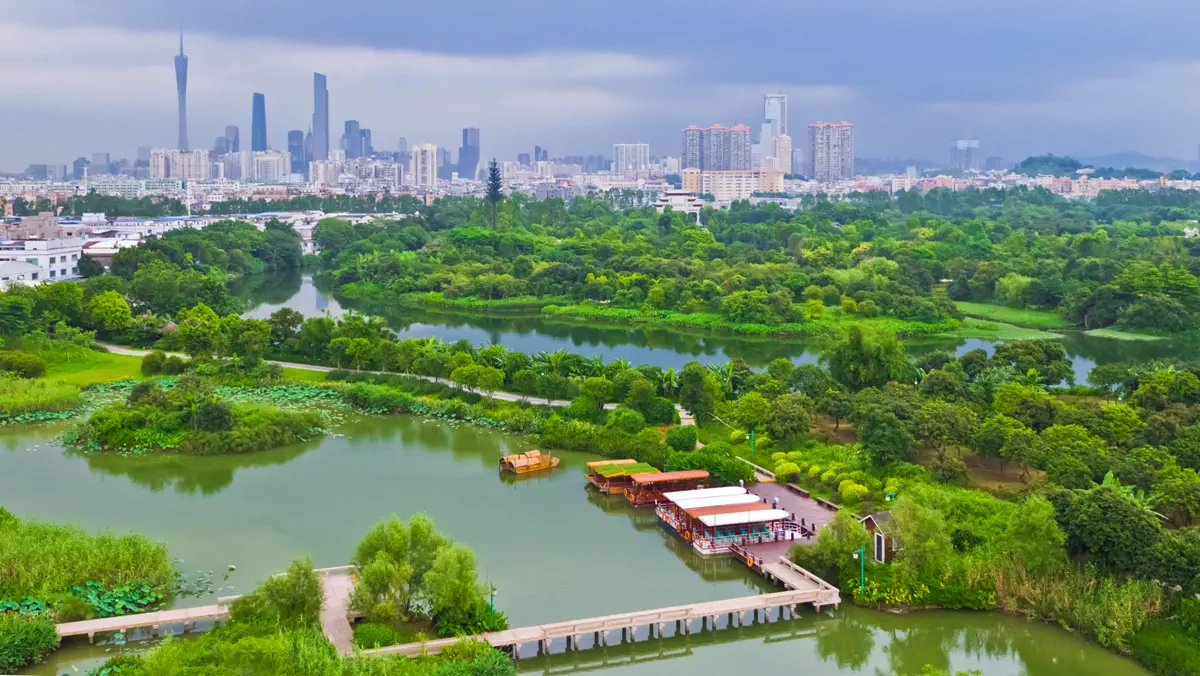
Located immediately east across Xinjiao Road, Phase I is the paid conservation core. It blends Lingnan heritage architecture with manicured ecological trails. Entering through the magnificent white stone archway, visitors encounter oyster-shell walls, wok-ear gables, shaded arbor walkways, and endless rows of century-old fruit trees. This sector hosts the main seasonal flower exhibitions and pleasure boat docks.
3. Wetland Phase II (海珠湿地二期) - Deep Wilderness & Bird Reserves
Extending south into the tidal wetlands, Phase II is intentionally maintained in an untamed, wilderness state. Here, paved boardwalks give way to secluded crushed-stone pathways winding through dense mangrove swamps, reeds, and tidal creeks. Because visitor density is much lower, wildlife thrives here. It is ideal for quiet contemplative hikes, macro photography, and serious birdwatching.
The iconic Canton Tower skyline view across the water
The single most renowned image associated with Haizhu Wetland is the postcard vista known locally as "Tower by the Flowerbed" (花畔塔影). Standing on the timber viewing promenade on the northern shore of Haizhu Lake, your eyes follow a breathtaking visual progression:
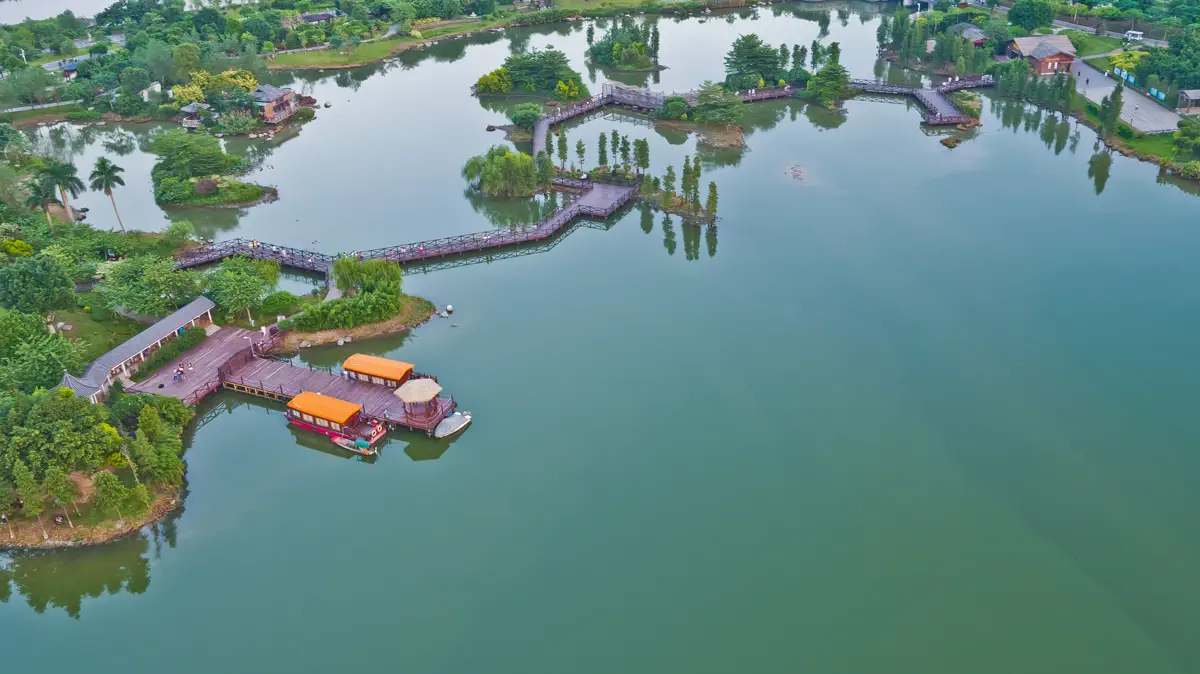
In the immediate foreground, vibrant seasonal flower fields sway in the breeze. Beyond the flowers lies the glassy surface of the lake, punctuated by miniature ecological islets where snowy egrets nest in willow branches. On the distant northern horizon, the soaring 600-metre spire of Canton Tower rises majestically alongside the East and West Towers of the Tianhe Central Business District. On clear mornings or golden-hour sunsets, when the modern skyline casts crisp reflections across the peaceful waters, you witness one of the most stunning examples of urban harmony in modern China.
Seasonal flowers and boardwalk trail experiences
Thanks to Guangzhou's warm subtropical climate, Haizhu Wetland blooms with vibrant colors throughout the entire year:
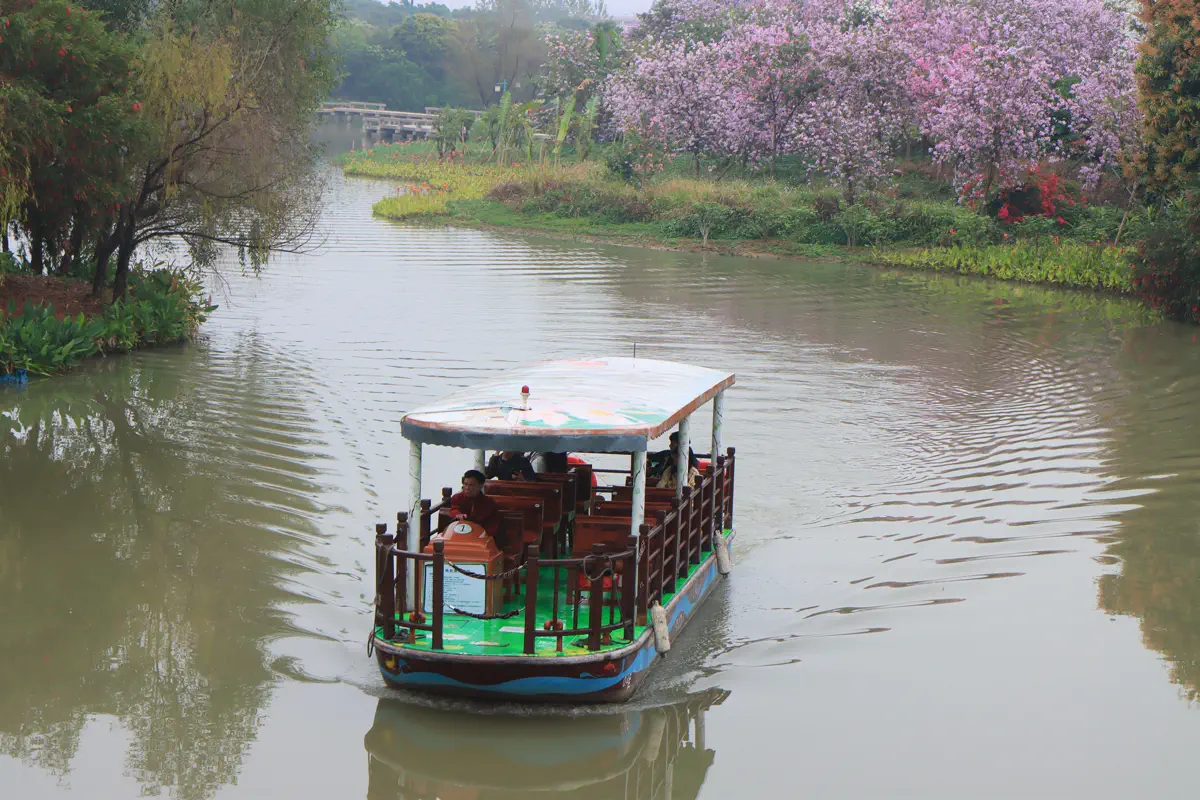
- Spring (February to April): Over three kilometres of Chinese redbud and pink bauhinia trees burst into bloom along the banks of Shiliugang River, showering waterways with pastel petals. Flocks of yellow tabebuia (golden trumpet trees) add dazzling golden accents.
- Summer (June to August): Dozens of acres of lotus ponds across Phase I transform into a sea of emerald lily pads and fragrant pink blossoms, accompanied by rolling fields of bright sunflowers.
- Autumn (September to November): Massive fields of sulfur cosmos and Persian chrysanthemums turn the open meadows into undulating carpets of warm gold and orange, attracting thousands of butterflies.
- Winter (December to January): Stands of bald cypress (落羽杉) lining the lake shores turn a rich rust-red and copper color, creating a striking northern-autumn aesthetic beneath blue southern skies.
Traditional boat cruises and urban birdwatching
While walking the extensive pedestrian trails is rewarding, exploring by water reveals the park from an intimate historical perspective. At the piers of Phase I, travelers can board electric wooden pleasure boats with carved balustrades and traditional silk lanterns. As the boat glides silently along tidal channels, dense fruit tree branches form a natural tunnel overhead, filtering sunlight into dancing reflections on the emerald water.
For wildlife enthusiasts, the park features specialized bird-viewing boardwalks and wooden observation hides with viewing slits. Bring binoculars or a telephoto camera lens: patient observers will easily spot great egrets stalking minnows in the mudflats, common moorhens swimming among reeds, and kingfishers diving like blue arrows into clear shallows.
Opening hours, tickets and practical visiting tips
Keep these practical guidelines in mind when arranging your trip:
- Tickets & Pricing:
- Haizhu Lake: Free admission, no booking required.
- Wetland Phase I & II: Regular adult ticket is ¥20 per person. Half-price tickets (¥10) are available for full-time students and seniors aged 60–64 with valid ID. Free entry for children under 6 (or under 1.2m) and seniors aged 65+. Tickets can be booked on the official WeChat mini-program ("海珠湿地") or purchased at the North Gate ticket windows.
- Operating Hours:
- Haizhu Lake: 7:30am to 9:30pm daily (last entry 9:00pm).
- Wetland Phase I & II: 9:00am to 5:00pm daily (last entry 5:00pm). Important: The paid wetland zones are closed all day on Mondays for ecological restoration and maintenance, unless the Monday coincides with a national public holiday.
- Footwear & Sun Protection: The combined park area is immense. Wear supportive walking or running shoes. Much of the trail passes through open wetlands, so pack sunglasses, a sun hat, and sunscreen.
- Mosquito Repellent: Because the wetland preserves lush standing water bodies, mosquitoes and midges can be active, particularly during humid spring and summer afternoons. Carry insect repellent spray.
- Refreshments: Light vending kiosks, bottled water machines, and clean restrooms are spaced at regular intervals along main paved routes, but food options inside the paid reserve are limited. Plan meals before or after entering.
Nearby attractions in Haizhu District
Pairing your wetland visit with neighboring landmarks creates an enriching day in southern Guangzhou:
- Xiaozhou Village (小洲村): Located just a 10-minute bike ride east of the wetland, this historic water town boasts winding stone alleyways, ancient banyan trees, oyster-shell houses, and quaint artistic cafes along the riverbanks.
- Canton Tower & Pearl River: Head just four stops north on Metro Line 3 to reach Canton Tower and the waterfront boarding piers for a sunset Pearl River Night Cruise.
- Ersha Island (二沙岛): Hop over to the nearby river island of Ersha Island to enjoy green sculpture lawns, Xinghai Concert Hall, and sweeping riverfront vistas.
- Itinerary Planning: Check out our curated Guangzhou travel guide and Guangzhou 3-4 days itinerary to seamlessly combine urban ecological escapes with historical sites and authentic Cantonese food tours.
Haizhu Wetland Park questions, answered
Is Haizhu Wetland Park free?
Haizhu Lake Park is completely free for all visitors. The main protected conservation areas (Wetland Phase I and Phase II) require an admission ticket of ¥20 for adults, with discounts for students and seniors.
Which metro station is closest to the park?
For Haizhu Lake, take Metro Line 3 to Datang Station (Exit B), which is just 100 metres from the park gates. For Wetland Phase I (North Gate), take Metro Line 18 to Longtan Station (Exit D) and walk 7 minutes east.
Is the wetland open on Mondays?
Haizhu Lake is open every day. However, Wetland Phase I and Phase II are closed all day on Mondays for ecological rest and maintenance, except on Chinese statutory public holidays.
Can I rent bicycles inside the wetland?
Public shared bicycles (like Meituan and Hello Bike) can be ridden up to the outside entrance plazas, but private or shared bicycles are generally not permitted inside the pedestrian nature trails to protect walkers and wildlife. Sightseeing electric shuttle carts are available inside the paid reserve for a small fee.
How long should I spend at Haizhu Wetland Park?
If you only plan to stroll around Haizhu Lake and capture photos of the Canton Tower skyline, allow 1.5 to 2 hours. If you wish to enter Phase I and Phase II for an in-depth ecological hike or boat ride, budget 3 to 4 hours.