Guangzhou Attractions 8 min read
The Museum of the Nanyue King Mausoleum
The Guangzhou Nanyue King Museum is not just a treasure house of artifacts; it's a window into the origins of Lingnan civilization. Through its "in-situ protection + artifact display" dual model, it allows visitors to touch the historical threads of two millennia ago.
Exploring the Architecture and History of the Nanyue King Museum
Located at 867 Jiefang Bei Lu (解放北路), Yuexiu District, Guangzhou, the Museum of the Nanyue King Mausoleum showcases a remarkable archaeological discovery. Originally opened in 1988 as the Museum of the Western Han Dynasty Nanyue King's Tomb, it merged in 2021 with the Nanyue Kingdom Palace Museum to form today's comprehensive institution with two key sites: the Mausoleum Exhibition Area and Palace Exhibition Area.
Key Facts:
- Born from a 1983 construction discovery on Xianggang Hill (象岗山)
- Houses a perfectly preserved Han Dynasty royal tomb 20m underground
- "Emperor Wen's Xingxi" gold seal identified King Zhao Mo (grandson of Qin general Zhao Tuo)
- Won 6 major architecture awards for its innovative design
- UNESCO World Heritage Tentative List ("Maritime Silk Road" site)
- Ranked among Guangzhou's Top 10 Cultural Landmarks
Modern Meets Ancient:
The museum's design features:
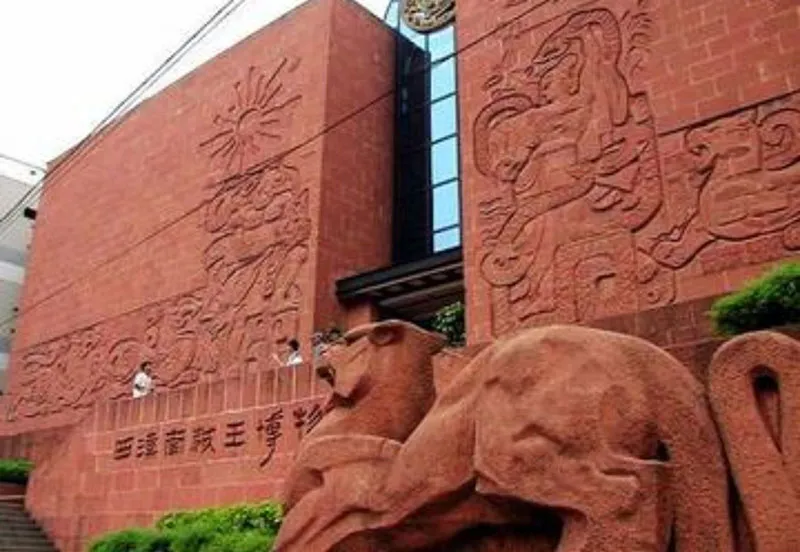
Glass canopy symbolizing ancient burial mounds while protecting artifacts
Hillside integration with red sandstone walls matching the tomb
Three connected spaces: Exhibition Building, Tomb Protection Zone, and Main Hall
A Visitor's Guide to the Guangzhou Nanyue King Museum
Planning your visit to this historical treasure trove requires knowing its opening hours and how to get there. The museum is open Tuesday to Sunday, 9:00-17:30 (last entry 17:00), closed every Monday (except national holidays). Book on WeChat "南越王博物院". The tomb's lower chamber is a separate, limited reservation and is not included in the ordinary ticket. Note that the Mausoleum Exhibition Area and the Palace Site Exhibition Area (316 Zhongshan 4th Road / 中山四路) are about 3 kilometers apart; it's recommended to plan visits to each separately.
Ticket Information:
| Ticket Type | Mausoleum Exhibition Area | Palace Site Exhibition Area |
|---|---|---|
| Full Price | 10 yuan | Free (WeChat reservation) |
| Half Price | 5 yuan | Free (WeChat reservation) |
| Free Entry | Seniors over 65, minors under 18, and other listed groups | Free |
2026 free days at the mausoleum (book ahead; special exhibitions and the tomb's lower chamber are not included): 14 January, 11 February, 11 March, 15 April, 18 May (International Museum Day), 19 May (China Tourism Day), 13 June (Cultural and Natural Heritage Day), 15 July, 12 August, 16 September, 14 October, 11 November, and 16 December. Nurses, doctors, teachers, and sanitation workers can claim a free ticket on their professional days with a work ID.
Getting There is Very Convenient:
- Metro: Mausoleum Area – Exit E of Yuexiu Park Station (越秀公园站), Line 2; Palace Area – Exit F of Gongyuanqian Station (公园前站)
- Bus: Multiple routes serve Yuexiu Park Station (越秀公园站), Jiefang North Road Intersection Station (解放北路口站), Panfu Road Station (盘福路站)
- Driving: Parking recommended at Ruian Guangzhou Center Parking Lot (瑞安广州中心停车场, approx. $1.1/hour)
The museum offers rich facilities, including free luggage storage, wheelchair/stroller rental, reading glasses, Braille introductions, etc. For special services (like sign language guided tours), it's advised to call ahead 2-7 days in advance (020-36182920).
Delving into the Mausoleum Exhibition Area: Wonders of the Tomb
The core appeal of the Mausoleum Exhibition Area is the chance to personally step into a 2,000-year-old imperial tomb. This is the largest and best-preserved Han Dynasty painted stone-chambered tomb discovered in the Lingnan region to date, constructed from over 750 pieces of red sandstone, its layout resembling an inverted "士" character. Passing through the tomb passage into the front chamber, the faint remnants of red and black swirling cloud patterns on the door still speak of its former solemnity.
The tomb chambers are divided into front and rear sections, perfectly replicating the Nanyue King's palace living quarters:
- Front Section (South): Symbolizing the court and banquet halls, including the Front Chamber, East Side Chamber (banquet/music space, yielding many musical instruments and wine vessels), West Side Chamber (storage room, piled with treasures and medical supplies).
- Rear Section (North): Private living quarters, including the Main Coffin Chamber (where Zhao Mo rested, containing the silk-threaded jade burial suit and gold seal), East Side Chamber (burial area for concubines), West Side Chamber (servant quarters), and Rear Storage Chamber (storing food vessels and ingredients).
Visiting Tips:
- The tomb chambers are narrow with limited airflow; try to avoid peak times (especially weekends/holidays) to ensure a chance to descend into the tomb.
- Free guided tours start daily at 09:30; an excellent opportunity to deeply understand the tomb structure.
- Allocate at least 2 hours to explore the area thoroughly; history enthusiasts may need 3 hours or more.
Palace Site Exploration: The Heart of the Nanyue Kingdom
The Palace Site Exhibition Area is located at 316 Zhongshan 4th Road (中山四路), forming a complete picture of Nanyue Kingdom history together with the Mausoleum Area. This was once the political nerve center of the Nanyue rulers, and the discovery of the site holds irreplaceable value for studying the early urban development of Lingnan.
The area is mainly divided into four buildings:
- Building 1: Two-story structure. Ground floor displays the Meandering Stone Channel (曲流石渠) site – remnants of China's earliest imperial garden water feature. The upper floor hosts the "Guangzhou Ethnic Community" historical exhibition, tracing ethnic integration from the Nanyue Kingdom to the present.
- Building 2: Site of the palace hall's pillar bases, whose architectural style reveals a fusion of Central Plains and Yue aesthetics.
- Building 3: Main exhibition hall. Its three floors systematically present the historical evolution of the Nanyue Kingdom and unearthed artifacts, key to understanding the palace complex layout.
- Building 4: Well Exhibition Hall (check opening times in advance).
In 2016, this site was included in China's World Heritage Tentative List as a key component of "Maritime Silk Route: Chinese Historical Sites," confirming Guangzhou's unique status as a port city thriving for two millennia. The Palace Site Exhibition Area not only presents the grandeur of the palaces but also vividly recreates royal daily life and court systems through artifacts like utensils and architectural components. The well-landscaped grounds also make the visit more comfortable.
Treasures of the Museum & Must-See Artifacts
The Nanyue King Tomb yielded over 10,000 artifacts. More than 200 are rated as National Grade One Cultural Relics, and two are among the first batch of national treasures prohibited from leaving China for exhibition. These treasures are not only materially precious but also carry rich historical information:
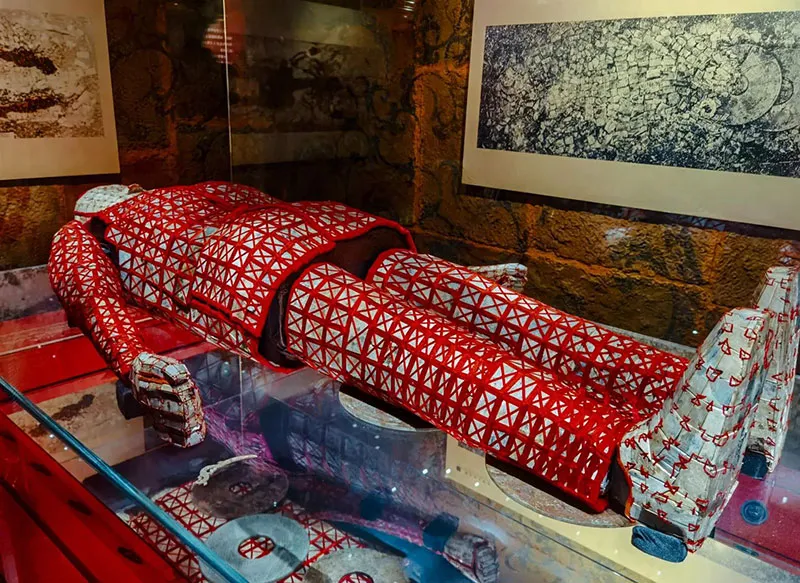
- Silk-Threaded Jade Burial Suit (丝缕玉衣): The only intact, fully formed silk-threaded jade suit discovered in China to date. Measuring 1.73 meters long, it consists of 2,291 pieces of green jade threaded together with silk and linen, taking three years to restore. Unlike the more common gold or silver-threaded suits, its unique material reflects the Nanyue Kingdom's adaptation of burial customs to local conditions.
- "Emperor Wen's Xingxi" Gold Seal (文帝行玺金印): The largest Western Han gold seal ever excavated in China (148.5g, 98% pure). Its imposing dragon knob and inscription confirm the tomb owner's identity and provide direct evidence of the Nanyue Kingdom's claim to imperial status. Its discovery overturned traditional understanding of Han Dynasty feudal lords' seal specifications.
- Double-Ring Dragon and Phoenix Pendant (透雕龙凤纹重环玉佩): The inspiration for the museum's logo. Found over the tomb owner's right eye, its double-ring structure features a dragon in the inner ring facing a phoenix in the outer ring, symbolizing "auspicious union of dragon and phoenix." Its exquisite craftsmanship represents the pinnacle of Han Dynasty jade carving.
- Horn-Shaped Jade Cup (角形玉杯): A unique piece among Han tombs, among the first batch prohibited from export. Carved from a single piece of green jade into a rhinoceros horn shape, its intricate decorations fuse Chinese and Western elements. Experts speculate its form may have been influenced by Near Eastern "rhyton" cups, witnessing cultural exchange along the Maritime Silk Road.
- Persian Silver Box (波斯银盒): A highly significant imported artifact. Its garlic-head shaped convex petal patterns and repoussé technique are typical of Persian gold and silverware. After arriving in China, it was fitted with bronze ring feet and a lid knob. Residue of medicinal pills found inside reveals information about ancient pharmaceutical exchange and royal healthcare.
In the special exhibitions, the Collection of Ceramic Pillows Donated by Mr. and Mrs. Yang Yongde (杨永德伉俪捐赠瓷枕) is also not to be missed. Over 200 ceramic pillows from the Tang to Yuan dynasties form a rare, high-quality thematic collection in China, showcasing the evolution of ceramic art and social life.
Planning Your Nanyue Cultural Journey
When incorporating the Guangzhou Nanyue King Museum into your itinerary, smart planning greatly enhances the experience. Although the Mausoleum and Palace Site areas are 3 km apart, they are easily connected via Metro Line 2 (Yuexiu Park Station and Gongyuanqian Station). Allocate half a day (5 hours) for a comprehensive visit.
Recommended Combined Routes:
- History & Culture One-Day Tour: Morning: Mausoleum Area (3h) → Yuexiu Park (越秀公园 - Five-Ram Stone Sculpture / 五羊石雕, Guangzhou Museum / 广州博物馆) and Sun Yat-sen Memorial Hall → Afternoon: Palace Site Area (2h) → Evening: Stroll Beijing Road Pedestrian Street (北京路步行街 - overlays with historical road strata).
- Lingnan Architecture Art Line: Chen Clan Ancestral Hall (陈家祠 - peak of Lingnan decorative arts) → Palace Site Area (ancient palace architecture) → Xiguan Yongqing Fang (西关永庆坊 - traditional residential neighborhood).
- Family Study Half-Day Tour: Mausoleum Area (children's interactive zone + tomb descent experience) → Palace Site Area (archaeological simulation + Meandering Stone Channel site) → Enhance understanding with free guided tours (Mausoleum: 09:30 / Palace: 15:30).
Practical Tips:
- Souvenir lovers can get free stamps at the service desks in Building 1 and Building 3 of the Palace Site Area. Building 3 also has souvenir coin ($2.7-$7+) and fridge magnet vending machines.
- Photography enthusiasts should bring a wide-angle lens; low light in the tomb allows capturing architectural details, but flash is strictly prohibited to protect artifacts.
- Avoid Mondays (closed). Book tickets in advance for holidays. Bring water in summer; sunscreen recommended for walking between sites.
Why the Nanyue King Museum Deserves a Special Visit
Experience 2,000-year-old Lingnan history through:
- China's only accessible Han Dynasty imperial tomb
- Two complementary sites showing royal life and death
- World-class artifacts like the silk-threaded jade suit
- UNESCO-recognized maritime history
Stand before the Double-Ring Dragon and Phoenix Pendant; the jade's gleam transcends two millennia.
The intertwined dragon and phoenix embody King Zhao Mo's longing for eternity,
They are also the earliest cultural genetic code of the Lingnan land.Book Your Journey Through Time:
Search WeChat Official Account "南越王博物院" (Nanyuewang Bowuyuan),
Mausoleum Area ticket 10 yuan, Palace Site Area free with reservation.
A two-thousand-year-old Lingnan legend awaits your discovery.