Guangzhou Attractions 11 min read
Guangdong Museum: The Ultimate Visitor Guide to Guangzhou's Cultural Treasury
Plan your visit to the Guangdong Museum in Guangzhou's Zhujiang New Town. Complete guide covering the Moonlight Treasure Box architecture, Chaozhou woodcarving, Duan inkstones, opening hours, tickets, and travel tips.
Guangdong Museum Overview and Architecture
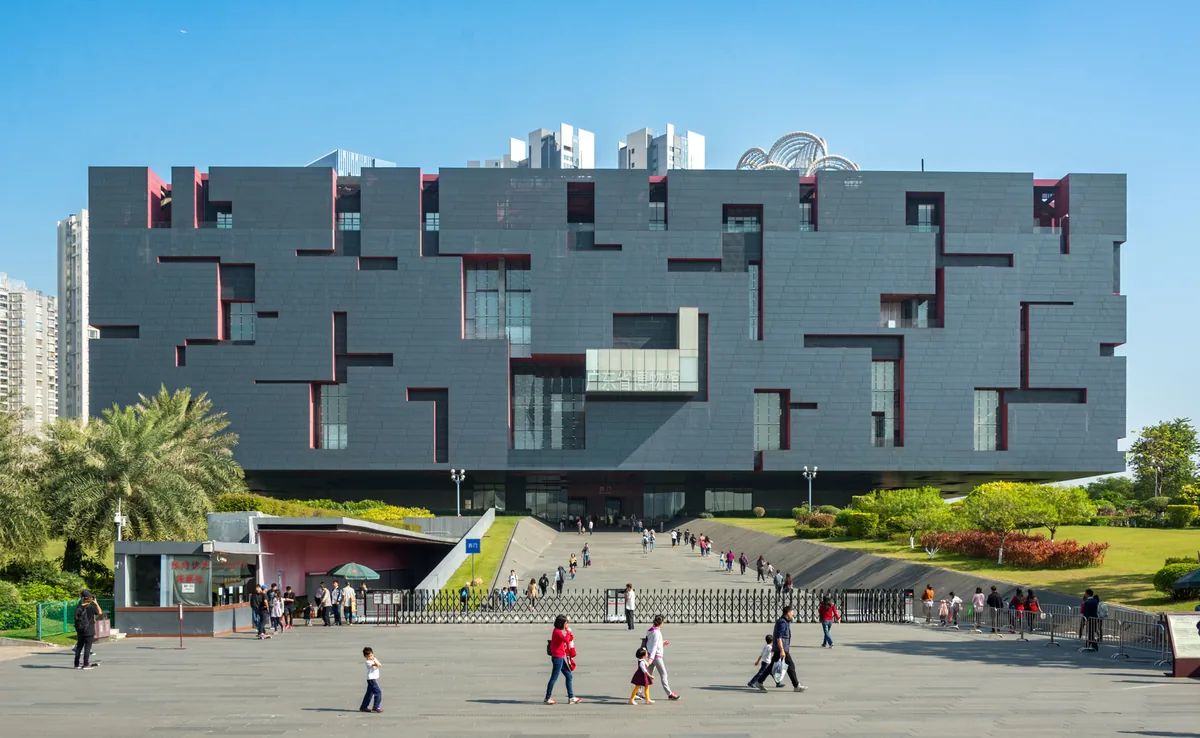
Standing prominently on the eastern flank of Huacheng Square in the heart of Tianhe's Zhujiang New Town CBD, the Guangdong Museum (广东省博物馆) serves as South China's foremost comprehensive cultural repository. Flanked by the Guangzhou Opera House, the Guangzhou Library, and looking across the Pearl River toward the soaring Canton Tower, this national first-class museum preserves over 320,000 precious artifacts spanning ancient archaeology, Cantonese intangible folk arts, imperial porcelain, and natural history specimens.
Unlike the subterranean archaeological burial site of the Nanyue King Museum or the communal lineage architecture of the Chen Clan Ancestral Hall, the Guangdong Museum represents a state-of-the-art monumental civic institution. It showcases the grand historical continuum of Lingnan civilization, from prehistoric human settlements in South China to the maritime zenith of the Canton Thirteen Hongs trade system.
The Moonlight Treasure Box Design
Designed by renowned Hong Kong architect Rocco Yim (许李严), the museum's exterior draws conceptual inspiration from traditional Lingnan lacquer jewelry containers, commonly nicknamed the "Moonlight Treasure Box" (月光宝盒), as well as the intricately carved concentric ivory puzzle spheres of Canton. The building facade alternates dark grey composite panels with deep red aluminum plates and perforated fritted glass panels. As natural daylight shifts across the central green axis, the geometric cutouts create dramatic reflections, evoking an antique container slowly unveiling its precious contents to the urban landscape.
Suspended Steel Structure and Space
Covering a total building area of 67,000 square meters, the structure features a pioneering column-free suspended steel truss structural frame. Huge diagonal steel tension members support the upper exhibition halls from an overhead perimeter truss ring, suspending the galleries mid-air around a massive 22-meter-tall central atrium. This engineering feat eliminates cumbersome interior load-bearing columns across the vast galleries, granting curators flexible display geometries and visitors unobstructed panoramic vistas through wide internal sky-bridges.
Key Permanent Galleries and National Treasures
The museum organizes its primary collections across the 3rd and 4th floors. To make the most of your visit, take the grand escalators directly from the ground floor atrium up to the 4th floor, touring the galleries downward to minimize crowd interference.
Chaozhou Gold-Lacquered Woodcarving Gallery (3rd Floor)
Ranked alongside Zhejiang Dongyang woodcarving and Yueqing boxwood carving as one of China's top three woodcarving traditions, Chaozhou gold-lacquered woodcarving (潮州金漆木雕) is celebrated for its multi-tiered openwork carving, lifelike figurative compositions, and shimmering pure gold leaf gilding. At the gallery entrance, a life-size reconstructed Chaozhou ancestral hall doorway greets visitors, its lintels, brackets, and beams glowing with golden resplendence.
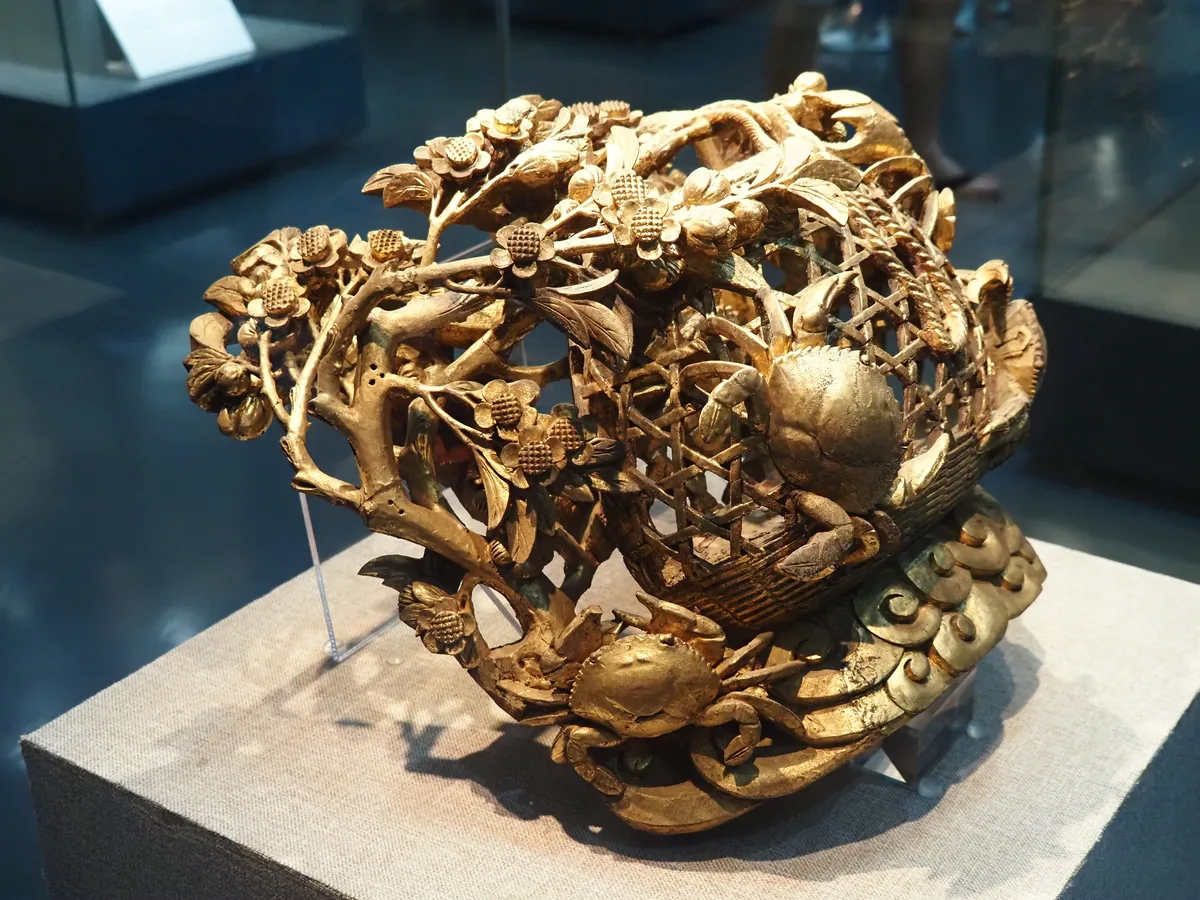
- Gold-Lacquered Pierced Crab Basket Beam Ornament (清代金漆通雕蟹篓梁托): A masterpiece of Chinese pierced openwork carving. Master craftsmen sculpted an entire bamboo-woven basket from a solid block of camphor wood. Inside and outside the open woven mesh crawl vivid freshwater crabs, wriggling lobsters, and curling waterweeds. Originally serving as an architectural bracket under temple beams, it combines load-bearing structural support with ventilation and exquisite decorative art.
- Grand Gold-Lacquered Ancestral Shrine (清代金漆木雕大神龛): Towering over 3.3 meters in height, this monumental shrine housed ancestral tablets in a wealthy Teochew lineage hall. The shrine doors and balustrades are partitioned into five delicate tiers of hollowed carving, each board merely two centimeters thick yet depicting dozens of armored warriors from The Romance of the Three Kingdoms and The Investiture of the Gods with theatrical detail.
- Openwork Folk Narrative Panels: Displays illustrate the arduous creation stages: soaking seasoned camphor wood, rough gouging, multi-layered deep relief, raw lacquer priming, and final gold foil gilding. Even after centuries, the golden glow remains untarnished.
Duan Inkstone Art Exhibition (3rd Floor)
Hailed as the premier variety among China's "Four Famous Inkstones", Duan inkstone (端砚) originates along the steep cliffs of Fuke Mountain and the Lingyang Gorge in Zhaoqing (historically Duanzhou), Guangdong. Celebrated for its silken texture, smooth ink-yielding property that preserves brush hairs, and water-retaining capacity in dry winters, Duan stones have captivated Chinese scholars for over 1,300 years.
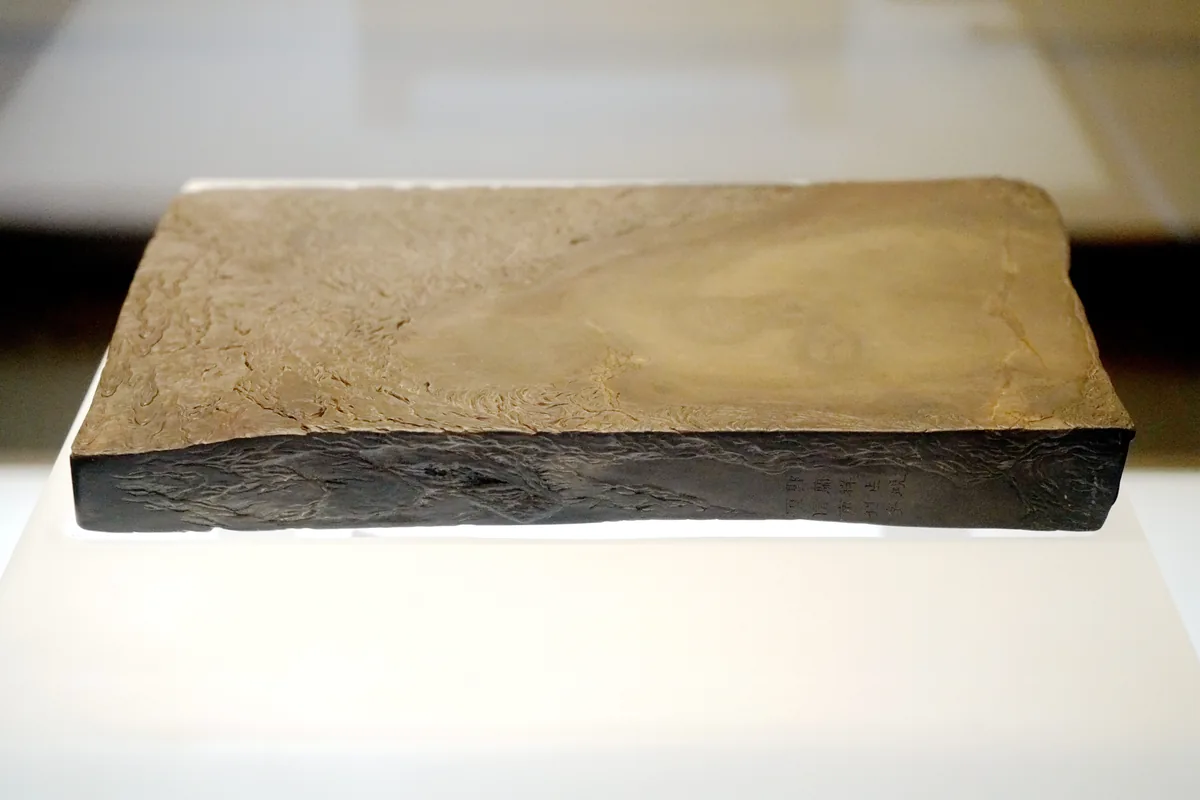
- The Qianjin Monkey King Inkstone (端石千金猴王砚): A National First-Class Relic and undisputed crown jewel of the museum. Quenched from the deepest Daxi Cave of Zhaoqing's Old Mine during the late Qing Dynasty, this raw slab naturally grew a circular white "fish-brain freeze" pattern and a translucent emerald stone eye. Master lapidaries transformed the stone vein into a seated macaque picking a longevity peach, where the stone eye precisely falls into place as the fruit. When touched with water, the stone's white mineral hairs shimmer like real primate fur. Detailed calligraphic inscriptions on the inkstone flank document its ownership by He Chao, senior adviser to Viceroy Zhang Zhidong.
- Song and Ming Dynasty Inscribed Stones: Showcase natural stone markings including jade veins, emerald eyes, and fine gold streaks. Side-lit display cases allow visitors to appreciate the jade-like translucence under magnifying lenses.
Lingnan History and Maritime Trade (4th Floor)
The 4th-floor comprehensive historical gallery traces Lingnan's trajectory from the prehistoric Maba Man and the Baiyue kingdoms to the flourishing Maritime Silk Road during the Tang, Song, and Qing dynasties.
- Western Zhou Bronze He Vessel from Xinyi (西周信宜铜盉): Unearthed in Xinyi, Guangdong, in 1974, this 27-centimeter-tall bronze wine vessel with a hollow spout and tripod legs represents one of the earliest Western Zhou bronze ritual items discovered in South China. Decorated with intricate thunder and taotie patterns, it provides hard material evidence of early cultural dialogue between Central Plains ritual bronze technology and southern Lingnan tribal cultures.
- Panorama of Guangzhou Port (《广州港全景图》外销画卷): A remarkable two-meter-long export oil painting created by local Cantonese artists in the mid-19th century. It vividly depicts merchant vessels from Britain, France, the Netherlands, and America anchored in the Pearl River's Bai'etan waters. Along the riverbanks stand the iconic Western-style facades of the Canton Thirteen Hongs (Thirteen Factories), with porters loading tea chests and silk bales onto sampans.
- Relics from the Nanhai No. 1 Shipwreck: Displays maritime trade goods recovered from ancient merchant vessels that sank off the Guangdong coast, including Song Dynasty gold jewelry, celadon ceramics, and iron trading bars.
Ancient Ceramics and Canton Export Porcelain (4th Floor)
Guangdong was historical China's primary porcelain export gateway. The ceramics gallery highlights Tang Dynasty Chaozhou kilns, Song Dynasty Xicun kilns, and Qing Dynasty export wares.
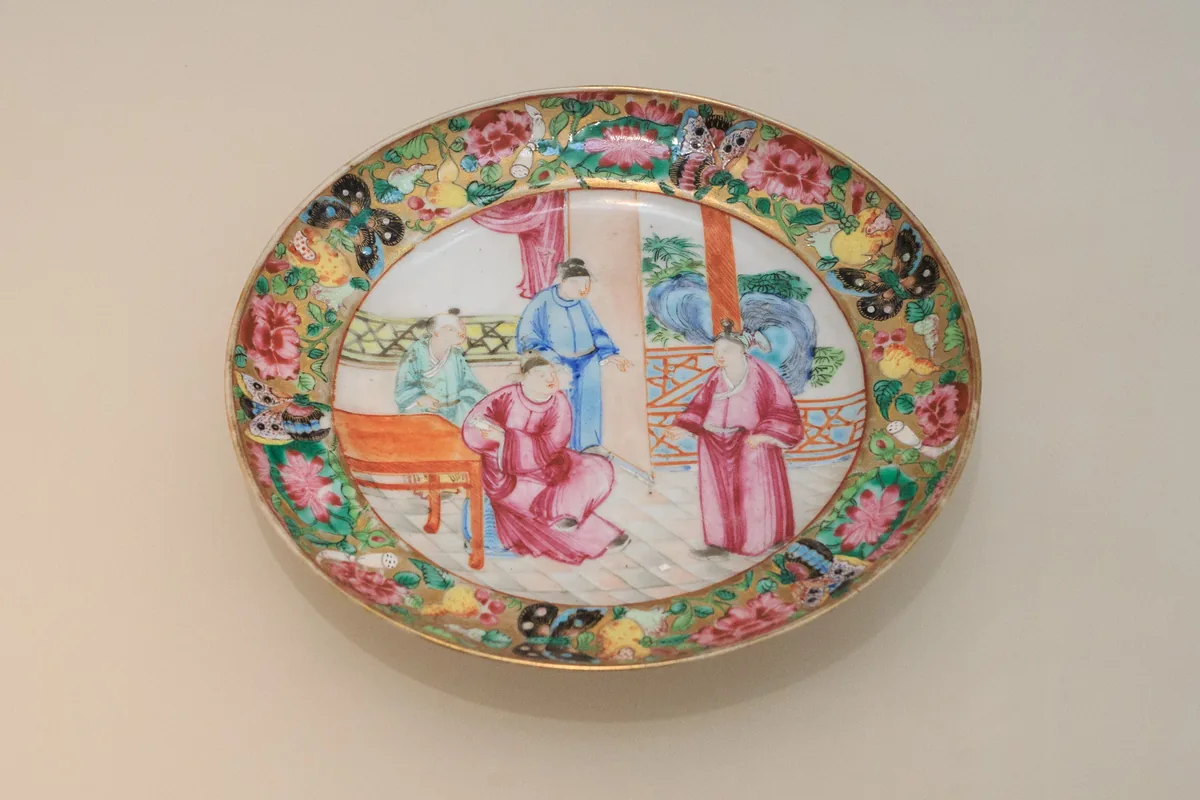
- Canton Famille Rose Porcelain (广彩瓷): White porcelain blanks shipped from Jingdezhen down the Gan River to Guangzhou were hand-painted by local workshops in Saiguan using dazzling enamels and gold leaf before secondary firing. Plates from the Daoguang era feature court ladies, floral medallions, and Western armorial crests specifically tailored to foreign tastes.
- Shiwan Ceramic Sculptures (石湾陶塑): Glazed stoneware figurines from Foshan illustrating Daoist immortals, lions, and folklore heroes, noted for expressive facial modeling and thick dripping glazes.
Natural Resources and Dinosaur Fossil World (4th Floor)
Spanning two cavernous wings, the Natural Resources Pavilion is a family favorite, divided into prehistoric paleontology and South China marine ecosystems.
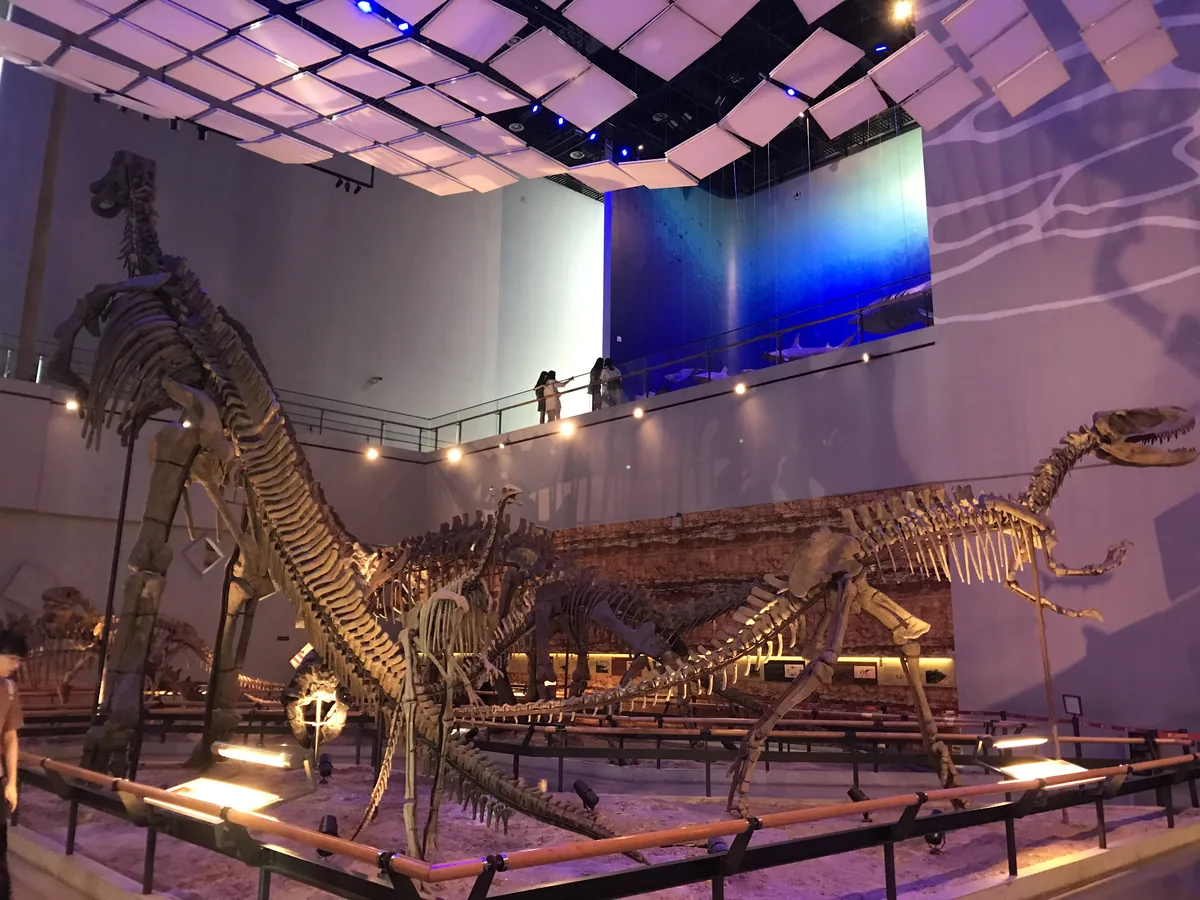
- Dinosaur Fossil World: Dominated by fully assembled fossil skeletons of towering Mamenchisaurus sauropods and Cretaceous predators. Display cases showcase extensive nests of round and oval dinosaur egg fossils unearthed from the red sandstone beds of Nanxiong and Heyuan in northern Guangdong.
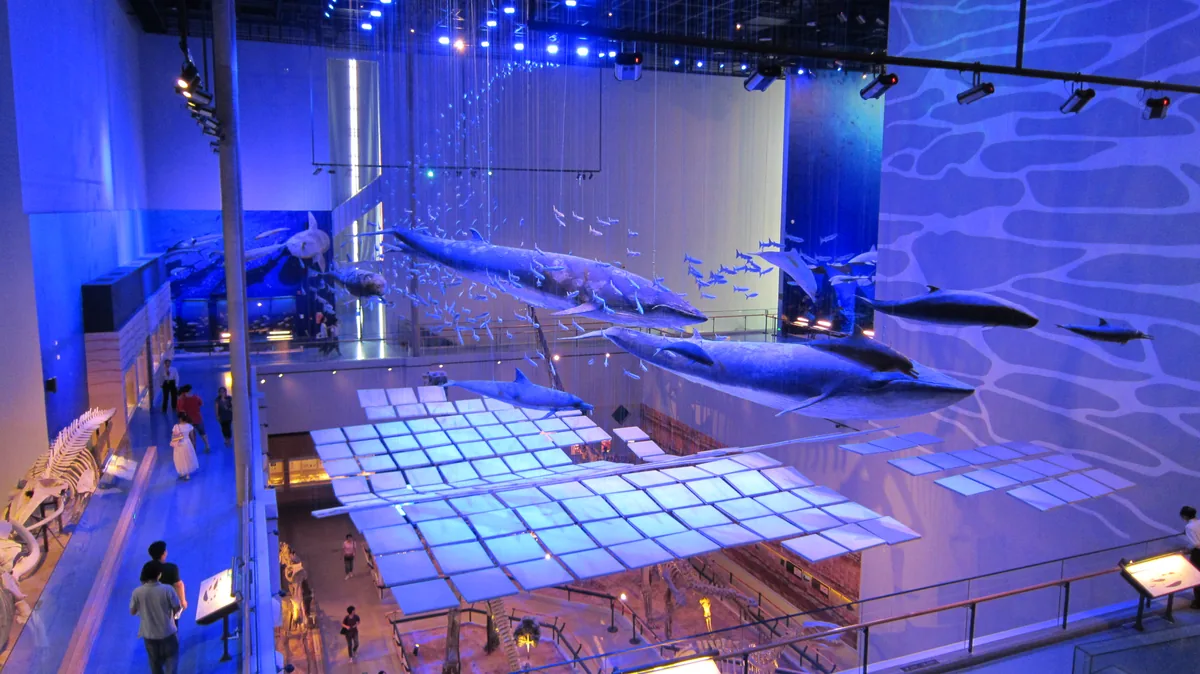
- Ocean World Gallery: Immersed in deep marine blues, the gallery suspends 1:1 scale models of giant sperm whales, blue whales, and stingrays overhead. Ground-level vitrines display giant clam shells (Tridacna), tropical coral reef biomes, and authentic whale teeth.
Guangdong Museum Ticket Reservation and Entry Guidelines
Admission to the Guangdong Museum's permanent galleries is completely free, but entry requires mandatory real-name timed reservations.
Online Booking Procedure
- Official Platform: Bookings must be made through the official WeChat Mini Program or official WeChat account
广东省博物馆(Guangdong Museum). - Ticket Release Window: Tickets are released 7 days in advance at 22:00 (10:00 PM) sharp Beijing Time. Weekend and national holiday slots often book out within minutes of release. Set a phone reminder for 21:58 to secure morning weekend entries.
- Session Times: Available daily in two primary slots: Morning (09:00 - 12:00) and Afternoon (12:00 - 16:00). Visitors may stay inside until closing once admitted.
Guidelines for International Visitors and Passport Holders
- Passport Registration: In the official WeChat booking portal, select "Foreign Passport" (外国护照), "Mainland Travel Permit for Hong Kong and Macao Residents" (回乡证), or "Taiwan Compatriot Permit" (台胞证) under the ID Type menu, entering your full name and document number.
- On-Site Special Inquiries: If online reservations are fully booked upon your arrival in Guangzhou, proceed directly to the General Service Counter (综合服务台) on the 1st Floor with your original foreign passport during regular opening hours. Staff can provide emergency queue numbers for international travelers when capacity permits.
- Ticketed Special Exhibitions: Occasional world-touring loan exhibitions (such as ancient Egyptian, Syrian, or European master retrospectives) require a separate paid admission ticket (usually ¥50–¥80). Purchasing a special exhibition ticket grants direct entry into the permanent museum galleries without needing a separate free reservation.
Security Check and Luggage Storage
- Prohibited Items: Lighters, matches, flammable liquids, and hazardous items are strictly confiscated at airport-style security scanners. Monopods, camera tripods, and selfie sticks are prohibited inside delicate artifact galleries to protect exhibit showcases.
- Free Smart Luggage Lockers: Located directly beside the West Gate security checkpoint on the 1st floor. Automated smart lockers easily accommodate large 28-inch suitcases and travel backpacks at zero charge during museum hours.
Opening Hours and Optimal Visiting Routes
Operating Hours and Summer Night Schedules
- Regular Hours: Tuesday to Sunday, 09:00 – 17:00 (Last entry at 16:00).
- Weekly Closure: Closed every Monday (open as usual on official Chinese statutory public holidays).
- Summer Friday Night Extensions: During July and August, the museum frequently extends opening hours until 20:30 (last entry at 19:30) on Friday evenings. Confirm current dates via their official WeChat before planning an evening visit.
The Recommended 3-Hour Highlights Route
To avoid backtracking and maximize energy, follow this carefully tested 3-hour route:
- 1F West Entrance (09:00 - 09:15): Clear airport-style security, store luggage, and pick up a bilingual audio guide (¥20 rental with passport or electronic deposit) at the service counter.
- 4F Natural Resources & Dinosaurs (09:15 - 10:00): Take the main escalator directly to the top floor. Photograph the giant whale models and dinosaur fossil skeletons before morning school groups arrive.
- 4F Lingnan History & Ceramics (10:00 - 10:45): Walk east through the Western Zhou bronze exhibits, the 1845 Canton Harbor oil painting, and imperial export porcelain.
- 3F Chaozhou Woodcarving Gallery (10:45 - 11:30): Head down the internal corridor to the 3rd floor. Marvel at the 3-meter gold-lacquered ancestral shrine and the intricate crab basket beam bracket.
- 3F Duan Inkstone Gallery (11:30 - 12:00): Examine the Qianjin Monkey King Inkstone and admire scholar rock veins.
- 1F Museum Shop & Cultural Cafe (12:00 - 12:30): Collect museum stamp seals (gai zhang), sample the inkstone-shaped cultural ice cream, and browse creative Cantonese craft souvenirs.
How to Get There and Transportation Options
The Guangdong Museum is located at No. 2 Zhujiang East Road, Tianhe District, Guangzhou (广州市天河区珠江东路2号), accessible by multiple transit options:
- Metro APM Line: Take the automated APM Line to Grand Theater Station (大剧院站), take Exit B, and walk eastward across the pedestrian plaza for 150 meters (2-minute walk).
- Metro Lines 3 & 5: Take Line 3 or Line 5 to Zhujiang New Town Station (珠江新城站), take Exit B1 or D, and walk south through the underground concourse of Mall of the World (Huacheng Hui) for approximately 800 meters (10-minute walk).
- Public Buses: Ride bus lines 40, 107, or 901A to Zhujiang East Road Station (珠江东路站) or Huacheng Square / Guangzhou Opera House Station.
- Taxis / Ride-Hailing (Didi): Set your drop-off destination to "Guangdong Museum West Gate" (广东省博物馆西门).
- Parking: The museum's underground garage charges ¥5 per hour, though spaces are limited. On weekends, park in the adjacent Mall of the World South Garage or K11 Art Mall.
Zhujiang New Town Full-Day Itinerary
Pairing a morning museum tour with Tianhe's landmark urban sights makes for an unforgettable Guangzhou day:
- Morning (09:00 - 12:30): Explore the Guangdong Museum's Chaozhou woodcarvings, Duan inkstones, and maritime Silk Road galleries.
- Lunch (12:30 - 14:00): Stroll down to Mall of the World (花城汇) or adjacent K11 Mall for classic Cantonese fare—order authentic shrimp dumplings (har gow), roasted goose, or beef chow fun (see our Guangzhou Dim Sum Guide).
- Afternoon (14:00 - 16:30): Walk through Huacheng Square parklands. Admire the futuristic black granite and glass curves of the Zaha Hadid-designed Guangzhou Opera House, and step inside the Guangzhou Library's cathedral-like atrium. Look up at the Canton Financial Center (Chow Tai Fook East Tower, 530m) and Guangzhou IFC (West Tower, 432m).
- Late Afternoon to Evening (17:00 - 20:30): Walk south across the Pearl River via the sweeping, pedestrian-only Haixin Bridge (advance booking required) directly to the base of Canton Tower. Conclude the night with a scenic Pearl River Night Cruise or ascend to the tower's 488-meter outdoor observation deck to watch Guangzhou's glittering urban skyline.
Practical Visitor Tips and Etiquette
- Audio Guides: Smart touchscreen multilingual audio guides (English, Mandarin, Cantonese, French, Japanese, Korean) are available at the 1st-floor reception desk for a ¥20 fee.
- Photography Etiquette: Non-flash photography without tripods is welcomed in all permanent galleries. Please turn off autofocus assist lamps and flashlights near delicate ancient textiles and lacquered surfaces.
- Temperature Comfort: Exhibition galleries maintain a strict climate-controlled conservation temperature between 20°C and 22°C (68°F–72°F). Bring a lightweight jacket or shawl, especially during hot summer months.
- Accessibility: The museum is 100% barrier-free with elevator access to all levels, wheelchair ramps, accessible restrooms on every floor, and free manual wheelchair loans at the front desk with a valid passport.
- Combine with Historical Sights: After exploring modern Zhujiang New Town, continue your cultural journey through Guangzhou's ancient roots at the Nanyue King Museum, Yuexiu Park, and historical Beijing Road Pedestrian Street.