Guangzhou Attractions 7 min read
Shangxiajiu Pedestrian Street: Qilou, Old Shops and How to Visit
Visit Shangxiajiu Pedestrian Street in Liwan, Guangzhou. 1,218 metres of 1920s arcade buildings, time-honoured Cantonese restaurants, and the metro from Hualinsi.
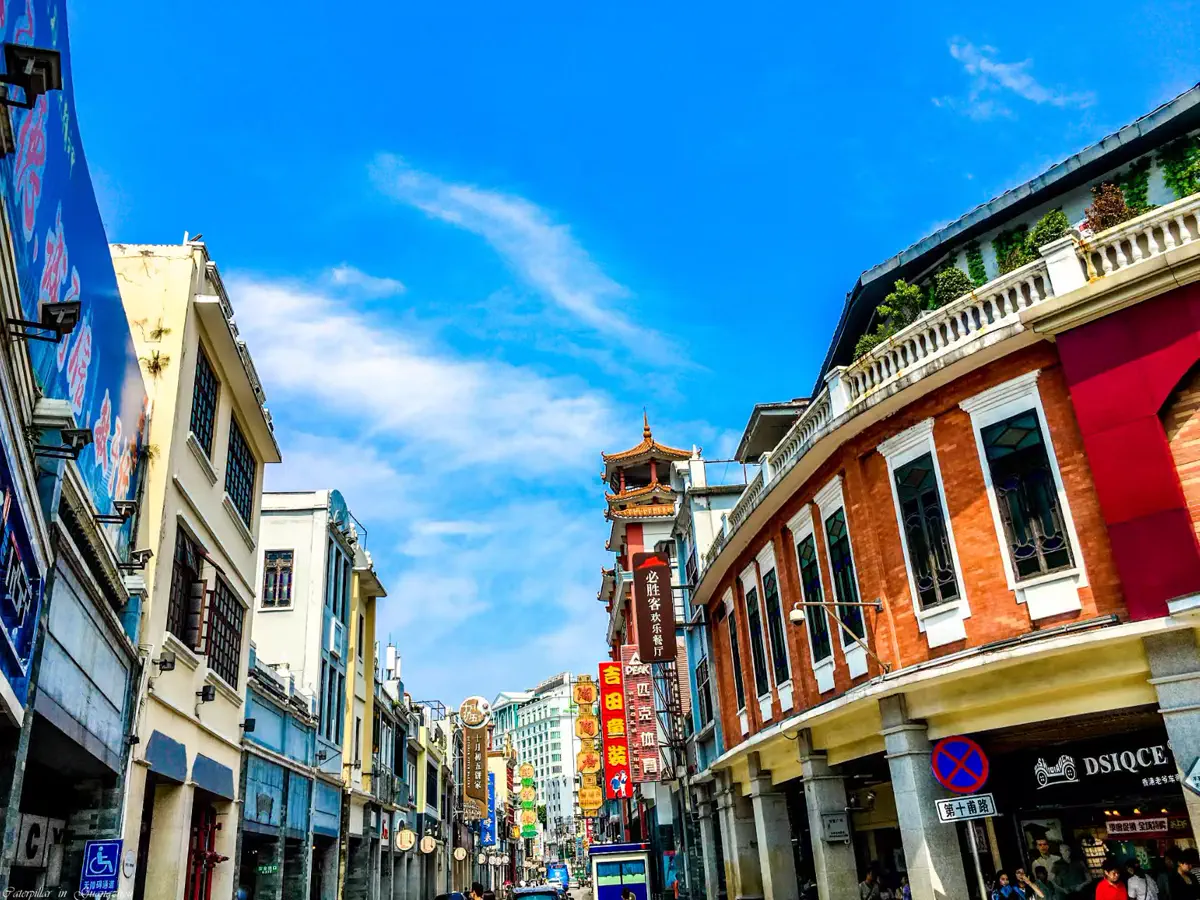
The Yongqing Fang page on this site already mentions Shangxiajiu to the east. This page covers the street itself. Shangxiajiu Pedestrian Street (上下九步行街) runs 1,218 metres through Liwan District, connecting Shangjiu Road, Xiajiu Road and Dishifu Road end to end. Both sides are lined with qilou arcade buildings from the 1920s and 1930s, with shops at ground level, homes above, and a continuous covered colonnade that keeps you out of the rain and the subtropical sun. The street was formally opened as a pedestrian zone on 30 September 1995, making it Guangzhou's first commercial pedestrian street. In 2020, the Guangdong provincial government listed it as a provincial-level historical and cultural block.
The Chinese name is 上下九步行街. English maps use Shangxiajiu Pedestrian Street. The address covers Xiajiu Road in Liwan District. Search the Chinese name in a map app.
How to get to Shangxiajiu
The closest metro station is Hualinsi on Line 8. Take Exit E and walk south along Kangwang South Road for three to five minutes to reach Xiajiu Road. Changshou Road on Line 1 also works. Take Exit D and walk south along Baohua Road for eight to ten minutes. That route passes Baohua Noodle Shop, Chentianji and Shunji Ice Room along the way, which makes it the classic food walk into the street.
Huangsha Station on Line 1 and Line 6 sits southwest of the street. From there it is about ten minutes on foot, and the same station serves Shamian Island to the south.
For a first visit, Hualinsi or Changshou Road is the most direct.
The qilou arcade buildings
The qilou (骑楼) on Shangxiajiu are the densest surviving cluster of arcade buildings in Guangzhou's old Xiguan quarter. Most were built after the Dishifu and Shangxiajiu road-widening project broke ground in September 1926 and finished in May 1927. Shopkeepers then built the arcade fronts to a municipal code. The style mixes Baroque pediments, Roman columns and Rococo scrollwork with Lingnan touches like Manchurian windows (满洲窗, coloured-glass pane assemblies), grey-moulded ornament and washed-stone facades.
Below the buildings, the covered colonnades run continuously along the street, two to three metres wide. In a city where summer heat and sudden downpours are the norm, the design is practical before it is decorative. Each building looks different up close, but the rhythm of columns, arches and upper-floor balconies holds the whole street together.
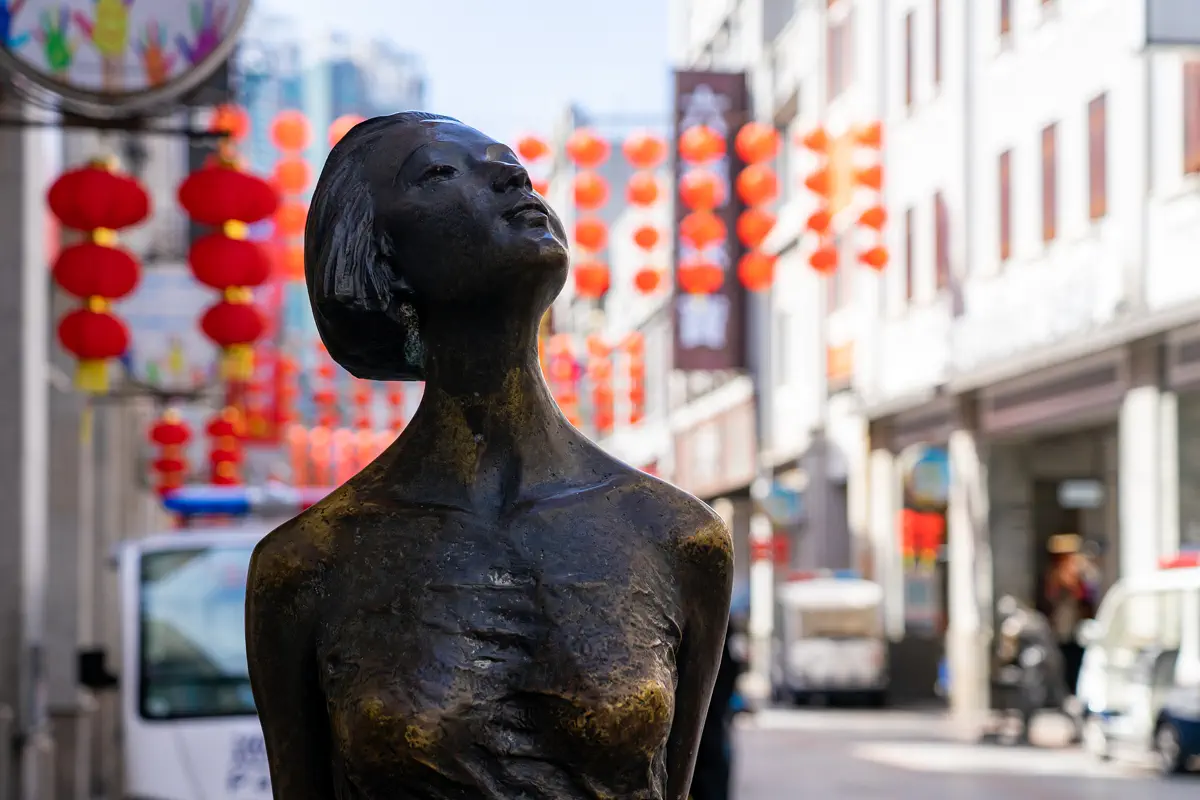
The Guangzhou planning bureau has put the qilou frontage inside a core protection zone, requiring all repairs to follow a restore-as-original principle. In April 2024 the city launched a conservation and revitalisation project for the Shangxiajiu–Dishifu block. By the end of 2025 the project had upgraded the Shangxiajiu Square landscape, repaired the facades of 15 large buildings, and cleared rooftop additions from 141 structures. The south side of Liwan Plaza is being restored to its original arcade form. Some scaffolding and partial hoarding may still be up when you visit. The project runs to the end of 2026.
Where to eat on Shangxiajiu
The density of time-honoured restaurant names on this stretch of road is hard to match elsewhere in Guangzhou. Several are unavoidable in any account of the city's food history.
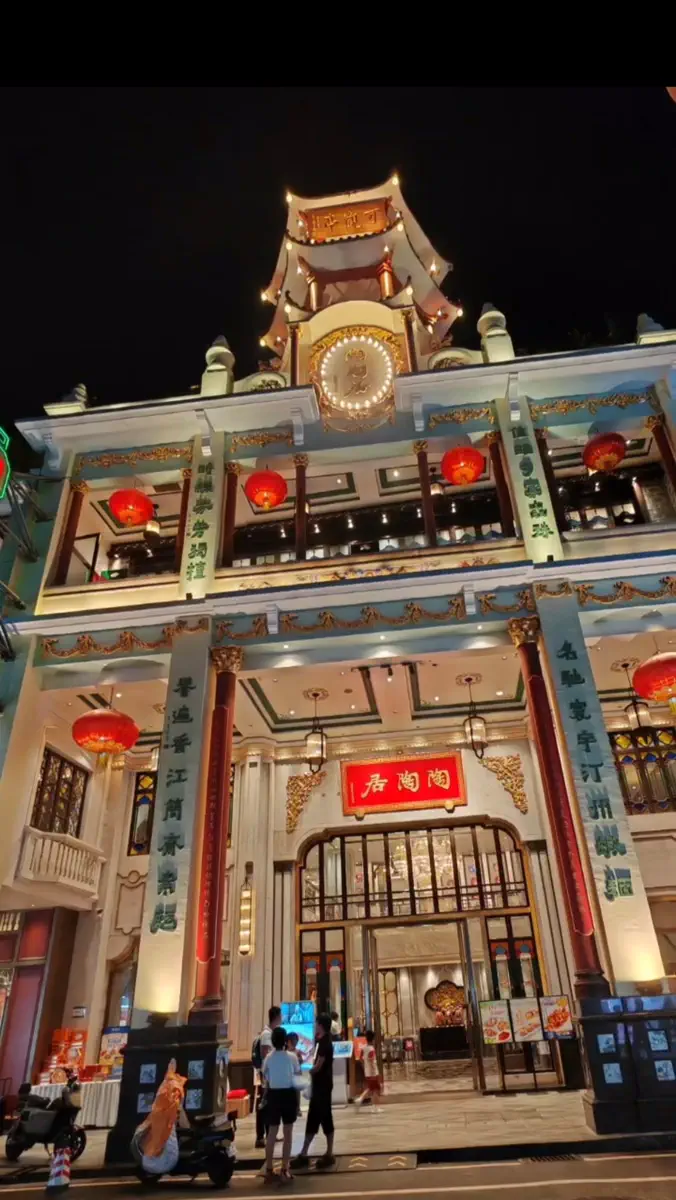
Tao Tao Ju (陶陶居) sits at 20 Dishifu Road. It opened in 1880, during the Guangxu reign, and Kang Youwei once inscribed its signboard. The flagship completed a full heritage restoration in 2021, bringing back the Republican-era skywell, Manchurian window light and carved-wood screens. Shrimp dumplings, lava buns and phoenix claws are the usual orders. On holidays the queue starts at one hour. This site's dim sum guide and what to eat in Guangzhou page cover the wider Cantonese dim sum picture.
Lin Heung Tea House (莲香楼) is at 67 Dishifu Road. It opened in 1889 as a pastry shop called Gaosu Guan and pioneered pure lotus-seed paste filling, earning the title "first house of lotus paste". The ground floor sells takeaway pastries. The upper floors run a traditional tea service.
Guangzhou Restaurant (广州酒家) has its Wenchang flagship at 2 Wenchang South Road, at the junction with Dishifu Road. It opened in 1935 and carries the tagline "first house of eating in Guangzhou". Dim sum and roast meat are the main draw. The building has an interior courtyard garden with rockery and fish ponds.
Huang Shang Huang (皇上皇) at 3 Xiajiu Road has been making cured meat since 1940. The autumn and winter sausage and cured pork are popular souvenirs. The shopfront displays hang neatly under the arcade.
Nanxin (南信牛奶甜品专家) at 47 Dishifu Road opened in 1934 and specialises in double-skin milk pudding and ginger milk curd, both made with Shunde buffalo milk.
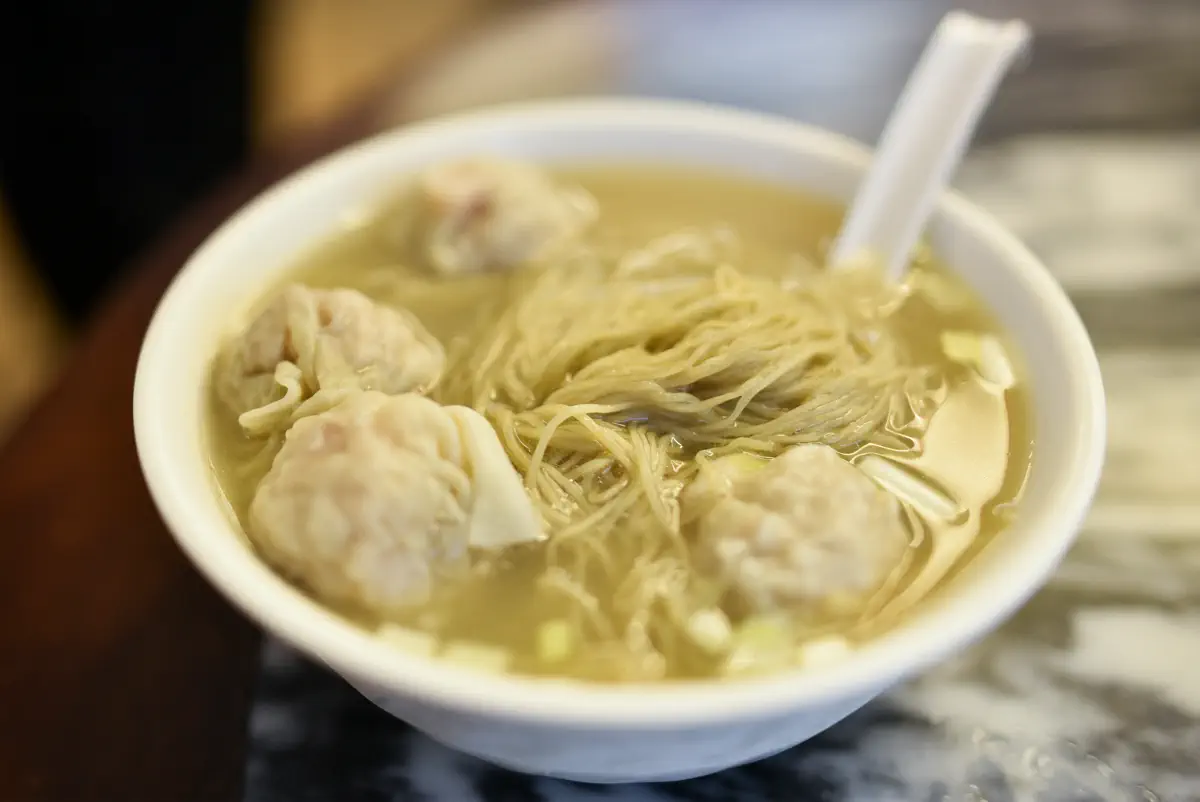
On Baohua Road, just off the main street, Shunji Ice Room (顺记冰室, 1920s) serves hand-churned coconut ice cream, and Chentianji (陈添记) does fish-skin salad and sampan congee. Yinji (银记肠粉, 1958) on Shangjiu Road does pulled rice-noodle rolls. Eating as you walk is how this street is meant to work. Check prices on the day.
Pair it with nearby Guangzhou attractions
Shangxiajiu sits on the central axis of old Liwan. The surrounding attractions connect on foot or by a single metro stop.
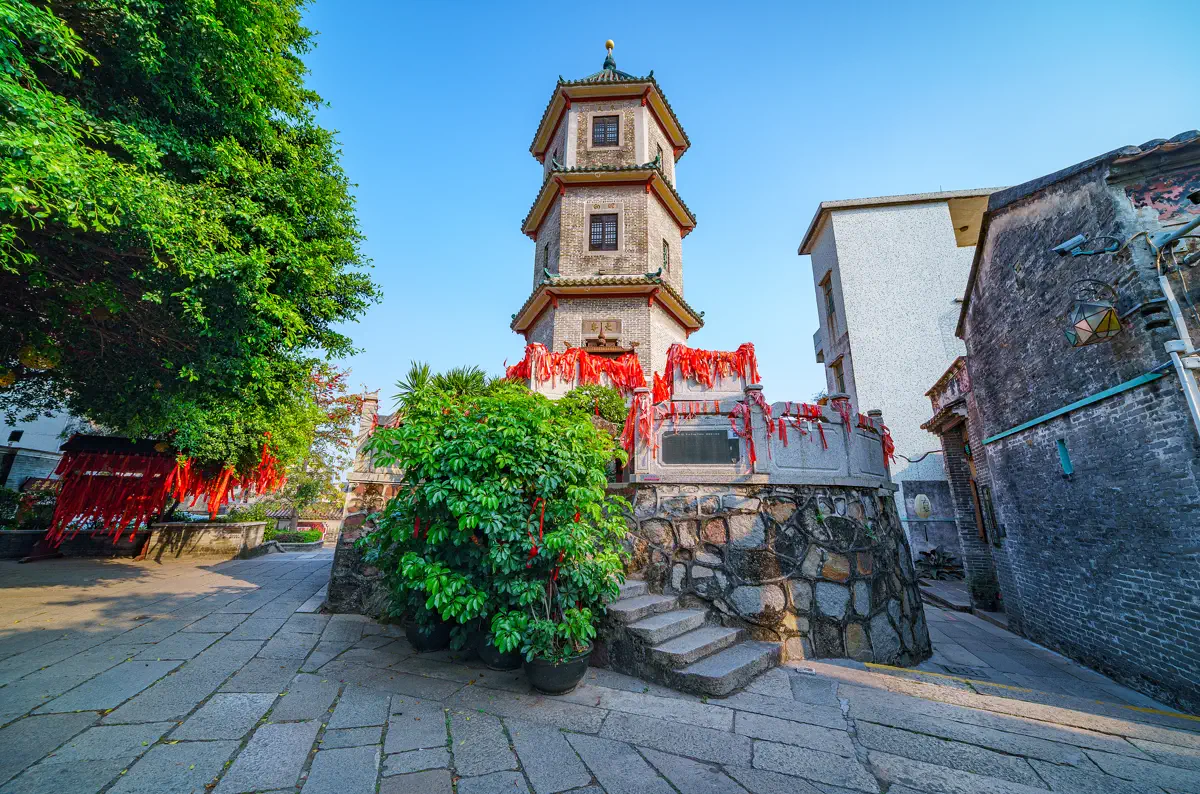
- West from the end of the street, a six to eight minute walk along Enning Road reaches Yongqing Fang, with the Cantonese Opera Art Museum and the Bruce Lee ancestral residence. From there, another four to five minutes on foot reaches Lychee Bay, with the Wen Pagoda, Renwei Temple and Pantang Road snacks.
- South, cross over from Huangsha Station or walk twelve to fifteen minutes to Shamian Island. Shangxiajiu is Lingnan arcade, Shamian is European concession. Fifteen minutes of walking switches the entire cultural register.
- Northeast, take Line 8 one stop from Hualinsi to Chen Clan Ancestral Hall station, or Line 1 one stop from Changshou Road. The ride is two to three minutes. The Chen Clan Ancestral Hall page covers the visit.
The smoothest half-day is Chen Clan Ancestral Hall in the morning plus dim sum on Shangxiajiu, then Yongqing Fang and Lychee Bay in the afternoon, and back to Shangxiajiu for the arcade lights and dinner. That line fits Day 2 of the 3–4 day itinerary.
The Guangzhou travel guide covers the whole city. This page is only the pedestrian street.
When to go
The street is open around the clock with no gate and no ticket. Shops generally open from 10am to 10pm. Tea houses start morning tea service from around 7.30 or 8am. To eat dim sum at Tao Tao Ju or Guangzhou Restaurant without a long wait, arrive before 9am.
Weekday mornings are the quietest time and the best window for photographing the arcade facades. Weekends and holidays are extremely crowded, especially from afternoon into the evening. Tao Tao Ju and Nanxin queues can run to one or two hours on those days.
After dark the neon signs and arcade outline lights come on along the full length of the street. The atmosphere changes completely from the daytime. It is worth seeing once.
Shangxiajiu questions, answered
Is Shangxiajiu Pedestrian Street free?
Yes. It is a municipal pedestrian street, open around the clock with no admission fee.
Which metro station is closest?
Line 8 to Hualinsi, Exit E, then a three to five minute walk south. Line 1 to Changshou Road, Exit D, works with an eight to ten minute walk that passes several classic food shops.
How long do you need?
One to two hours for the street and photos. Half a day with food and the old shops. A full day if you add Yongqing Fang and Lychee Bay.
Is the street under renovation?
A conservation project launched in April 2024 and runs to the end of 2026. Some sections may have hoarding or scaffolding. The arcade buildings and time-honoured shops are open as usual.
Hours and listings follow 2026 sources and can change on festival days. The street was listed as a provincial-level historical and cultural block in 2020 (Guangdong provincial government notice 2020-63). Arcade construction dates follow the Baidu Baike entry for the street. The 1926–1927 road-widening timeline follows Liwan district heritage records. Time-honoured shop founding dates follow Trip.com, Wanderlog and Ctrip listings cross-checked against Baidu Baike entries. The 2024 conservation project timeline follows Liwan district housing and construction bureau notices. TravelChinaGuide lists the street length at 1,240 metres; Baidu Baike lists 1,218 metres.