Guangzhou Attractions 9 min read
Guangzhou Baiyun Mountain: The Complete Hiking, Cableway, and Scenic Guide
Plan your visit to Baiyun Mountain (White Cloud Mountain) in Guangzhou. Comprehensive guide covering Moxing Summit, Baiyun Cableway, Yuntai Garden, Nengren Temple, hiking trails, tickets, and travel tips.
Baiyun Mountain Overview: Guangzhou's Natural Oxygen Bar
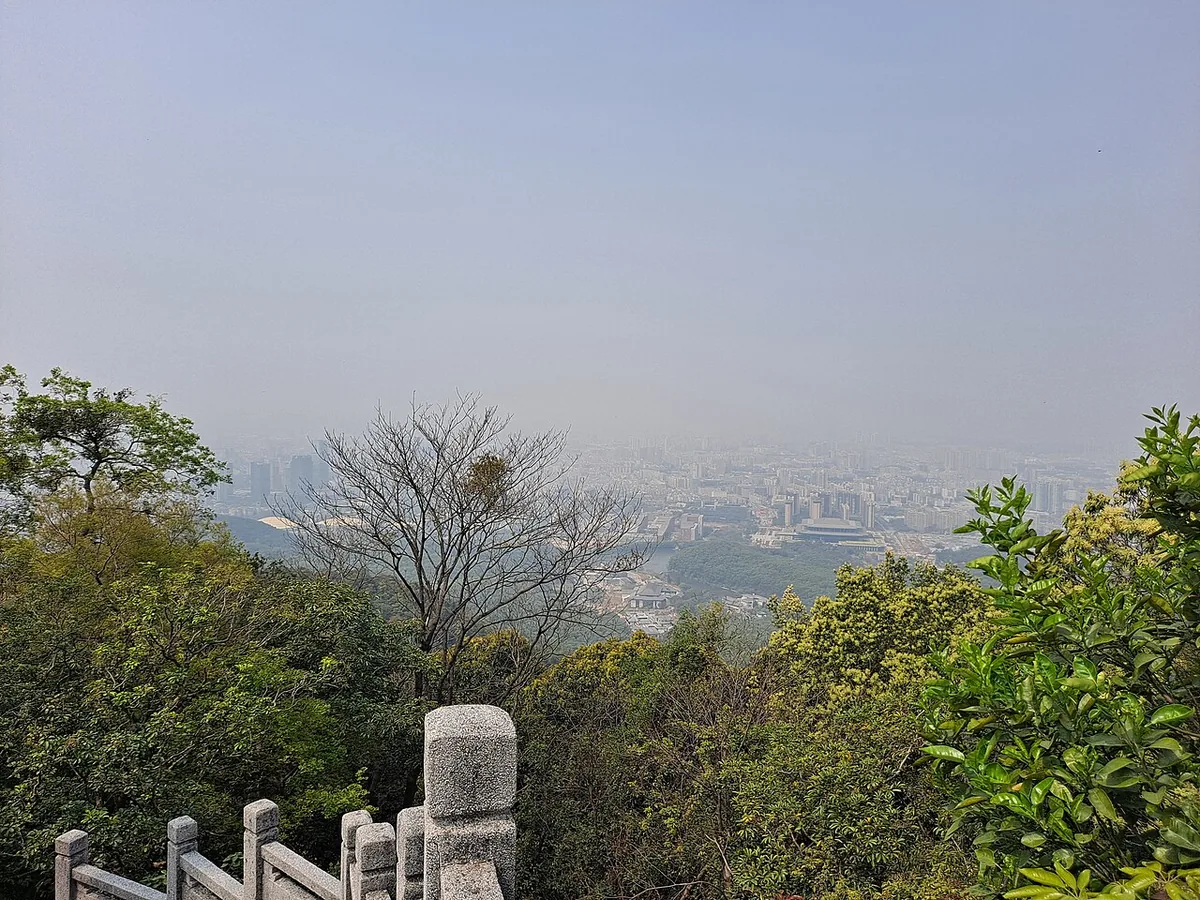
Rising majestically in the northern sector of Guangzhou's urban core, Baiyun Mountain (白云山, literally "White Cloud Mountain") is the city's foremost natural landmark and its premier ecological oxygen bar. Spanning an expansive area of nearly 21 square kilometers, this national 5A-level scenic area comprises over thirty undulating forested peaks. Its highest summit, Moxing Ridge (摩星岭), reaches an elevation of 382 meters (1,253 feet), serving as the geographic zenith of urban Guangzhou.
Unlike isolated wilderness reserves far outside town, Baiyun Mountain sits merely five kilometers north of downtown, seamlessly buffering the high-density skyscrapers of Tianhe and Yuexiu with verdant subtropical woodland. Together with the South China National Botanical Garden and Haizhu Wetland Park, it forms the green lungs that temper the Pearl River Delta's tropical climate.
Geographic Scale and Forest Ecosystem
Boasting a forest coverage rate exceeding 95%, Baiyun Mountain harbors more than 1,000 species of vascular plants and hundreds of native wild bird varieties. Masson pines, Chinese banyans, eucalyptus, and aromatic camphor trees drape the mountainside, generating over 2,800 tons of fresh oxygen daily. The average annual temperature hovers around 21.8°C, often 3°C to 5°C cooler than the downtown streets below, creating a cherished year-round haven for hikers, joggers, and weekend family getaways.
Historical Significance as Canton's First Beauty
Revered since antiquity as the "First Beauty of Canton" (羊城第一秀), Baiyun Mountain has played a central role in Lingnan culture for over two millennia. As early as the Southern Han Dynasty (917–971 AD), imperial rulers established hunting grounds and imperial summer villas among its cloud-shrouded valleys. Across the centuries, poets and scholars including Su Shi (Su Dongpo) scaled its peaks to compose verse. Historic scenic sights here—such as "Baiyun Evening View" (白云晚望) and "Pines Whispering in the Clouds" (白云松涛)—have been repeatedly enshrined in the celebrated Eight Sights of Guangzhou since the Song and Yuan dynasties.
Key Scenic Zones and Must-See Highlights
The vast mountain scenic area is thoughtfully divided into five distinct tourist zones, each offering unique vantage points, botanical collections, and cultural temples.
Moxing Summit: The 382-Meter Roof of Urban Guangzhou
At 382 meters above sea level, Moxing Summit (摩星岭) represents the pinnacle of Baiyun Mountain. Known in the Song Dynasty as "The First Mountain," its modern moniker poetically translates to "The Ridge That Grazes the Stars."
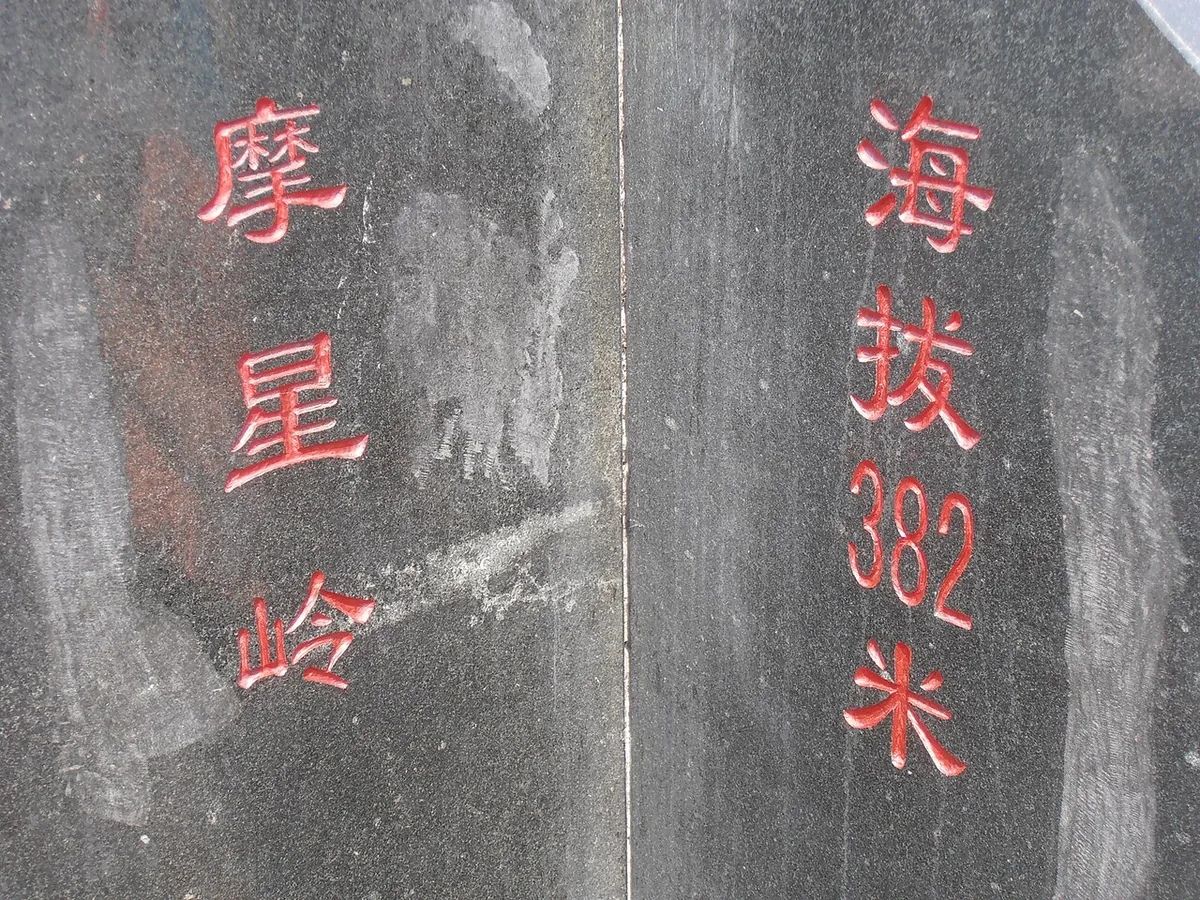
From Peak Park (山顶广场), visitors can reach the summit gate via shuttle cart or on foot. After passing through the carved wooden "Splendid Southern Sky" (锦绣南天) ceremonial archway and ascending stone staircases lined with bamboo groves, you reach the summit platform. A massive granite boulder marks the official 382-meter elevation.
Adjacent to the marker is the cantilevered "Lock of Love" viewing platform, its railings weighed down by thousands of engraved brass padlocks left by couples. On clear mornings and post-rain afternoons, the platform yields an incomparable 360-degree vista: looking south, the financial towers of Tianhe, the CITIC Plaza needle, and the slender silhouette of Canton Tower emerge through the mist.
Peak Park and Baiyun Wanwang Sunset Vista
Nestled on a broad saddle at an elevation of roughly 200 meters, Peak Park (山顶广场) is the bustling transit crossroads of Baiyun Mountain. This is where the Baiyun Cableway terminates and where internal sightseeing carts depart for various peaks. The plaza features teahouses, handicraft kiosks, and comfortable shaded resting pavilions.
On the southwestern edge of the plaza lies the Baiyun Wanwang (白云晚望, "Evening View from White Cloud") terrace. Dating back to the Yuan Dynasty, this scenic overlook is Guangzhou's most storied sunset spot. As dusk settles over the city, the setting sun casts a golden-orange glow across old Yuexiu District, followed by the gradual ignition of millions of urban lights stretching down to the Pearl River.
Just east of the plaza lies the Mingchun Valley (鸣春谷) bird sanctuary. Enclosed within a gigantic open-air steel mesh canopy spanning 56,000 square meters—one of the largest natural aviaries in Asia—it shelters hundreds of peacock, crane, and exotic songbird species wandering freely along babbling brooklets.
Yuntai Garden and the Southern Foothills
Situated immediately beside Baiyun Mountain's South Gate entrance, Yuntai Garden (云台花园) covers 120,000 square meters and is acclaimed as the "Pearl of Flower City."
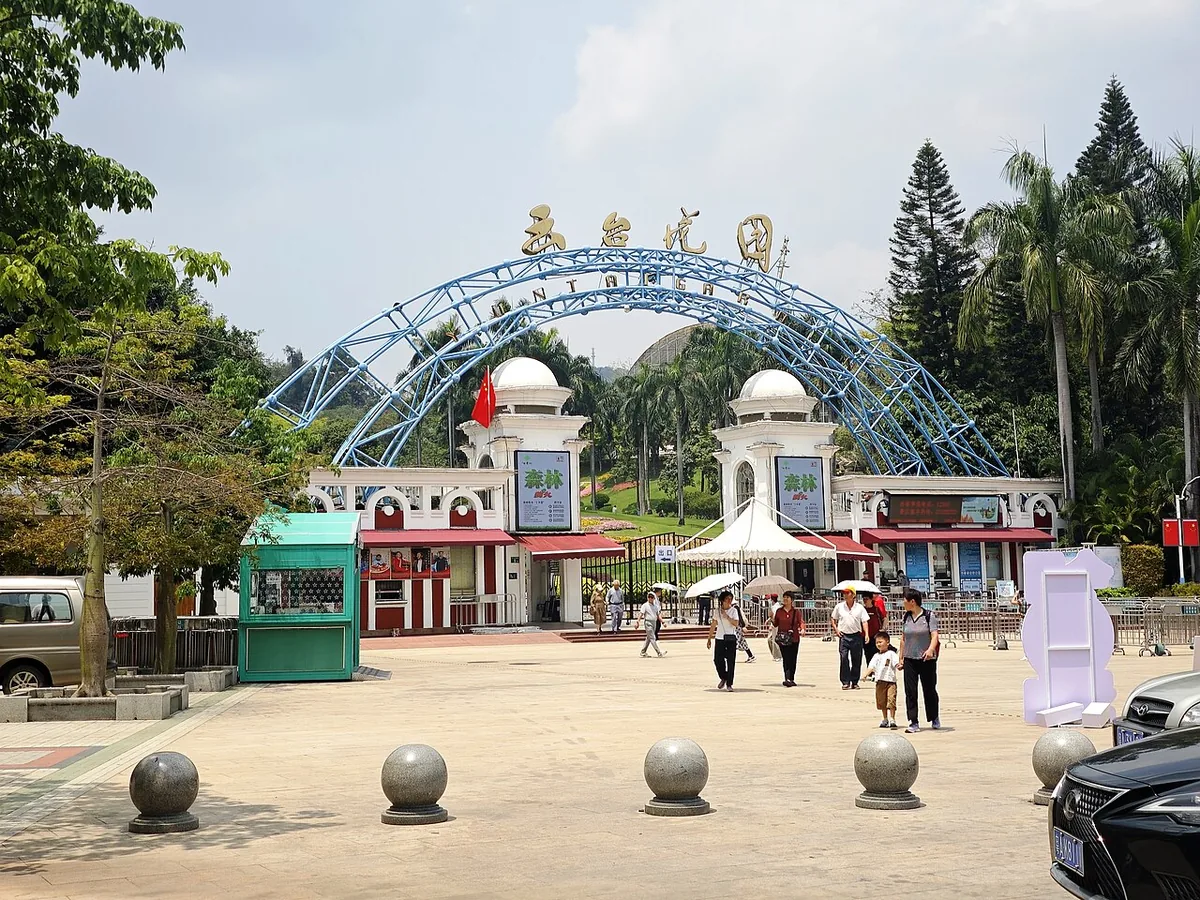
Designed as a premier Sino-European botanical exhibition park, its central axis features a magnificent cascade of stepped waterfalls, grand glasshouses, and manicured floral terraces that adapt to the mountain slope. During Spring Festival and National Day, Yuntai Garden hosts world-renowned floral exhibitions showcasing millions of imported Dutch tulips, roses, and orchids. Nearby, the verdant shoreline of Luhu Lake offers flat boardwalk strolls beneath autumn-red bald cypress trees.
Nengren Buddhist Temple and Jiulong Spring
Tucked into a tranquil ravine along the southern hiking road lies Nengren Temple (能仁寺), the largest Buddhist monastery complex on Baiyun Mountain. Founded during the Qing Dynasty reigns of Xianfeng and Tongzhi, the temple clings to the steep hillside across several ascending terraces.
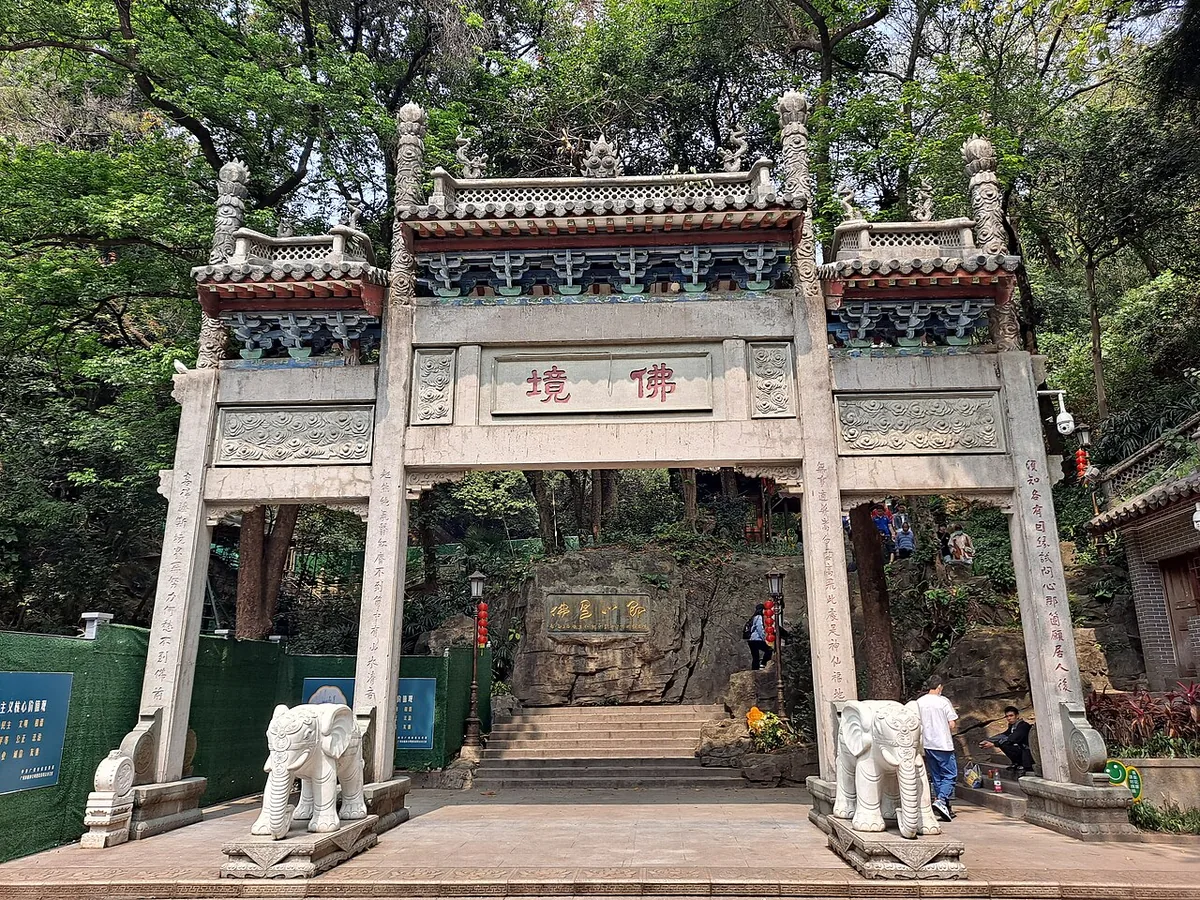
The monastery comprises the Hall of Heavenly Kings, the Grand Mahavira Hall, and the Ciyun Pavilion, their yellow-glazed roofs contrasting sharply with the deep green foliage. Within its courtyard, the Tiger Spring (虎跑泉) feeds an ornamental lotus pond where koi swim beneath stone bridges. Further up the road sits the ancient Jiulong Spring (Nine Dragons Spring), revered since Qin Dynasty Taoist hermits for its sweet, crystal-clear mountain water.
Mingzhulou and Huangpodong Reservoir
Located in the western valley near the West Gate, the Mingzhulou (明珠楼) precinct presents a remarkably serene, flat landscape centered on the scenic Huangpodong Reservoir (黄婆洞水库).
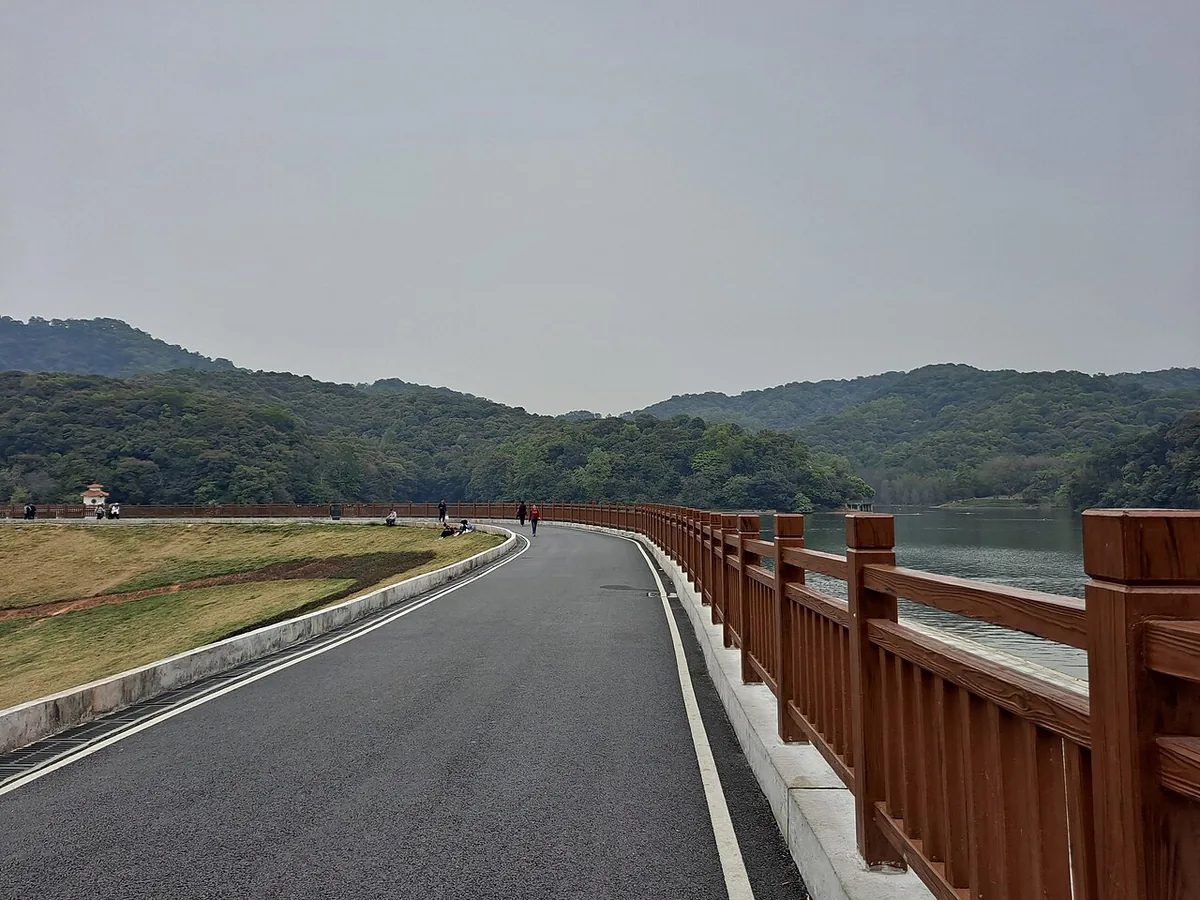
Built in 1956, this mountain reservoir is framed by gentle hills on three sides. Paved waterside promenades and wooden viewing decks loop around the emerald lake, lined with groves of deciduous bald cypress (metasequoia). In late autumn and winter, the needle foliage turns fiery crimson, reflecting upon the mirror-like water. Adjacent to the reservoir, the Peach Blossom Ravine (桃花涧) erupts into pink blossoms every February and March.
Baiyun Cableway and Electric Shuttle Carts
Because Baiyun Mountain is vast, utilizing its modern transit network helps travelers conserve stamina for summit trails and gardens.
Cableway Operating Hours and Ticket Prices
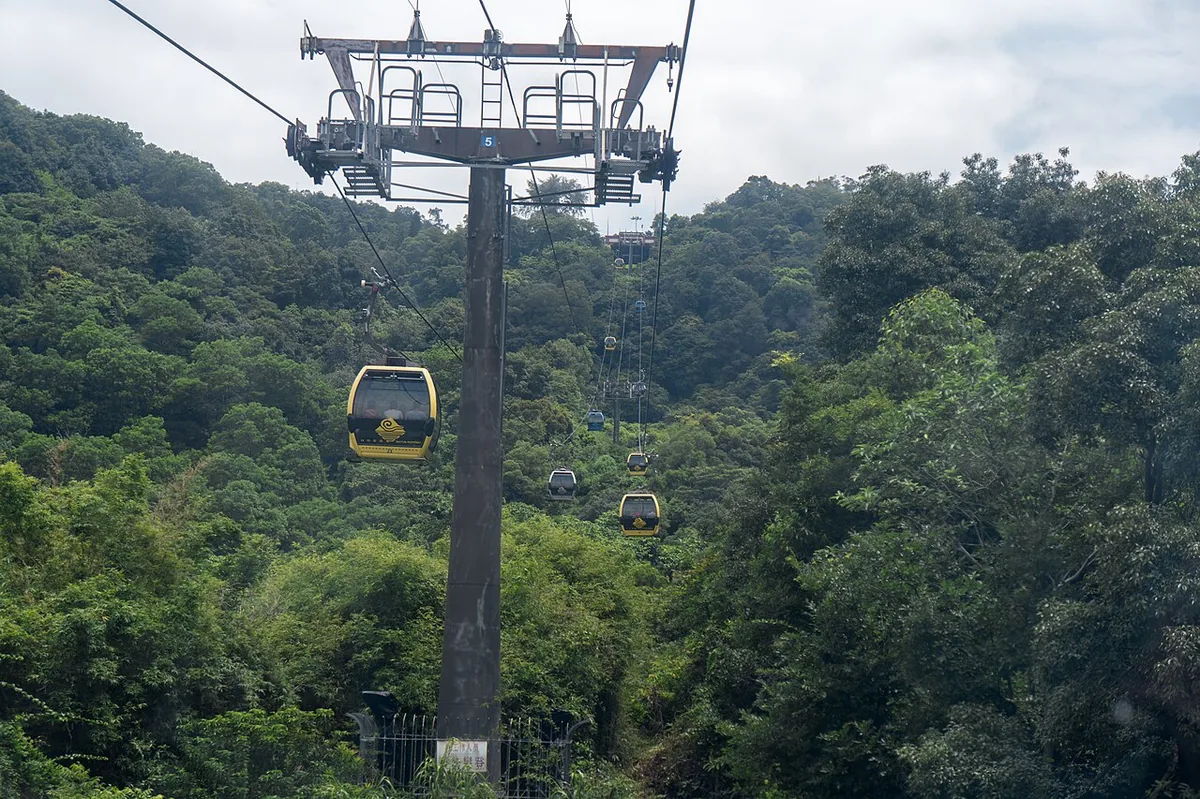
The Baiyun Cableway (白云索道) runs between the South Gate lower station (beside Yuntai Garden) and the upper station at Peak Park. Stretching 1,672 meters in length, the ride takes approximately 8 minutes in enclosed panoramic glass gondolas.
- Operating Hours: Daily 09:00 – 18:00.
- Ticket Prices:
- Ascent (Uphill): ¥25 per person.
- Descent (Downhill): ¥20 per person.
- Visitor Tip: Weekend queues peak between 09:30 and 11:30. Arrive before 09:00 or ride uphill in the early afternoon to bypass crowds.
Sightseeing Shuttle Cart Routes
Clean-energy open-air electric shuttle carts operate on the scenic mountain roads, offering hopped-on convenience across four fixed segments:
- South Gate ↔ Peak Park: ¥20 one-way.
- Peak Park ↔ Moxing Summit Base: ¥10 one-way.
- Moxing Summit Base ↔ Mingzhulou (West Area): ¥10 one-way.
- Mingzhulou ↔ West Gate: ¥10 one-way.
Ticket Prices, Opening Hours, and Entry Gates
Baiyun Mountain operates an open-door policy with affordable entry fees and continuous 24-hour accessibility at primary portals:
- General Park Admission: ¥5 per person (Children under 1.2m and seniors 65+ free; half-price ¥2.5 for students and seniors 60–64). Tickets can be bought on-site at automated gates or via WeChat scan.
- Special Attractions (Separate Tickets):
- Moxing Summit: ¥5 per person.
- Yuntai Garden: ¥10 per person (¥15–¥20 during major spring flower festivals).
- Mingchun Valley Aviary: ¥10 per person.
- Peach Blossom Ravine: ¥5 per person (during bloom season).
- Gate Hours:
- South Gate (云山南路): Open 24 hours daily (ideal for night hiking and sunrise watchers).
- West Gate (白云大道南): Open 24 hours daily.
- Secondary gates (North Gate, Keziling Gate, Lianquan Gate): Generally 06:00 – 21:00.
How to Get to Baiyun Mountain: Transit Options
Reaching the South Gate (Yuntai Garden)
The South Gate is the most popular departure point, positioned adjacent to the Baiyun Cableway and Yuntai Garden:
- By Metro: Take Line 11 directly to Yuntai Garden Station (云台花园站). Alternatively, take Metro Line 5 to Xiaobei Station or Taojin Station and complete the final 2 km via taxi or connecting bus.
- By Bus: Ride Tourism Bus Line 1 (旅游公交1线), Bus 24, 63, or 285 to Yuntai Garden Terminal (云台花园总站) or Baiyun Cableway Station (白云索道站).
Reaching the West Gate (Baiyun Avenue)
The West Gate is ideal for family strollers, runners, and travelers seeking gentle valley walks near Huangpodong Reservoir:
- By Metro: Take Line 2 to Xiaogang Station (萧岗站) or Baiyun Park Station (白云公园站), then walk 1.2 km eastward along Baiyun Avenue or catch a 5-minute taxi ride.
- By Bus: Ride bus lines 36, 66, 76A, 127, 223, or 245 to Baiyun West Gate Station (白云山西门站).
Two Recommended Itineraries: Leisure vs. Hiking
Route 1: Leisure Cableway Ascent & Highlights Walk
Duration: ~3.5 hours | Difficulty: Easy | Best For: Families, photography, and casual visitors.
- 09:00: Yuntai Garden
Arrive at the South Gate, strolling through Yuntai Garden to admire the terraced water stairs and floral displays. - 10:00: Baiyun Cableway
Board the gondola at the South Gate, gliding over the pine treetops to arrive at Peak Park. - 10:20: Moxing Summit Ascent
Hop on the shuttle cart to Moxing Ridge base, then climb the stone stairs to the 382-meter peak marker and love lock overlook. - 11:30: Peak Park & Tofu Pudding
Return to Peak Park, relax at an outdoor umbrella table with warm mountain tofu pudding, and survey the skyline from the Baiyun Wanwang deck. - 12:30: Downhill Descent
Descend back to the South Gate via cable car, or take an easy 45-minute shaded stroll down past Nengren Temple and Jiulong Spring.
Route 2: South-to-West Nature Traverse
Duration: ~5.5 hours | Difficulty: Moderate (10–12 km walk) | Best For: Hikers, nature photographers, and outdoor enthusiasts.
- 08:30: South Gate Hiking Trail
Enter via the South Gate, hiking up the pedestrian stone paths through fragrant pine woods, visiting Nengren Temple along the way. - 10:15: Peak Park to Moxing Summit
Scale the ridge to the 382m summit, savoring panoramic mountain-and-city contrast views. - 11:45: Northward Ridge Trail
Descend Moxing Ridge's northern trail through Longhugang and Dangxiong Pavilion, surrounded by bamboo groves. - 13:00: Huangpodong Reservoir & Peach Ravine
Arrive at the serene shores of Huangpodong Reservoir. Walk the wooden boardwalk under the bald cypress trees and stop by Peach Blossom Ravine. - 14:15: West Gate Departure
Exit through the West Gate onto Baiyun Avenue to enjoy a hearty Cantonese lunch of Baiyun Pork Trotters and Shahe rice noodles at a nearby garden restaurant.
Authentic Mountain Delicacies and Tea Culture
No trip to Baiyun Mountain is complete without savoring its two iconic, centuries-old local delicacies:
- Mountain Spring Tofu Pudding (山水豆腐花): Made using fresh, naturally filtered spring water from Baiyun Mountain, this silky-smooth soybean custard is served warm in porcelain bowls. Drizzled with a generous ladle of dark brown sugar syrup or spicy ginger syrup, it costs just ¥5 to ¥8 per bowl at Peak Park and mountain path stalls—the quintessential hiker's energy treat.
- Baiyun Zhushou (Crispy Sweet-and-Sour Pork Trotters, 白云猪手): According to Lingnan culinary folklore, this dish was invented centuries ago by an inventive monk at a Baiyun temple. Fresh pork trotters are boiled tender, plunged immediately into icy natural spring water to wash away fats, and marinated in white rice vinegar, rock sugar, and sliced red chili. The result is translucent, gelatinous skin with an addictively crisp bite and a balanced sweet-tangy flavor. Sample it at the Baiyun Villa Restaurant near Peak Park or traditional eateries lining the West Gate.
- Morning Tea on the Slopes: Local seniors maintain a cherished tradition of dawn hiking followed by Cantonese morning dim sum and steaming pots of Jiulong spring tea at open-air pavilions, celebrating the timeless Cantonese lifestyle of slow living amid nature.