Guangzhou Attractions 6 min read
Dafo Temple Guangzhou: Spirited Away Night View & Guide
Visit Dafo Temple near Beijing Road, Guangzhou. See the glowing Spirited Away night view, thousand-year history, ancient timber hall, and light-up hours.
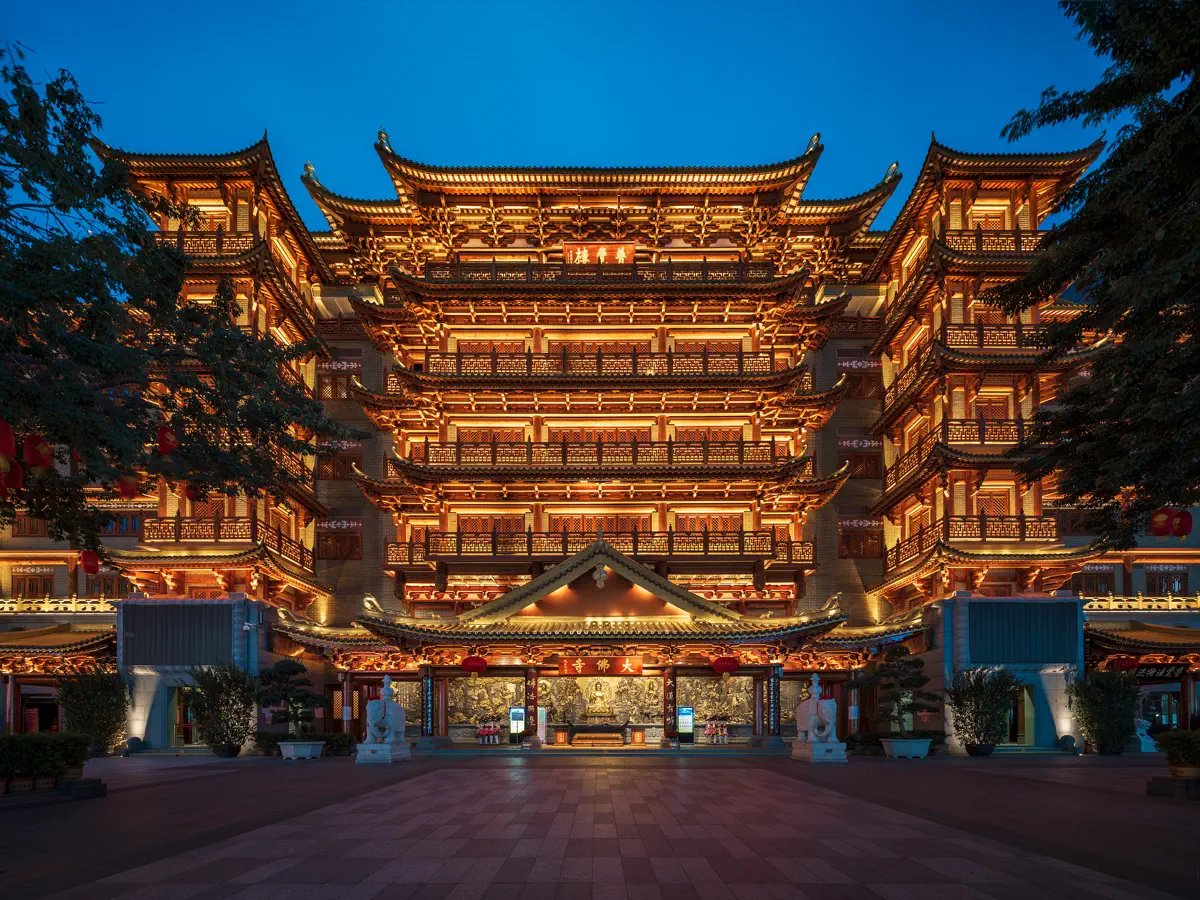
Just a few steps from the bustling neon-lit thoroughfares of Beijing Road, Dafo Temple (大佛古寺, Big Buddha Temple) presents one of Guangzhou's most striking visual contrasts. By daylight, it is an active Buddhist monastery where locals chant prayers and burn incense before ancient bronze statues. But at 7:00pm each evening, when its soaring multi-tier pavilion illuminates with thousands of golden lights, the temple transforms into a scene straight out of Studio Ghibli’s Spirited Away. For international visitors, it has become an essential nighttime photography stop in historic Yuexiu District.
The Chinese name is 大佛古寺 or 大佛寺, and English maps label it Dafo Temple or Big Buddha Temple. The address is 21 Huixin Middle Street, Huifu East Road, Yuexiu District. Search the Chinese name when booking ride-hailing services or navigating subway routes.
How to get to Dafo Temple
Located in the heart of central Guangzhou, Dafo Temple is exceptionally well connected to the municipal metro:
The quickest route is via Metro Line 6 to Beijing Lu Station (北京路站). Leave through Exit B, walk north along Beijing Road for roughly five minutes, and turn west onto Huifu East Road. The temple entrance sits just around the corner on Huixin Middle Street.
Alternatively, take Metro Line 1 or Line 2 to Gongyuanqian Station (公元前站). Walk out of Exit D, head south down Qiyi Road, and turn east onto Huifu East Road. The walk takes about eight to ten minutes.
If you are already browsing the pedestrian mall on Beijing Road, simply walk through the open plaza flanking the Guangbai Department Store or Grandbuy Mall; the temple's rooflines will rise into view directly ahead.
Driving or taking a taxi directly to the front gate is strongly discouraged. The surrounding alleys are pedestrianized, meaning parking is scarce and road traffic is restricted during shopping hours. Public transit is far faster and hassle-free.
A thousand-year Buddhist sanctuary in old Yuexiu
While the glowing pavilion looks dramatic and new, Dafo Temple's spiritual lineage spans more than ten centuries.
The monastery was originally established during the Southern Han Dynasty (917–971 AD) as Xincang Temple, one of the twenty-eight state Buddhist temples built by the Southern Han royal court. Over the centuries, it was renamed Futian Temple during the Song Dynasty, expanded into Cangchun Academy under the Mongols during the Yuan Dynasty, and re-established as Fu'an Temple during the Ming Dynasty before suffering destruction by fire in the late Ming upheavals.
The temple’s modern revival began in 1663 during the Kangxi reign of the Qing Dynasty, when Prince Shang Kexi personally financed the reconstruction of the central shrine. To symbolize Buddhist universality, Shang commissioned three massive gilded bronze statues of the Trikala Buddhas (the Buddhas of Past, Present, and Future), leading locals to christen the sanctuary Dafo Si—the Temple of the Big Buddhas.
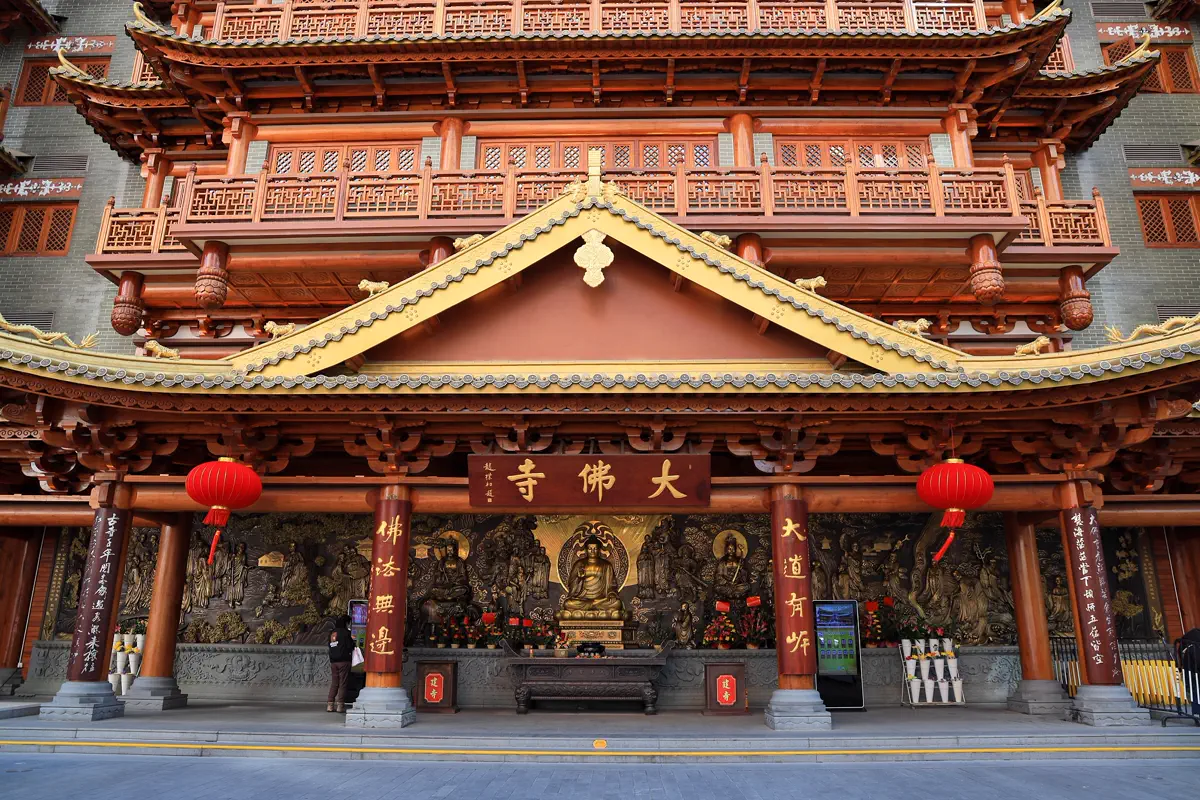
In modern times, after serving temporary roles as a school and municipal depot, the temple grounds were reclaimed and methodically restored. Today, Dafo Temple is recognized alongside Guangxiao Temple, the Temple of the Six Banyan Trees, and Hualin Temple as one of Guangzhou's foundational Buddhist sanctuaries.
The Qing Dynasty Great Buddha Hall and nanmu pillars
The temple's primary architectural relic is the Great Buddha Hall (大雄宝殿), which has survived intact for over 360 years.
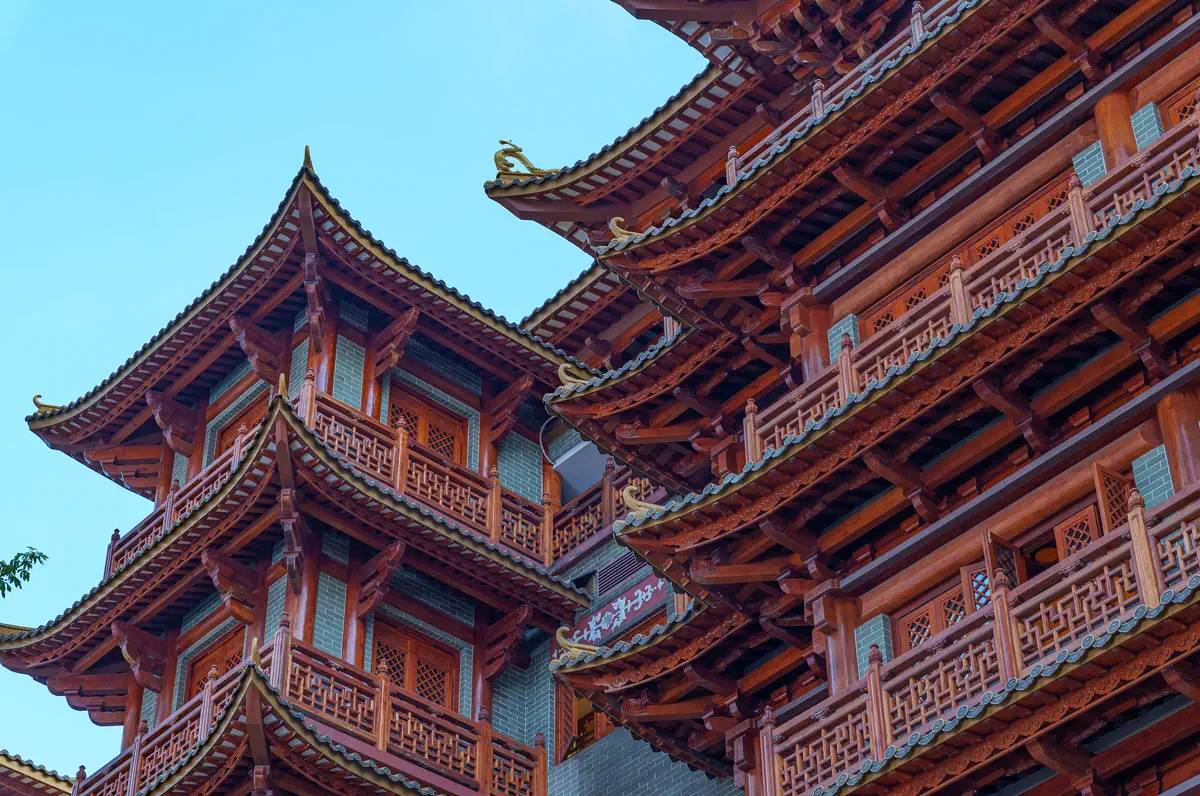
Measuring seven bays wide and five bays deep, the hall represents pure early Qing imperial wood-frame architecture adapted to southern China’s humid climate. Inside, twenty massive pillars carved from solid Phoebe zhennan (nanmu) wood reach eight metres high with diameters approaching half a metre. Despite centuries of subtropical humidity and termites, these ancient timber columns remain completely unblemished, filling the hall with a gentle cedar-like aroma.
Enshrined within are the three original 1663 bronze Buddhas, each towering six metres high and weighing ten metric tonnes. Their refined drapery folds and peaceful expressions reflect the peak of early Qing metal casting and gilding arts.
The 'Spirited Away' night view and lighting hours
The element that propelled Dafo Temple onto global social media feeds is the soaring Hongfa Building (弘法大楼, also called Pujue Pavilion), erected during the temple's recent revitalization.
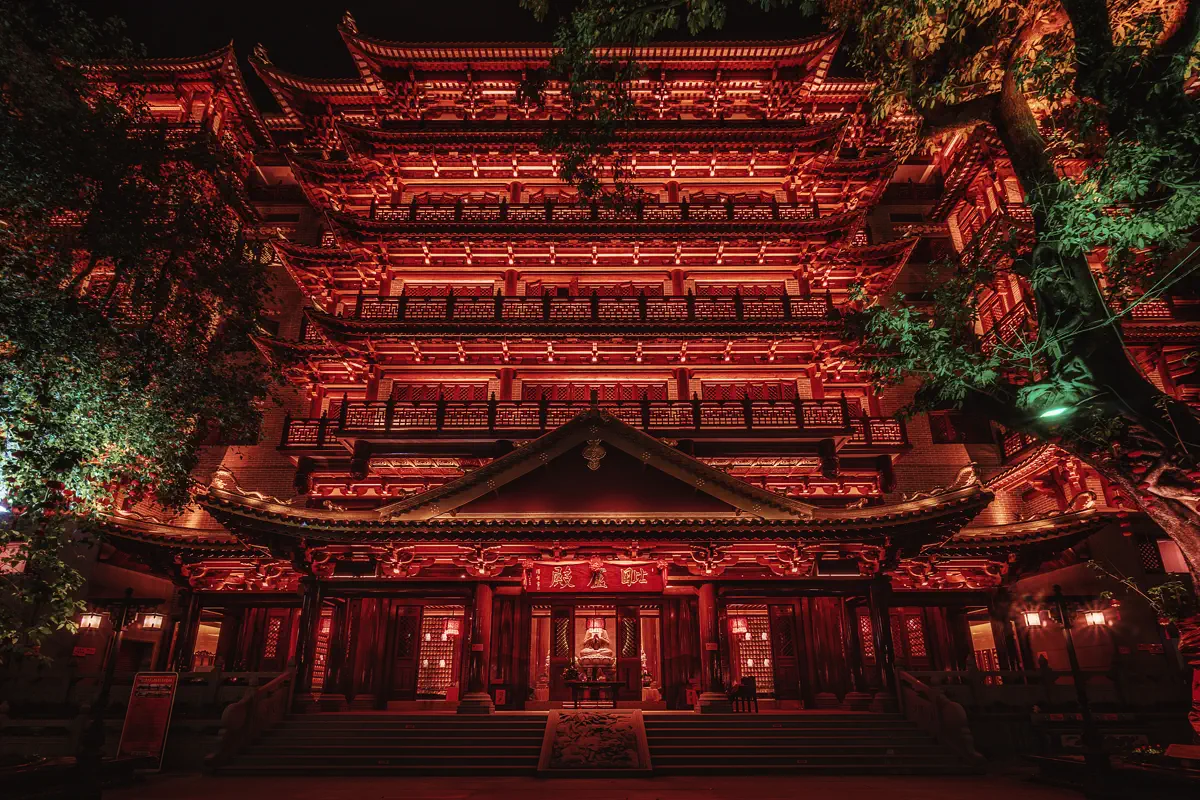
Rising over thirty metres, this seven-storey timber pavilion was constructed using classic Tang-Song mortise-and-tenon framing without modern nails, topped with specially cast golden copper roof tiles. The true spectacle begins promptly at 7:00pm every night when its exterior lighting turns on.
Rows of warm-amber LED ribbons trace every curved eave, timber balustrade, and tiered roofline. Set against the deep indigo twilight, the temple blazes with a warm golden luminescence that feels vividly cinematic. The sight of this multi-tiered gilded palace rising directly amidst bustling modern shopping malls evokes the fantastical bathhouse from Spirited Away.
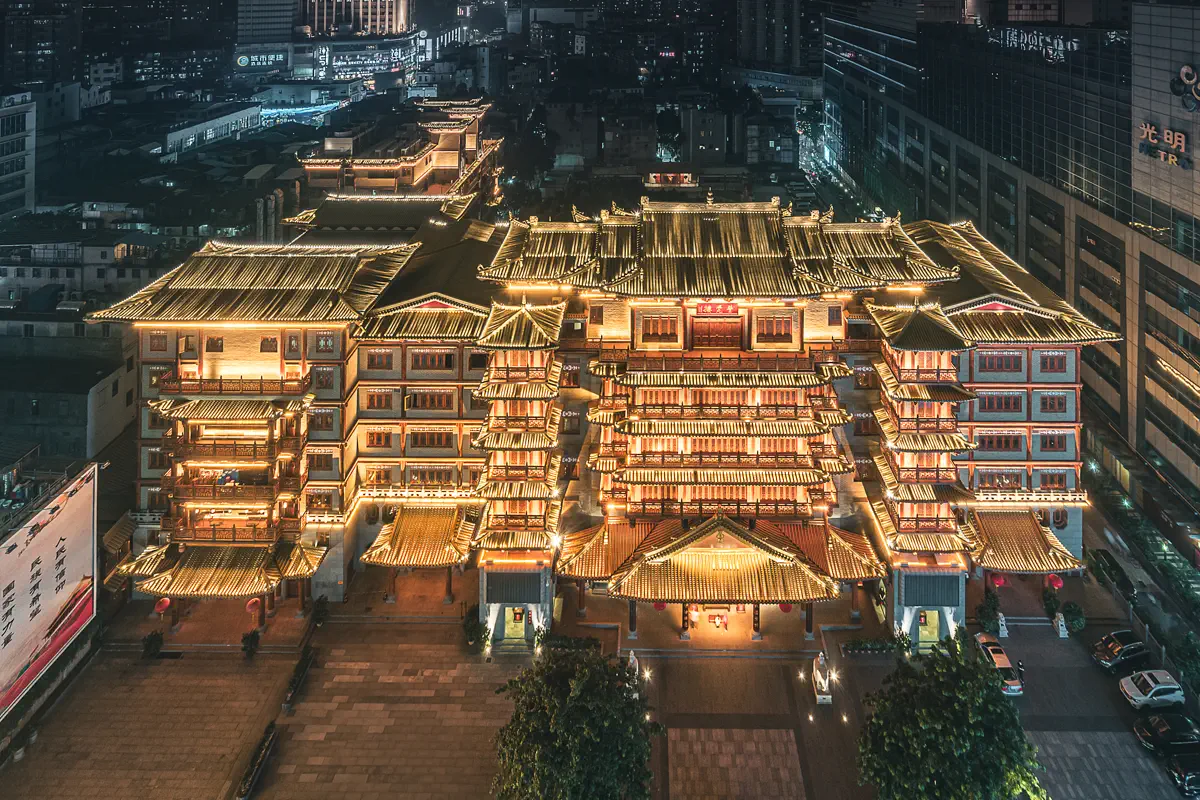
Lighting hours run from 7:00pm to roughly 9:30pm daily (sometimes extended to 10:00pm on public holidays). The best vantage point is from the open plaza outside the north gate, looking upward with a wide-angle lens.
How to fit Dafo Temple into your Beijing Road itinerary
Dafo Temple works best as the evening transition point of a cultural walking day in old Guangzhou:
Begin mid-afternoon around 3:00pm exploring Beijing Road's Millennium Ancient Path—where glass viewing floors reveal stone paving from the Tang, Song, Yuan, Ming, and Qing dynasties stacked in a single cross-section. Sample Cantonese wonton noodles or beef brisket along Huifu East Road.
At 5:30pm, step inside Dafo Temple while the afternoon light still illuminates the ancient nanmu pillars and bronze Buddhas of the Great Buddha Hall. The temple also operates an acclaimed second-floor vegetarian buffet restaurant, offering healthy Cantonese plant-based dishes at modest prices.
At 6:50pm, step out to the north plaza to watch the lights click on at 7:00pm, taking in the full golden glow during the blue hour.
By 8:00pm, stroll fifteen minutes south down Beijing Road to Tianzi Pier on the Pearl River to board a vessel for the Pearl River Night Cruise. This connects ancient dynastic relics, vibrant food streets, a temple night view, and evening skyline cruises without backtracking, serving as a standout night in our 3–4 day itinerary.
For transit logistics and hotel bases across the city, consult our complete Guangzhou travel guide.
When to go
Visit between 5:30pm and 8:30pm to experience both daytime temple worship and the evening illumination in a single trip.
On the 1st and 15th days of the lunar month and during Chinese New Year, thousands of residents gather to pray, resulting in one-way crowd control. For leisure photography, choose a weekday evening.
Dafo Temple questions, answered
Is admission to Dafo Temple free?
Yes. Admission is completely free, and visitors can enter without prior booking.
What time do the temple lights turn on and off?
The exterior lighting is active daily from 7:00pm to 9:30pm (extended to 10:00pm on holidays). Lights are off during daylight hours.
Can I take photographs inside the temple?
Outdoor photography of the pavilions and night illumination is fully permitted. However, avoid flash photography and do not take direct close-ups of Buddha statues or monks inside active prayer halls.
Is the vegetarian restaurant open to the public?
Yes. The vegetarian buffet on the second floor serves lunch and dinner to tourists and locals alike, with tickets purchased on-site.
Operating hours and lighting schedules reflect 2026 listings and may adjust on religious holidays. Heritage status and architectural history follow official publications from the Guangzhou Municipal Bureau of Ethnic and Religious Affairs and the Yuexiu District Cultural Bureau. Transit details align with Guangzhou Metro lines 1, 2, and 6.