Guangzhou Attractions 5 min read
Temple of the Six Banyan Trees Guangzhou: Hours, Tickets and How to Visit
Visit the Temple of the Six Banyan Trees (Liurong) in Yuexiu, Guangzhou. 2026 opening hours, ticket notes, the Flower Pagoda, and metro from Gongyuanqian.

This site’s 3-4 day Guangzhou itinerary already sends Day 1 to the Temple of the Six Banyan Trees, and until now there was no standalone page. After checking 2026 visitor listings, Yuexiu district hours, and the usual history record, the solid facts are the address, the metro, the opening window, and that the Flower Pagoda is not open to climb.
The Chinese name is 六榕寺. English maps use Temple of the Six Banyan Trees or Liurong Temple. The address is 87 Liurong Road, Yuexiu District. Search the Chinese name in a map app. English spellings wander.
How to get to the Temple of the Six Banyan Trees
Take Metro Line 1 or Line 2 to Gongyuanqian (公园前). Walk northwest to Liurong Road. 2026 guides put that walk at five to eight minutes. If you are already on Line 6, Haizhu Square works, with a longer walk.
Gongyuanqian is the same interchange for the palace-site half of the Nanyue King Museum. Keep both visits short and they fit in one morning. Buses still stop on Liurong Road. Route numbers change. For a first visit, give the metro instruction.
Hours, tickets, and the Flower Pagoda
Yuexiu visitor guidance from January 2026 and TravelChinaGuide’s July 2026 update both list 8am to 4.30pm, with admission free. Baidu Baike matches that, and adds the line that matters on the ground. The pagoda is currently closed.
Some English blogs still quote five or ten yuan at the gate. Those are leftover numbers. Pay what the window asks that day. Do not plan the visit around climbing the tower.
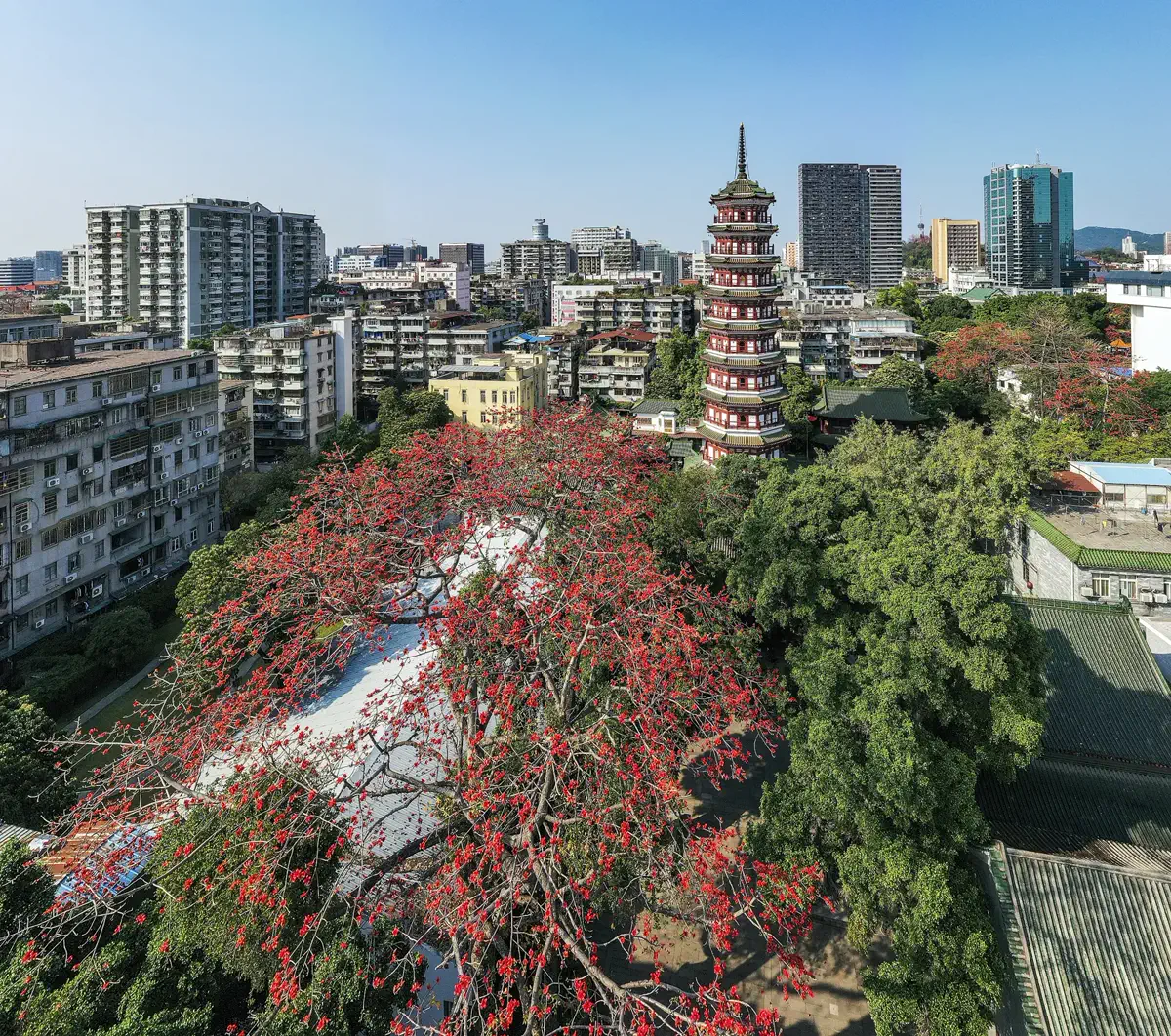
The Flower Pagoda (花塔) is the red-and-white octagonal tower you see from the street. Records date the rebuild to 1097, in the Northern Song. Height listings cluster around 57 metres. It stands above the Yuexiu blocks around it, which is why courtyard photos still work when you cannot go up.
Before 10am on weekdays there are fewer tour groups. Spring Festival and the Lantern Festival fill the courtyards because people queue for the first incense of the year. Holidays can change the hours. 8am to 4.30pm is the ordinary weekday listing.
The pagoda exterior, the main halls, and a loop of the steles take about an hour. Two hours only pays off if you like reading inscriptions.
What you see inside
This is a working Buddhist temple. People burn incense, and the halls stay in use. Cover shoulders and knees. Keep voices down inside. Do not photograph worshippers up close without asking. Skip flash around gilt statues, even when a sign is missing.
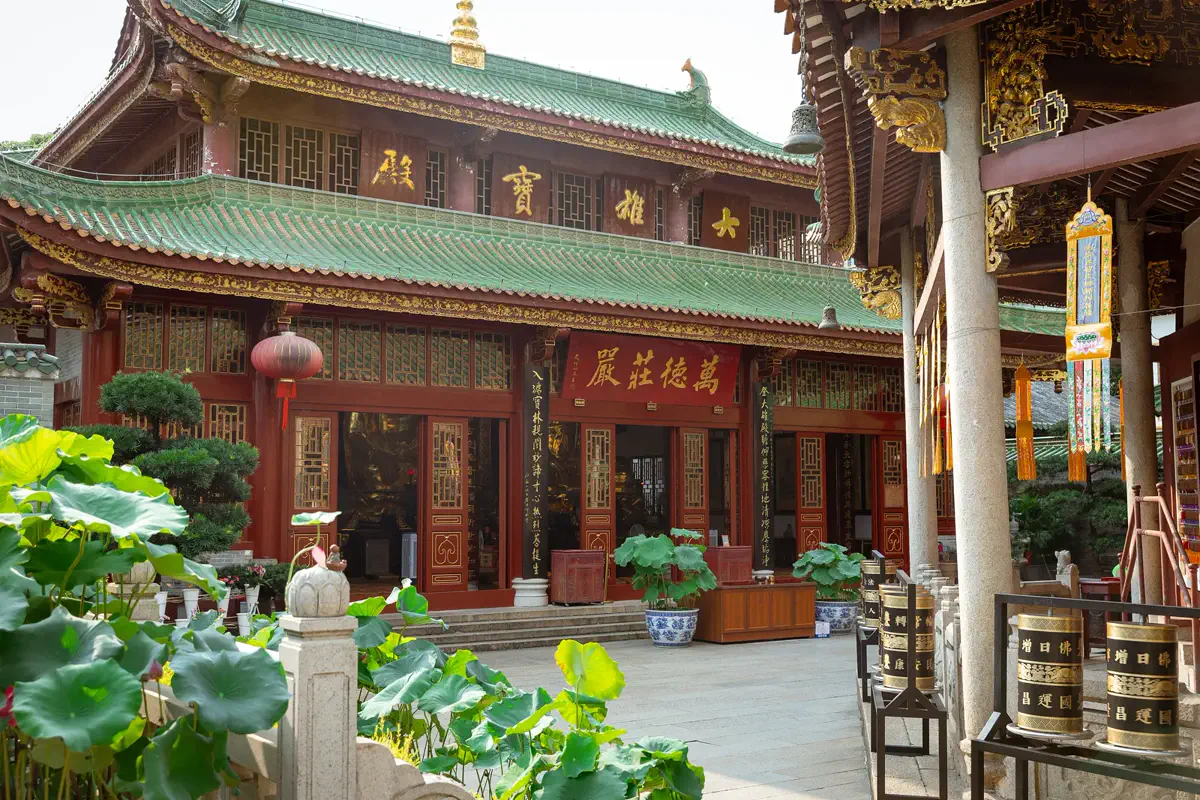
The Mahavira Hall holds three large Buddhas. Guides usually name Sakyamuni in the centre, Amitabha on one side, and the Medicine Buddha on the other. That is the standard visitor explanation. You do not need it to stand in the hall.
There is also a bronze figure of Huineng, the Sixth Patriarch of Chan Buddhism. West of here, Guangxiao Temple on Guangxiao Road is the larger Huineng site in the city. If you only have time for one temple, Six Banyan Trees wins on the pagoda. If you want the older, broader compound, Guangxiao is the other stop. This page does not cover both.
Thresholds are high. Step over them. Do not stand on them. Guangzhou temple notes almost all say this, including our Chen Clan Ancestral Hall page, and people looking at their phones still catch a foot.
How the temple got the name Six Banyan Trees
The first construction is dated to 537, in the Liang dynasty, under Emperor Wu. The monk tied to the founding is Tanyu. Early names include Baozhuangyan Temple. The compound burned and was rebuilt. Later writers keep pointing at the Northern Song rebuild.
The present name comes from a visit by Su Shi (Su Dongpo). He wrote of six banyan trees on the grounds. The two characters 六榕 stayed. The original trees are gone. The name is what remains.
That is the origin story you need on site. Dynasty lists after that do not change how you walk the courtyard.
Walk it with nearby Guangzhou attractions
The temple sits in the old Yuexiu core. It belongs on a first visit even if you are not collecting temples.
- West, a seven to eight minute walk, is Guangxiao Temple. That is the older compound and the fuller Huineng site.
- North, toward Dongfeng Road, is Sun Yat-sen Memorial Hall. The 3-4 day itinerary already pairs the two on the same afternoon and evening.
- East and south, Beijing Road has the glass-covered ancient road. Sacred Heart Cathedral is a further walk from there.
- Yuexiu Park and the Five Rams statue sit further north. Do not stack the temple, the park, and Chimelong on one day.
After the brick pagoda, if you want Lingnan woodcarving, go west to Chen Clan Ancestral Hall. That is a metro hop, not a stroll. The best 10 Lingnan attractions list already treats Liurong Temple as the compact stop.
A short plan that actually fits
Leave Gongyuanqian, walk to 87 Liurong Road, one hour in the temple, then the Nanyue palace site or Sun Yat-sen Memorial Hall, then Beijing Road when you want food and a flat walk. That is a full Yuexiu afternoon. It matches Day 1 of the itinerary, and it does not invent a pagoda climb the listings no longer support.
The Guangzhou travel guide covers the whole city. This page is only the temple.
Guangzhou temple questions, answered
Can you climb the Flower Pagoda?
No. Current visitor listings show the pagoda closed. Photograph it from the courtyard, where it still reads well against the Yuexiu rooftops.
Is the Temple of the Six Banyan Trees free?
Yuexiu district guidance and 2026 listings show free admission. Some older English blogs still quote a small gate fee. Pay what the window asks on the day.
Which metro station is nearest?
Line 1 or Line 2 to Gongyuanqian, then a five to eight minute walk northwest. Line 6 to Haizhu Square works with a longer walk.
How long do you need?
About an hour for the pagoda exterior, the main halls, and a loop of the steles. Two hours only pays off if you like reading inscriptions.
Hours and fees follow 2026 visitor listings and can change on festival days. On a public holiday, read the board at the gate. Yuexiu guidance (January 2026) and TravelChinaGuide (July 2026) list free admission and the 8am to 4.30pm window. Baidu Baike lists the pagoda as closed. Founding date, Su Shi’s naming, and the 1097 rebuild follow the English Wikipedia entry for the temple.