Guangzhou Attractions 11 min read
Southern Han Mausoleums Museum: Royal Tombs & Relics Guide
Explore Southern Han Mausoleums Museum in Guangzhou. Discover 10th-century royal tombs, ancient Islamic glassware, stone stele, tickets, and metro directions.
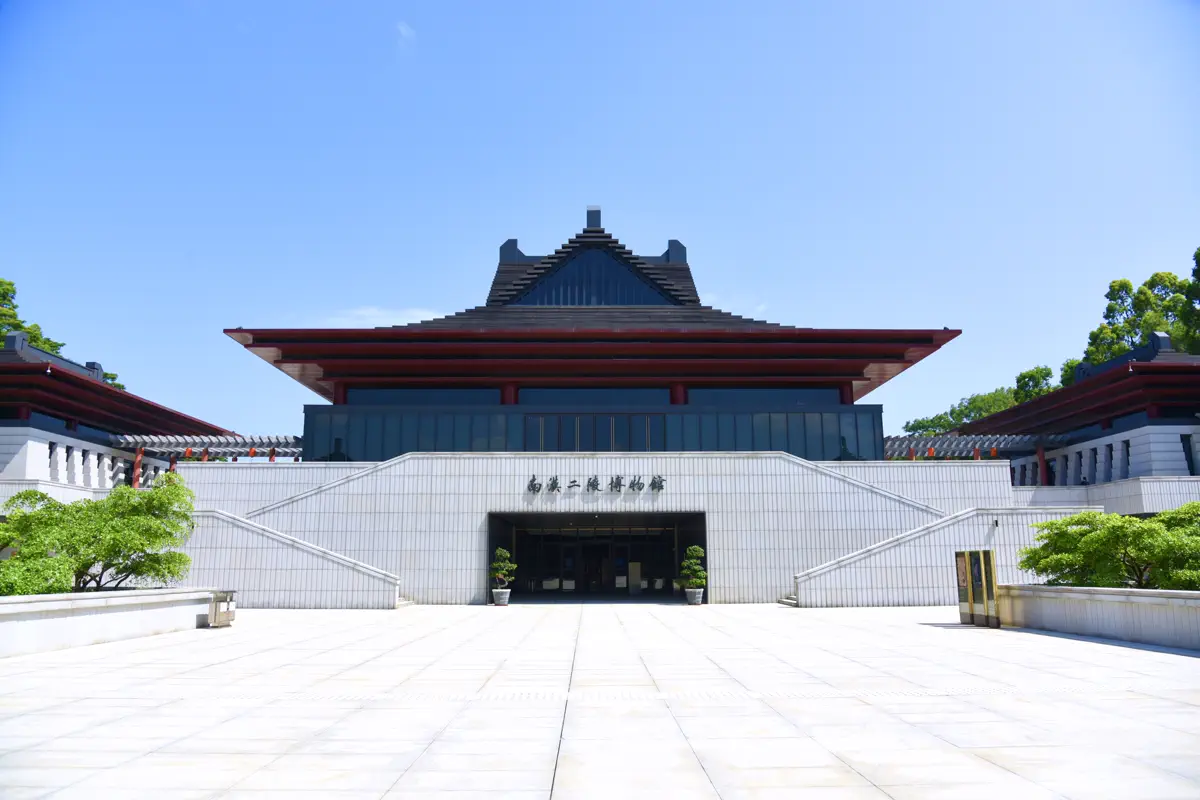
Most travelers seeking ancient royal history in Guangzhou head directly to the famous Western Han Nanyue King Museum in downtown Yuexiu District. Yet deep within the leafy campus surroundings of Xiaoguwei Island (known today as the Guangzhou Higher Education Mega Center or University Town), another magnificent imperial burial site awaits. The Southern Han Mausoleums Museum (南汉二陵博物馆) protects and showcases the final resting places of the rulers of the 10th-century Southern Han Kingdom.
Unlike crowded central tourist spots, this national-level museum offers a remarkably peaceful and contemplative atmosphere. Set against gently sloping green hills, its symmetrical Tang-style courtyards, soaring corner watchtowers, and understated granite terraces house thousands of archaeological treasures. From an intact stone mourning stele inscribed for a founding emperor to rare 1,000-year-old Islamic blown glassware shipped via ancient Maritime Silk Road routes, the museum reveals a fascinating era when Guangzhou served as the bustling independent capital of a seafaring dynasty.
The Chinese name is 南汉二陵博物馆 (Nánhàn Èrlíng Bówùguǎn). The official address is No. 8 Huashi 1st Road, Higher Education Mega Center, Panyu District, Guangzhou (广州市番禺区大学城华师一路8号). Use the Chinese characters when flagging a taxi or searching mapping apps.
How to get to Southern Han Mausoleums Museum
Although situated in suburban Panyu District, the museum is easily accessible via Guangzhou's extensive public transit system:
- By Metro and Bike (Recommended): Take Metro Line 4 or Line 7 to Higher Education Mega Center South Station (大学城南站). Leave via Exit D. From the exit, unlock a shared public bicycle (such as Meituan or Hello Bike) and cycle north along Zhonghuan East Road and Huashi 1st Road for roughly 2.0 kilometres (about 10 minutes). The wide, tree-lined bike lanes make this a scenic and straightforward ride.
- By Metro and Bus: From Higher Education Mega Center South Station (Exit C or D) or Higher Education Mega Center North Station, transfer to bus route University Town Circular Line 1 (大学城环线1路) or Pan 201 (番201路). Disembark at Huashi 1st Road Station (华师一路站) or Guanzhongyi Main Gate Station (广中医正门站), then walk 200 metres directly to the south entrance.
- By Taxi or Ride-Hailing (Didi): A direct ride from Tianhe District (Huacheng Square or Canton Tower area) takes roughly 25 to 35 minutes via Nansha Port Expressway or Guanzhou Island, costing approximately ¥35 to ¥55 depending on traffic. Set the destination pin to “南汉二陵博物馆-南门”.
The Southern Han Dynasty: 55 years of independence in Lingnan
To fully appreciate the collections on display, it helps to understand the historical backdrop of China's Five Dynasties and Ten Kingdoms period (907–979 AD). Following the collapse of the mighty Tang Dynasty, northern and central China dissolved into violent warlord conflicts and short-lived regimes. Far to the south across the Nanling Mountains, regional military governor Liu Yin and later his younger brother Liu Yan consolidated control over Guangdong and Guangxi, shielding the coastal region from civil war.
In 917 AD, Liu Yan formally proclaimed himself emperor in Guangzhou, initially naming his state Great Yue before changing it to Han (historically termed Southern Han). He established Guangzhou as his imperial capital, designating it Xingwang Fu (Prosperous Royal Prefecture). The kingdom lasted 55 years across four generations and five monarchs until it was conquered by the Northern Song Dynasty in 971 AD.
While court records describe internal palace intrigues, the Southern Han era was marked by exceptional economic and commercial openness. Safe from northern warfare, Guangzhou flourished as the premier terminus of the Maritime Silk Road. Southern Han monarchs welcomed Arab, Persian, and Southeast Asian merchant traders, amassing enormous wealth through maritime customs duties, pearls, spices, and exotic tribute goods. Emperor Liu Yan was also a fervent patron of Buddhism, constructing 28 grand temples around the capital outskirts, including the historic Xinzang Temple, which evolved centuries later into the renowned Dafo Temple in old Yuexiu, while his successor cast the famous thousand-year-old iron pagodas preserved at Guangxiao Temple.
Archaeological breakthrough: The Kangling and Deling imperial tombs
For centuries, the exact locations of the Southern Han imperial tombs were lost beneath the undulating bamboo groves and orchards of Xiaoguwei Island. In 2003 and 2004, when the Guangzhou municipal government commenced construction on the island-wide University Town, archaeological teams conducted systematic survey excavations.
What they uncovered made national headlines. On Liangshi Hill in Beiting Village, archaeologists excavated Deling (德陵), the tomb of Liu Yin (posthumously honoured as Emperor Xiang). Although ancient tomb robbers had penetrated the burial vault centuries earlier, teams recovered celadon storage jars, glazed ceramics, and architectural roof tiles that confirmed high-ranking 10th-century royal burials.
Less than a kilometre away on Qingdigang Hill, researchers discovered an even more monumental complex: Kangling (康陵), the imperial mausoleum of founding ruler Liu Yan. Excavators found that the entire natural hilltop had been artificially leveled to create an enclosed imperial precinct. The surface layout included a rammed-earth circular mound, a stepped sacrificial platform, stone-columned spirit ways, and corner watchtowers. Below the platform lay a massive subterranean burial chamber built of heavy grey kiln bricks with vaulted double-arch ceilings.
Kangling represents the only intact, fully articulated imperial mausoleum layout from the Five Dynasties and Ten Kingdoms period ever uncovered anywhere in China. Due to its unparalleled historical and architectural significance, the excavation of the Southern Han Mausoleums was celebrated as one of China's Top 10 Archaeological Discoveries of 2004. The dedicated museum was constructed adjacent to the tombs to ensure perpetual in-situ conservation and public education.
Tang-style architecture: South Rhythm and Harmonious Courtyard
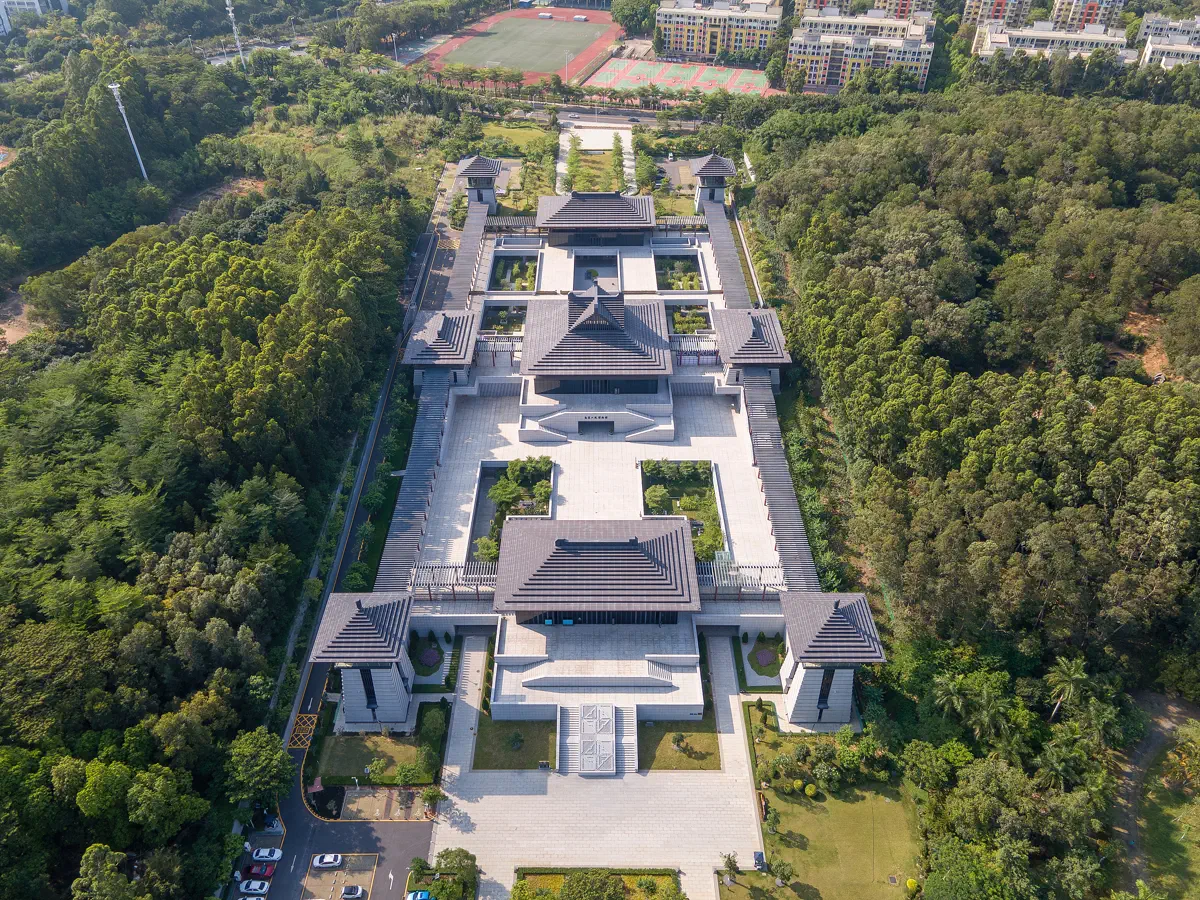
The museum building itself is an architectural masterwork. Designed by acclaimed architect Xian Jianxiong and his design firm XAA, the structure encompasses roughly 20,000 square metres of floor space across a 90,000-square-metre site. The architectural concept, titled "South Rhythm and Harmonious Courtyard" (南韵·和庭), draws inspiration from the classical Chinese philosophical motif of the spherical heaven and square earth.
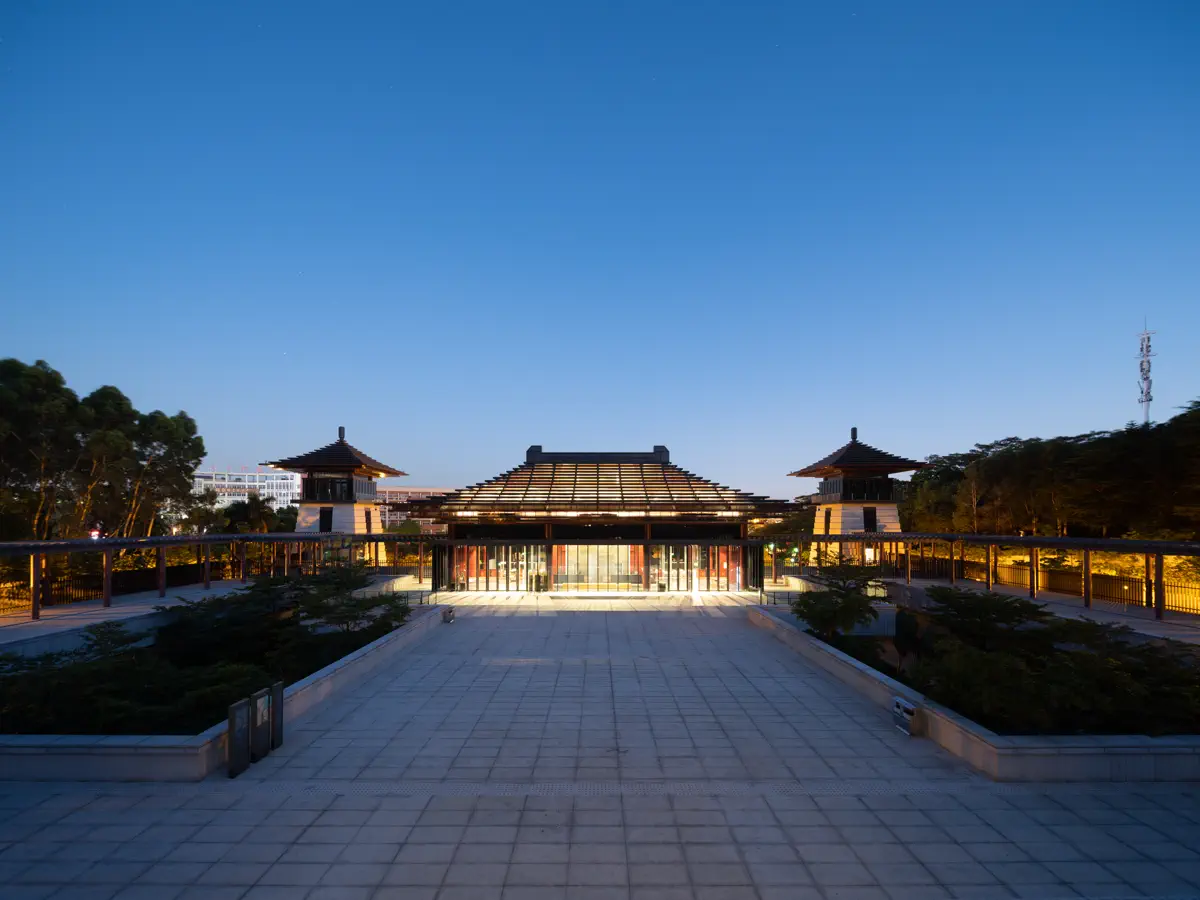
Rather than erecting a solitary monolithic box, the architects stepped the building down into the hillside terrain along a precise north-south ceremonial axis that parallels the nearby Kangling burial mound. Visitors ascend wide granite flights of stairs through a series of three progressively elevated courtyards, mirroring the progression of Tang and Song imperial palaces.
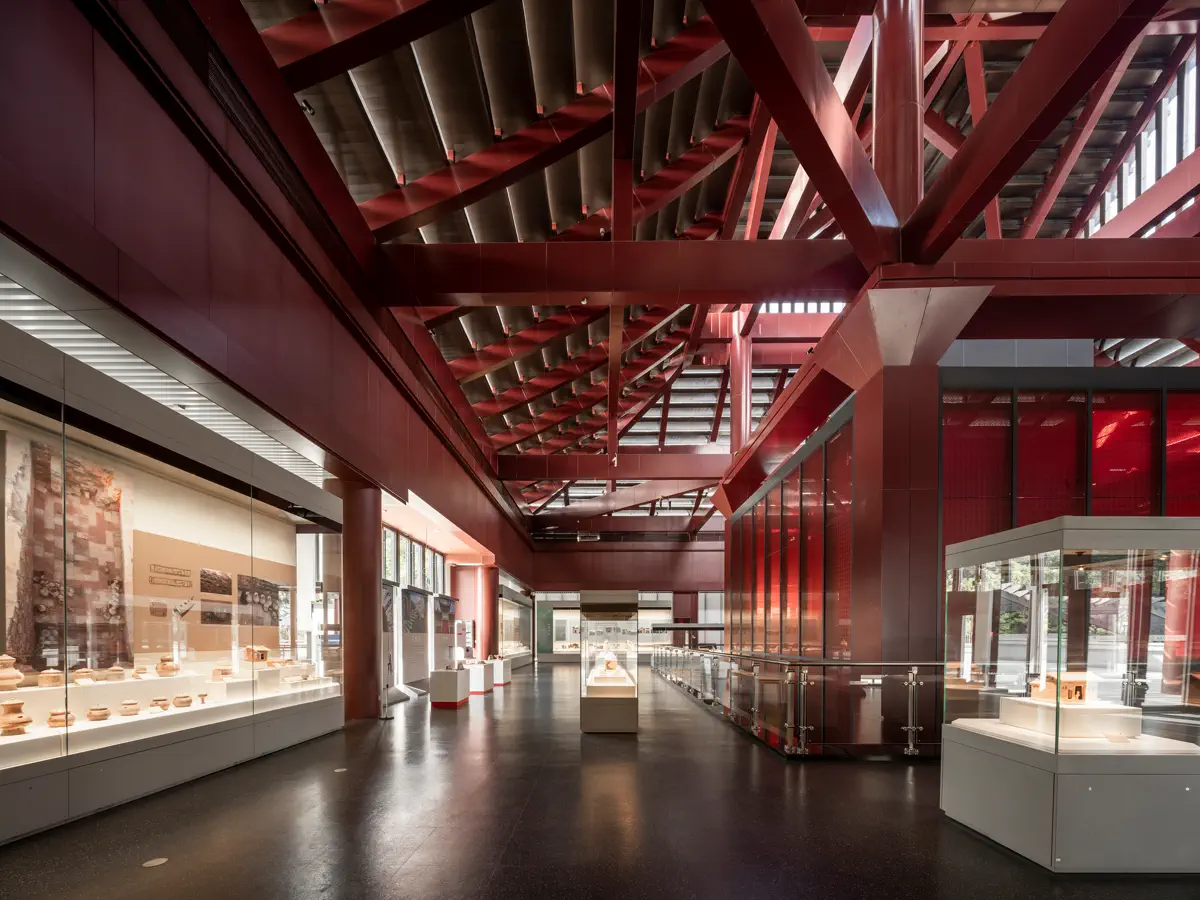
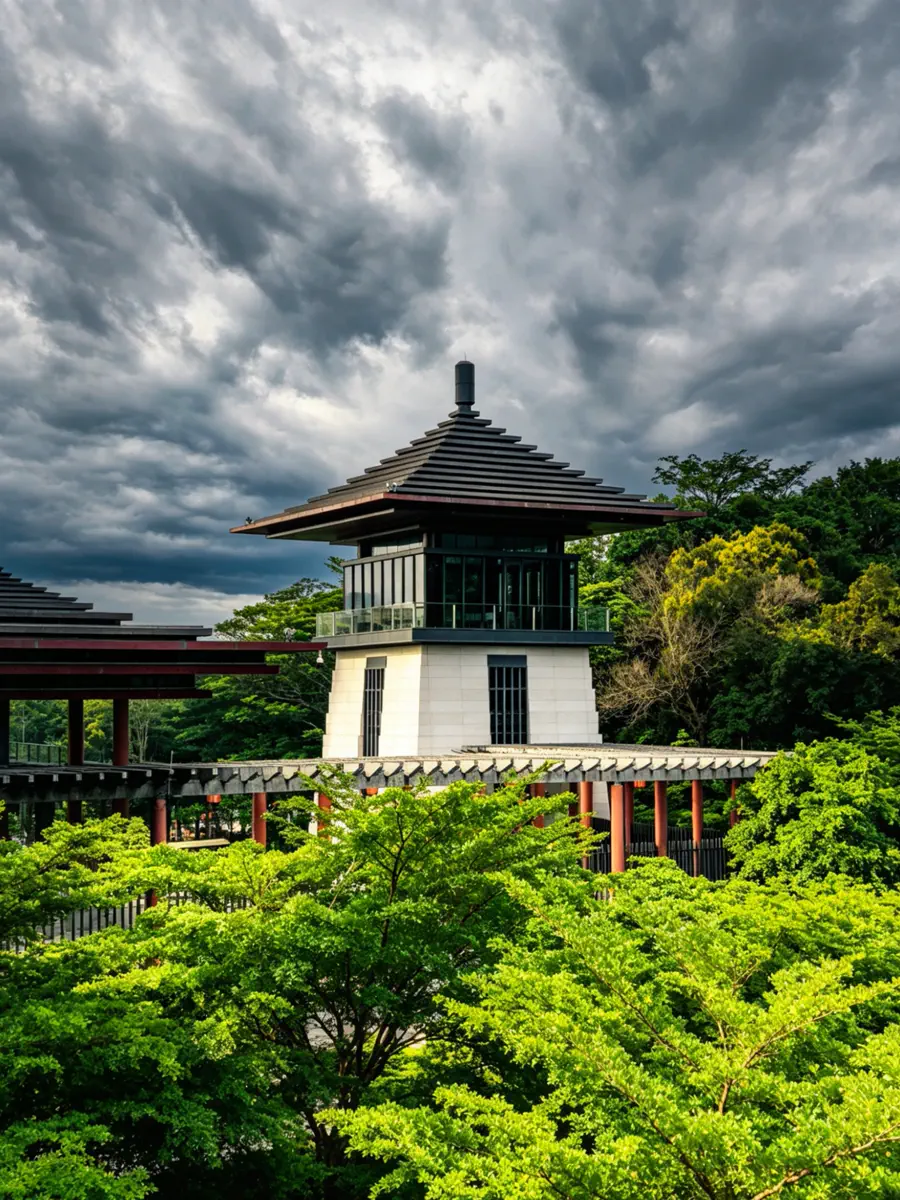
The exterior balances light-grey solid granite walls on the lower levels with exposed crimson steel roof trusses above. Sweeping hipped-gable roofs (歇山顶) with deep overhanging eaves evoke classical wooden bracket architecture while maintaining sleek, minimalist modern geometry. Flanking corner pavilions act as contemporary watchtowers (阙楼), connected by open-air colonnades where bamboo and native banyan trees cast geometric shade across polished stone floors.
Museum highlights: Persian glass, imperial stele and ceramics
The museum holds two primary permanent exhibition galleries alongside rotating special exhibits:
1. Han Spirit and Tang Charm: History and Culture of the Southern Han
This dedicated exhibition provides the most comprehensive historical overview of the Southern Han regime in existence. Key artifacts include:
- The Imperial Eulogy Stele of Emperor Liu Yan (高祖天皇大帝哀册文碑): Unearthed from the brick underground burial chamber of Kangling, this grand stone monument bears an intact inscription of several hundred calligraphic characters detailing the emperor's posthumous titles, virtues, and funeral ceremonies. It is the earliest intact imperial mourning eulogy stele ever discovered in China, providing definitive textual proof of the tomb's occupant.
- Restored Islamic Green Blown Glass Bottle: Excavated from the damp silt of Kangling as more than 100 shattered fragments, this translucent greenish glass vessel was painstakingly reassembled by Guangzhou conservators over several months. Chemical analysis confirms its composition and blown-glass craft originated in ancient West Asia (Islamic Persia), serving as prime physical testimony to Guangzhou's pivotal role on the 10th-century Maritime Silk Road.
- Realistic Ceramic Fruit Models (象生陶瓷祭品): Among the imperial funerary goods are charming glazed terracotta sculptures depicting tropical Lingnan fruits, including papayas, bananas, water chestnuts, and pineapples, proving these fruits were already cultivated and valued as royal tribute items a millennium ago.
- Carved Celadon Censer Lids and Mythical Beast Tiles: Intricately pierced celadon incense burner lids featuring swirling scroll patterns, alongside expressive terracotta guardian beast roof tiles that once adorned Southern Han royal palace buildings.
2. Between Cloud Mountain and Pearl Water: Archaeological Discoveries of Guangzhou
Because the museum also serves as the operational headquarters of the Guangzhou Municipal Institute of Cultural Heritage and Archaeology, this expansive second gallery chronicles over 2,200 years of Guangzhou's urban growth. Artifacts span from Neolithic shell-mound tools found along the East River to Western Han jade, Tang porcelain trade wares, and Ming-Qing export ceramics salvaged from ancient shipwrecks in the Pearl River estuary.
Public Archaeological Center: Hands-on discovery for visitors
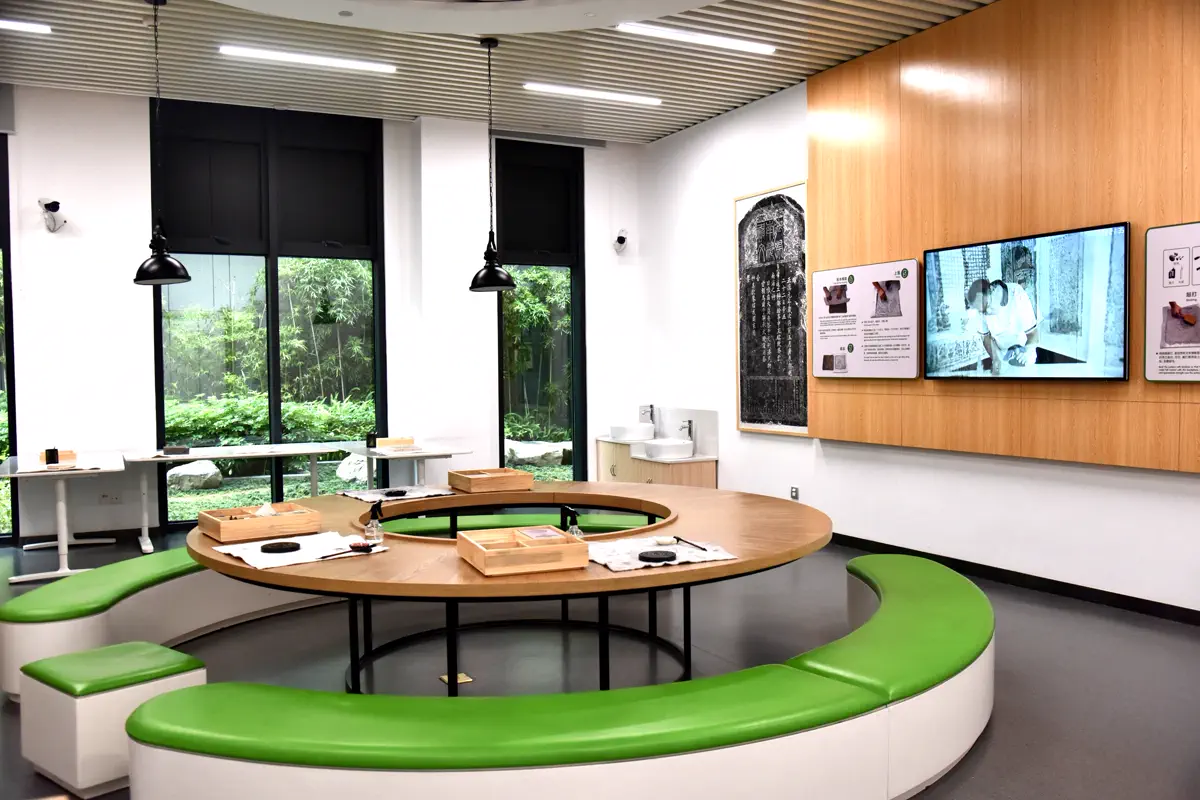
A standout feature that distinguishes this museum from traditional institutions is the Public Archaeological Activity Center. Aimed at demystifying field archaeology for families, students, and curious visitors, this dedicated wing offers interactive, hands-on learning:
- Simulated Excavation Pit: Children can put on aprons, pick up field brushes and trowels, and dig through layered sand strata to uncover replica pottery shards and ancient tiles, learning how stratigraphy and grid recording work.
- Stone Rubbing Workshops: Visitors can try their hand at traditional ink-rubbing techniques using handmade Xuan paper, water sprayers, and ink pads to transfer intricate beast patterns from ancient brick reliefs onto paper.
- Ceramic Restoration Tables: Educational jigsaw-style models allow visitors to experience the patience and precision required to puzzle fractured ancient vessels back together.
Hours, tickets and practical visiting tips
Plan your visit efficiently with these up-to-date practical guidelines:
- Admission: Free admission. Individual travelers do not need to make advance reservations online. Simply present your valid physical ID (Chinese Resident ID card or international foreign passport) at the entrance security checkpoint for complimentary entry. Guided group tours of ten or more people should call ahead (020-31360991).
- Opening Hours: Tuesday to Sunday, 9:00am to 5:30pm (last admission at 4:45pm). The museum is closed all day on Mondays for maintenance, except on official Chinese statutory holidays.
- Recommended Visit Duration: Allow 2 to 3 hours to thoroughly view the two permanent exhibition halls, explore the courtyards, and visit the archaeology center.
- Luggage & Lockers: Free electronic lockers and self-service water dispensers are available in the ground-floor visitor service lobby. English-language audio guide units can also be rented at the front reception desk.
- Kangling Archaeological Site: The outdoor Kangling tomb mound is located just east of the main building. Access to the excavated tomb shelter may periodically be restricted or require separate time-slot registration depending on conservation schedules; check with museum staff upon arrival.
Nearby attractions on Higher Education Mega Center island
Pairing your museum trip with other sights across Xiaoguwei Island makes for a rewarding full-day escape from the city centre:
- University Town Central Lake Park (大学城中心湖公园): A 10-minute bike ride north of the museum, this expansive lake features lakeside lawns, ancient banyan trees, and tranquil waters that are popular with local university students for weekend picnics and sunset strolls.
- Guangdong Science Center (广东科学中心): Located on the western tip of the island, this Guinness-record-holding science museum shaped like an aircraft carrier offers eight themed discovery zones and IMAX cinemas, ideal for families traveling with children.
- Lingnan Impression Park (岭南印象园): Situated along the southern waterfront in Lianxi Village, this heritage village showcases traditional Cantonese grey-brick oyster-shell walls, wok-ear gable houses, ancestral shrines, and Cantonese opera performances.
- Huangpu Ancient Port (黄埔古港): Just across the Pearl River waterway to the north in Haizhu District, this historic harbor served as the designated docking station for foreign merchant ships under the Qing Dynasty's Canton System. Sample traditional ginger milk curd (姜撞奶) and Tingzai porridge (艇仔粥) at village eateries.
- Itinerary Integration: See our complete Guangzhou travel guide and Guangzhou 3-4 days itinerary to incorporate Panyu's historic landmarks alongside Yuexiu's ancient heritage and Zhujiang New Town's modern skyline.
Southern Han Mausoleums Museum questions, answered
Is Southern Han Mausoleums Museum free to visit?
Yes. Admission is completely free. Individual visitors do not need to reserve online in advance. Simply show your physical passport or Chinese ID card at the entrance gate for free entry.
Can I see the actual tomb chamber underground?
The main museum building showcases all original excavated artifacts, including the emperor's stone mourning stele and Persian glassware. The outdoor Kangling tomb mound and brick underground shelter are situated adjacent to the museum. Access inside the shelter may occasionally be limited during preservation work, but visitors can freely observe the preserved surface layout and spirit platforms.
How does this compare to the Nanyue King Museum?
The Nanyue King Museum in downtown Guangzhou covers the 2nd-century BC Western Han dynasty and features a complete stone chamber burial with jade burial suits. The Southern Han Mausoleums Museum covers the 10th-century AD Five Dynasties period, emphasizing Tang-Song imperial transition, Buddhist royal patronage, and Maritime Silk Road foreign trade. Both museums are essential for visitors interested in Guangzhou's royal archaeological heritage.
Is English information available in the museum?
Yes. Main gallery introduction boards and major artifact display cases feature bilingual English and Chinese signage. Rental English audio guides are also available at the visitor reception desk.
What is the easiest way to reach the museum by public transit?
Take Metro Line 4 or Line 7 to Higher Education Mega Center South Station (Exit D), then ride a shared public bicycle for 10 minutes (2 km) directly north to the museum entrance. Alternatively, catch bus route Pan 201 or University Town Circular Line 1 from the metro station.