Guangzhou Attractions 6 min read
Haizhu Bridge and Haizhu Square Visitor Guide
Explore Haizhu Bridge and Haizhu Square in Guangzhou, featuring the 1933 steel truss bridge, Guangzhou Liberation Statue, and historic waterfront walks.
At the southern terminus of Guangzhou’s ancient central axis, the Pearl River flows steadily past open public plazas and historic embankment quays. Here, bridging the river between Yuexiu and Haizhu districts, the steel-truss spans of Haizhu Bridge and the broad green lawns of Haizhu Square create one of the most recognizable historic waterfront ensembles in southern China. Together with the nearby Sacred Heart Cathedral and the bustling streetscapes of Beijing Road, this riverside district encapsulates the dramatic evolution of modern Guangzhou.
The first modern bridge across the Pearl River
Before the 1930s, crossing the Pearl River in Guangzhou depended entirely upon wooden ferry sampans and small steam launches. During severe subtropical typhoons and summer cloudbursts, river transit frequently came to an abrupt halt, isolating the residential south bank from the commercial north bank. In December 1929, the municipal government initiated construction on the city’s very first permanent river bridge, choosing a narrow river bottleneck near the ancient Haizhu Rock reef, from which the crossing derived its name.
The project was contracted to the American firm McClintic-Marshall Corporation, with structural steel components and electrical bascule lifting mechanisms manufactured by Siemens in Germany. When Haizhu Bridge opened for public traffic on February fifteenth in 1933, tens of thousands of cheering residents flocked to witness the engineering feat.
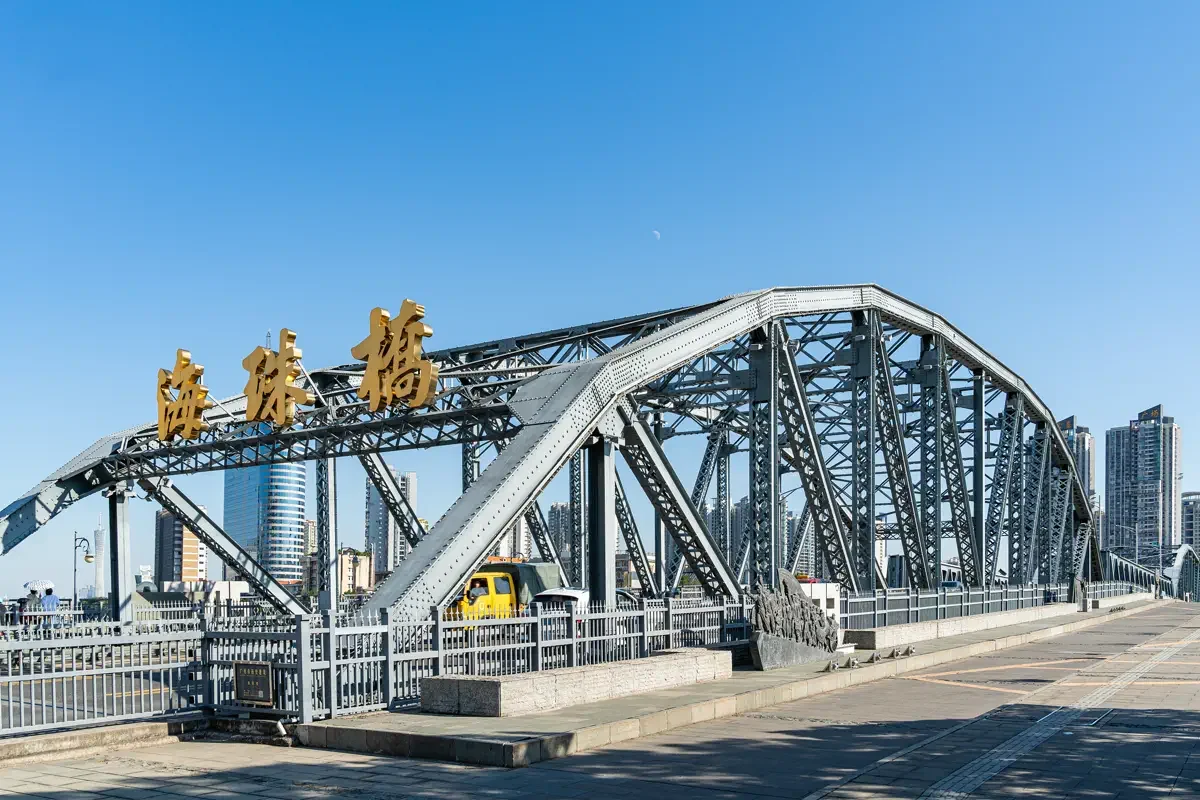
Measuring three hundred and fifty-six meters in total length, the original bridge featured three steel spans. The central seventy-meter opening was designed as an innovative double-leaf bascule bridge. Whenever ocean freighters and naval gunboats sounded their horns, two giant central leaves swung upward on counterweighted trunnions within minutes, allowing large vessels to steam upstream toward Shamian Island and Baietan before gently lowering back into place.
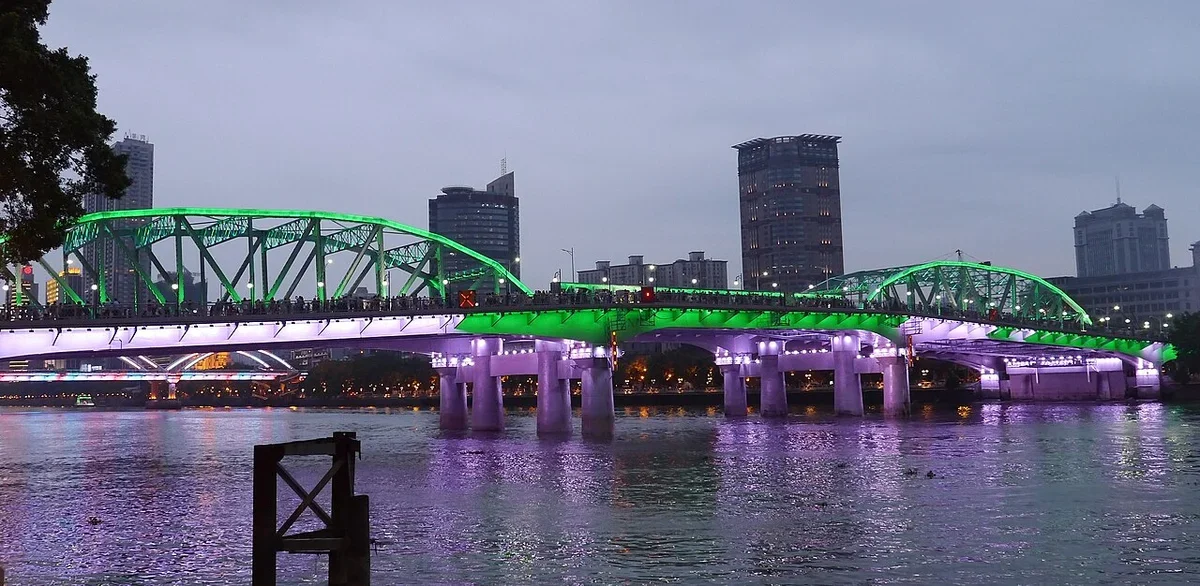
During wartime conflicts in the late 1930s and 1940s, the bridge suffered devastating damage. Japanese air raids crippled the electric opening gears, and retreating nationalist troops dynamited the concrete piers in October 1949, sending all three steel spans crashing into the water. Following liberation, the municipal government enlisted renowned civil engineer Mao Yisheng to guide reconstruction. Salvaged steel was repaired, additional girders were fabricated, and the center span was converted into a permanent fixed truss, reopening to city traffic in November 1950. Following thorough heritage restoration in 2013, the bridge stands in its dignified 1950s silhouette, its gunmetal steel girders adorned with commemorative bronze reliefs depicting river life across the decades.
Haizhu Square and Guangzhou Liberation Statue
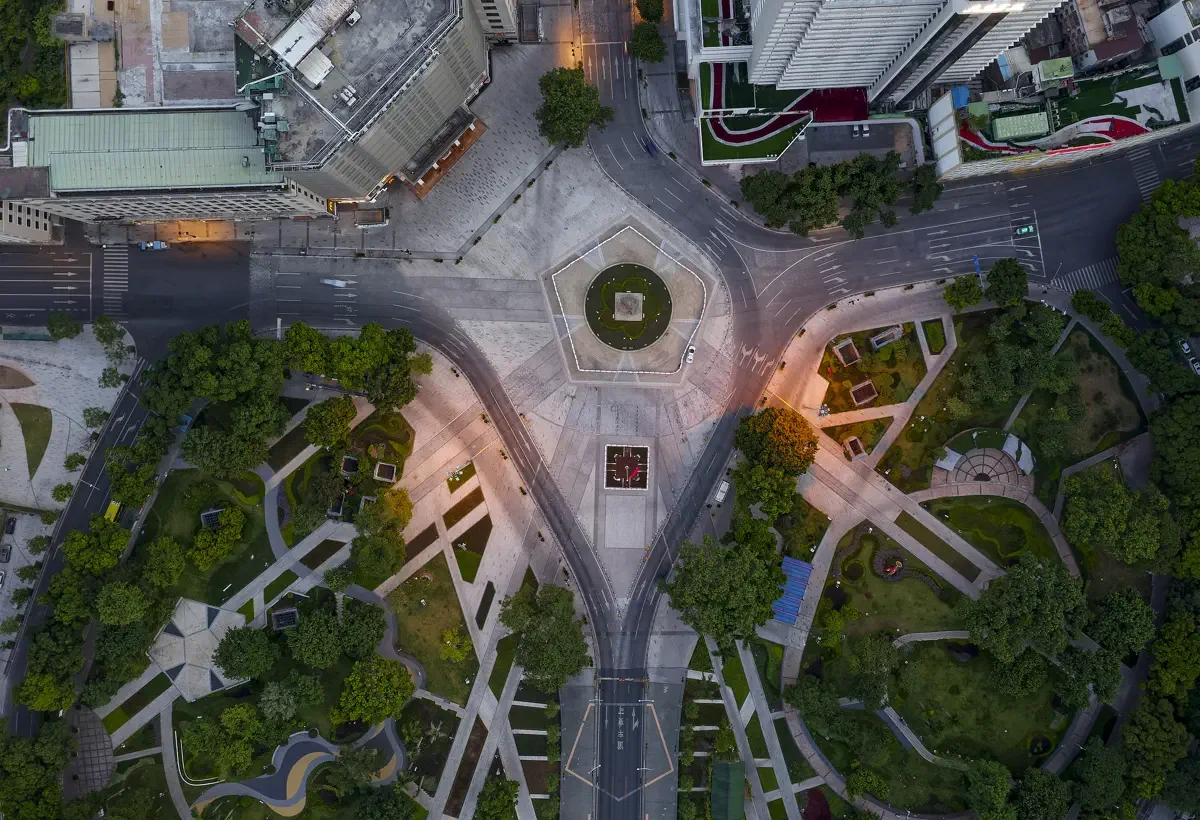
Descending from the northern bridge approaches leads visitors directly onto Haizhu Square. Constructed in 1953, this expansive park serves as Guangzhou’s only traditional waterfront municipal square, anchoring the intersection of the historical city axis that traces north toward Sun Yat-sen Memorial Hall.
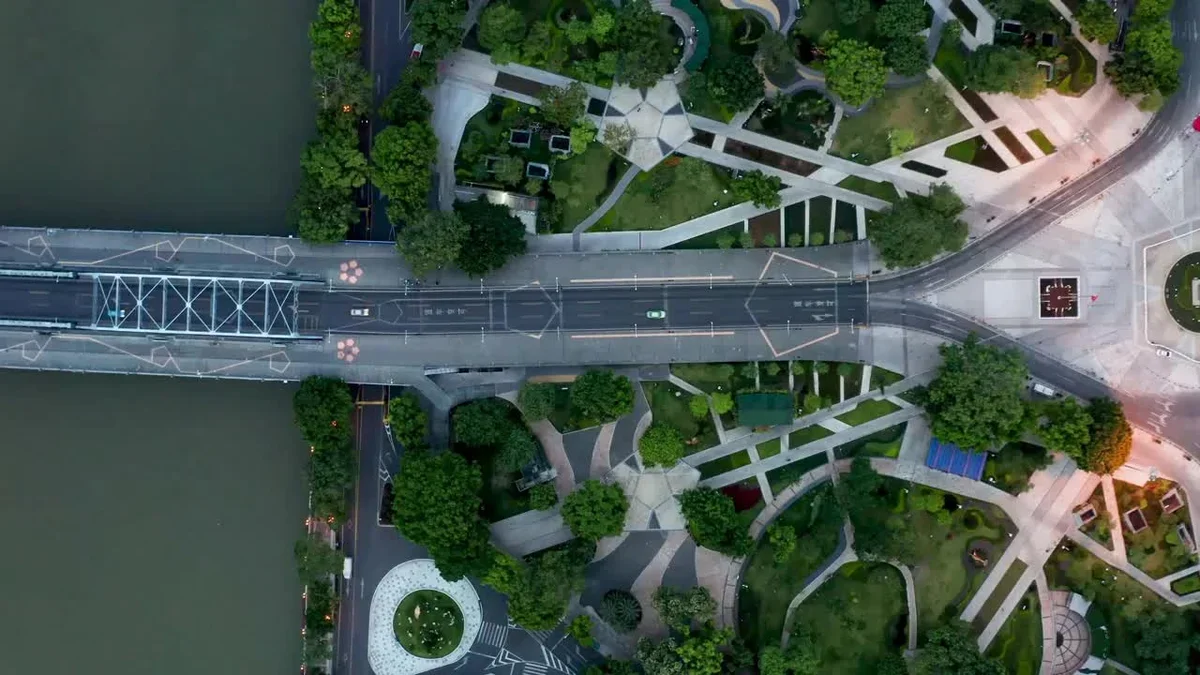
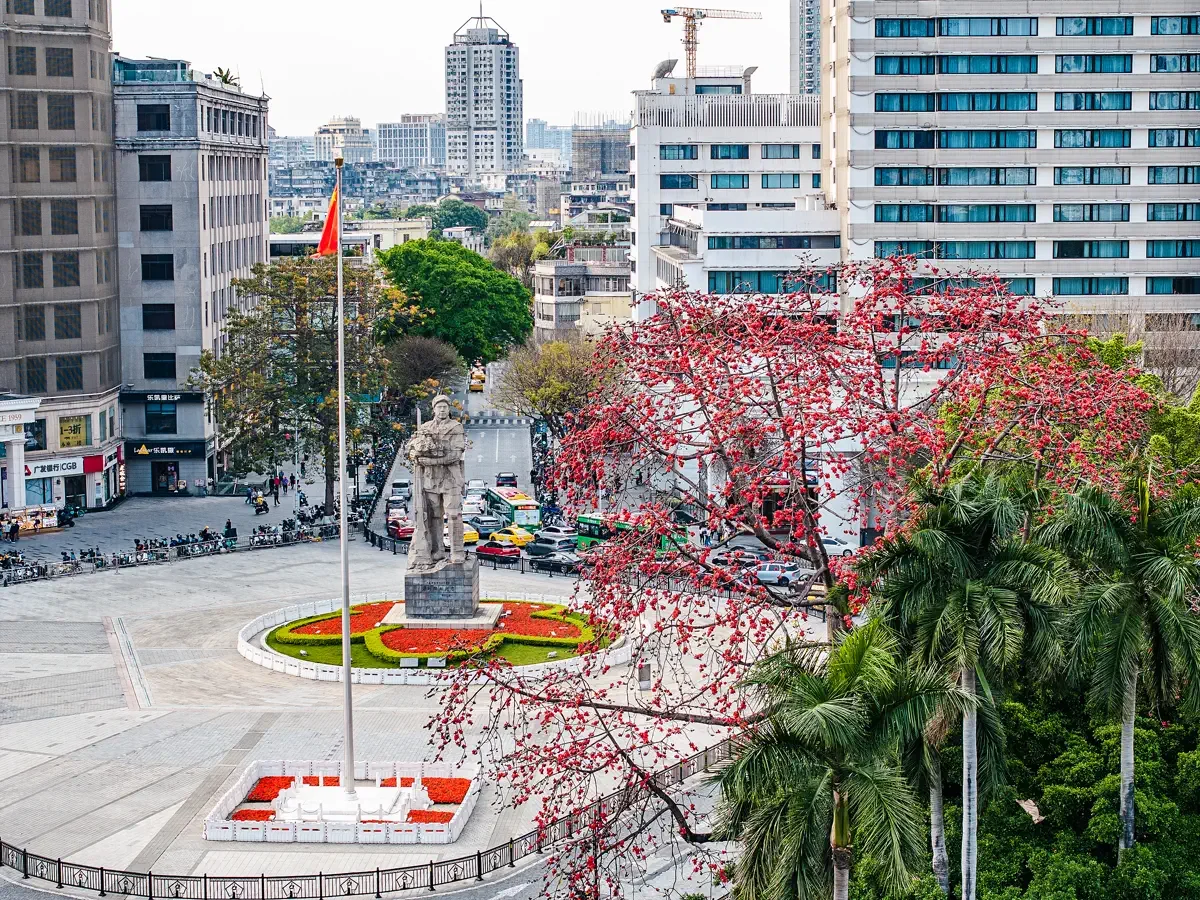
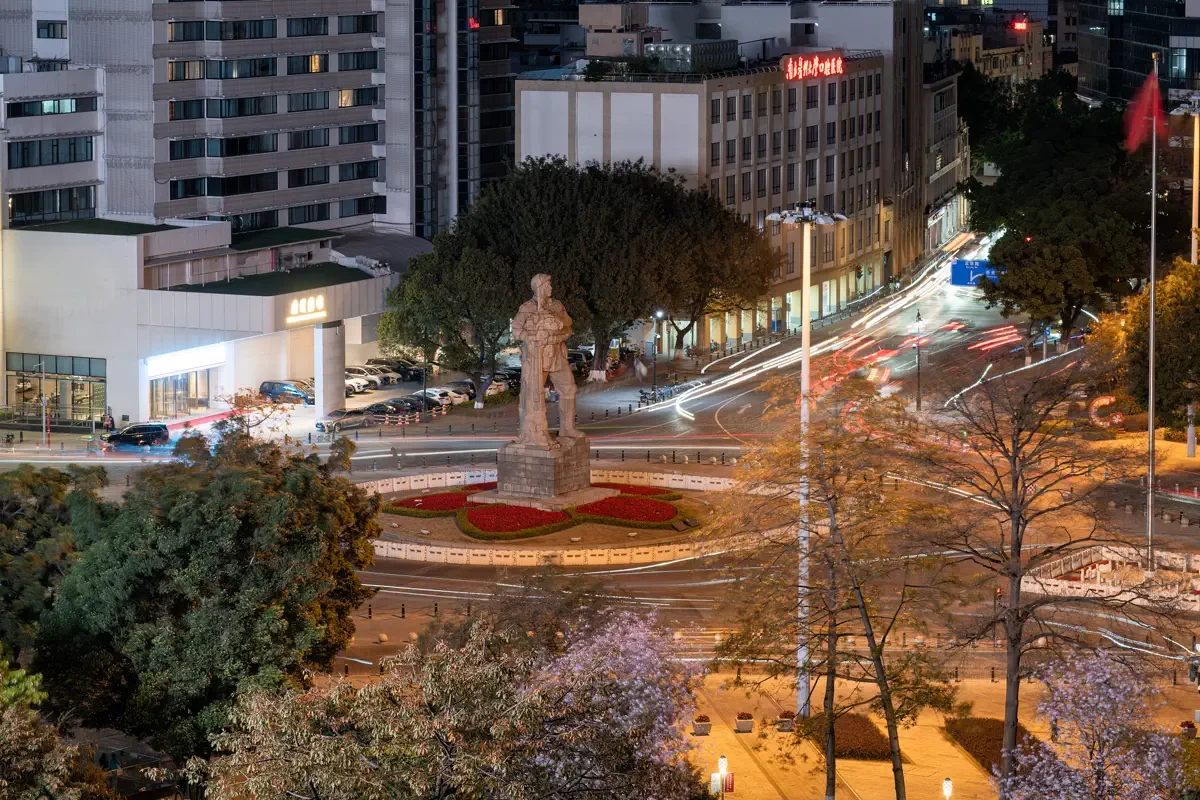
The square is arranged in an expansive radial pattern. Rising from the central green roundabout stands the monumental Guangzhou Liberation Statue, sculpted from massive granite blocks in 1959 by master sculptor Yin Jichang. Standing eleven meters tall, the statue depicts a resolute soldier of the Chinese People’s Liberation Army. With a submachine gun slung across his chest and a bouquet of fresh subtropical flowers cradled in both hands, the soldier gazes steadfastly southward over the flowing waters of the Pearl River.
Surrounding the monument are lush fan palms, broad-canopied banyan groves, and towering centenary kapok trees. Each March, fiery red kapok blossoms carpet the stone terraces below the granite pedestal, echoing the scarlet flowers carved in the soldier’s embrace.
Historical architecture and foreign trade heritage
Beyond its open lawns, Haizhu Square is encircled by landmark buildings that shaped the diplomatic and commercial history of post-war Guangzhou.
Occupying the northwest perimeter is Hotel Landmark Canton, previously celebrated as the Overseas Chinese Hotel when completed in 1955. Designed specifically to welcome returning overseas Chinese families and international trade delegations, the hotel was the premier state guest accommodation of its era, featuring classical Lingnan courtyards, marble corridors, and hospitable banquet facilities.
On the northeast corner stands Guangzhou Hotel, erected in 1968. Rising eighty-six meters across twenty-seven floors, it held the title of the tallest building in mainland China for several years. Locals still call it Twenty-Seven Floors with enduring pride. From its upper balconies, visitors could survey the sea of red-tiled old canton roofs, passenger ferry terminals, and river cargo craft.
Adjacent to the square stood the long-running exhibition halls of the Canton Fair. From 1959 onwards, the China Export Commodities Fair operated here for thirty-four consecutive editions. Foreign merchants from dozens of countries gathered every spring and autumn to negotiate trade agreements, cementing Haizhu Square as China’s primary commercial portal to global markets.
Bicycle tidal waves and local riverfront life
For generations of Guangzhou residents, Haizhu Bridge represented the daily heartbeat of the city.
During the 1970s and 1980s, private automobiles were scarce and commuter transit depended largely on bicycles. Because Haizhu Bridge remained the only central roadway linking the northern business quarter to southern residential factories, morning rush hours witnessed an unbelievable spectacle. Hundreds of thousands of commuters riding Flying Pigeon and Five Rams bicycles converged on the steel approaches. In 1988, a foreign photojournalist captured this daily commuter river from the upper floors of Guangzhou Hotel, a famous image hailed worldwide as a modern marvel of urban movement.
Today, while passenger subways have replaced the vast cycling columns, everyday street vitality continues along the bridge. Morning joggers and neighborhood elders stroll along the wide stone sidewalks at dawn. At twilight, gentle river breezes draw couples, photographers, and evening strollers to watch pleasure boats glide past beneath the steel spans.
Walking routes along the Pearl River promenade
Visiting Haizhu Bridge and Haizhu Square is seamless via public transit. Guangzhou Metro Line 2 and Line 6 intersect directly beneath the park at Haizhu Square Station, offering multiple exits opening into the landscaped gardens.
An ideal afternoon excursion begins by exploring the central memorial gardens and inspecting the mid-century architecture of Hotel Landmark Canton and Guangzhou Hotel. Travelers can then ascend the northern pedestrian ramp of Haizhu Bridge to walk across the historic spans.
Standing at mid-river provides panoramic views in both directions. Looking westward reveals the heritage European facades along Changdi Bund, with the customs tower of the Canton Customs Museum rising in the distance. Looking eastward reveals passenger vessels docking at Tianzi Wharf, framed against the distant towers of Zhujiang New Town.
After crossing to the southern bank, travelers can explore the tranquil banyan promenades along Binjiang Road. Heading north brings you along Danan Road flower markets directly to the pedestrian arcade of Beijing Road, while turning west along Yide Road leads straight toward the granite spires of the Sacred Heart Cathedral and traditional dried seafood wholesale markets. In the evening, the area connects directly with boarding piers for the Pearl River Night Cruise.
Frequently asked questions
Is there an admission fee to visit Haizhu Bridge or Haizhu Square
Both Haizhu Bridge and Haizhu Square are completely free municipal public spaces open twenty-four hours every day without ticket reservations.
What is the best time to photograph Haizhu Bridge
The most rewarding photography windows are late afternoon during golden hour when sunlight illuminates the steel trusswork, and after dusk when the bridge illuminates with amber floodlights alongside passing cruise ferries.
How do you travel between Haizhu Square and nearby attractions
The square sits within a ten-minute stroll of Tianzi Wharf, the Sacred Heart Cathedral on Yide Road, and the southern entrance of Beijing Road Pedestrian Street, making it a natural walking hub for central historic Guangzhou.