Guangzhou Attractions 7 min read
Nanyue King Museum Palace Site Guide in Guangzhou
Explore the Nanyue King Museum Palace Exhibition Site in Guangzhou, featuring the ancient royal garden stone brook, Qin shipyards, and stacked dynasties.
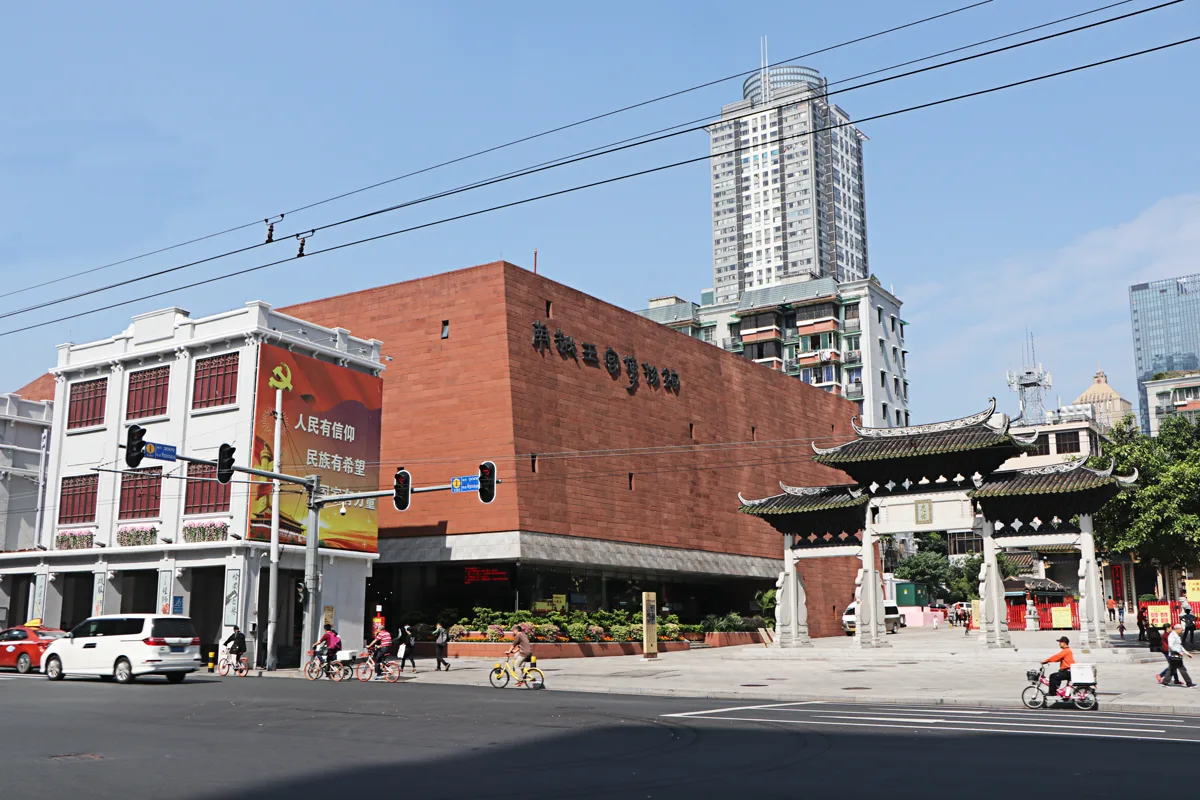
Beneath the noisy pavement of modern Zhongshan Fourth Road sits an extraordinary subterranean complex. The Nanyue King Museum Palace Exhibition Site preserves the royal administrative core of the ancient Nanyue Kingdom. The sister campus at the Nanyue King Mausoleum showcases gold treasures and jade shrouds. In contrast, this downtown site reveals where rulers actually lived and governed.
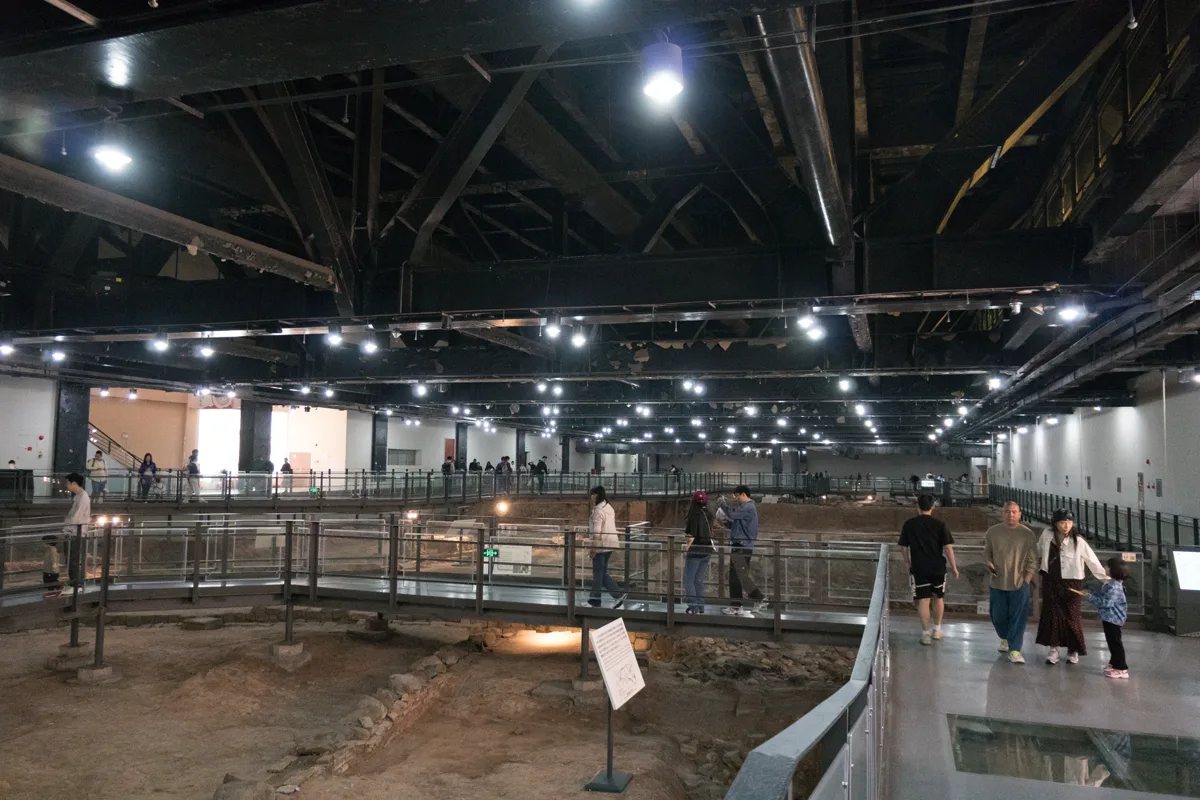
Archaeologists working here uncovered layers of continuous human occupation spanning more than two millennia. Thirteen separate historical dynasties left behind structural foundations, drainage channels, and domestic wells. Today, visitors walk on suspended pathways directly above the original excavation pits. The facility provides an unparalleled glimpse into early Chinese landscape architecture and city planning.
Two Thousand Years of Continuous Urban History
Guangzhou possesses a rare geographic distinction among ancient world metropolises. Its municipal administrative center has remained anchored to the exact same downtown location for over 2,200 years. The Palace Exhibition Site provides the definitive archaeological proof of this unbroken urban tradition.
Construction workers first struck ancient masonry here during commercial redevelopment projects in the mid 1990s. Subsequent systematic excavations exposed an immense archaeological archive packed into a single downtown block. Soil strata reveal municipal life across diverse dynasties. Artifacts trace back from the modern Republic through the Qing, Ming, Song, and Qin eras.
Instead of relocating administrative seats across distant valleys, successive dynasties leveled earlier ruins and built directly on top. Each government reutilized previous water systems and road networks. Standing above these exposed trenches helps travelers grasp how modern Guangzhou grew out of its deep royal origins.
The Royal Garden and Crooked Stone Brook in the Nanyue Palace
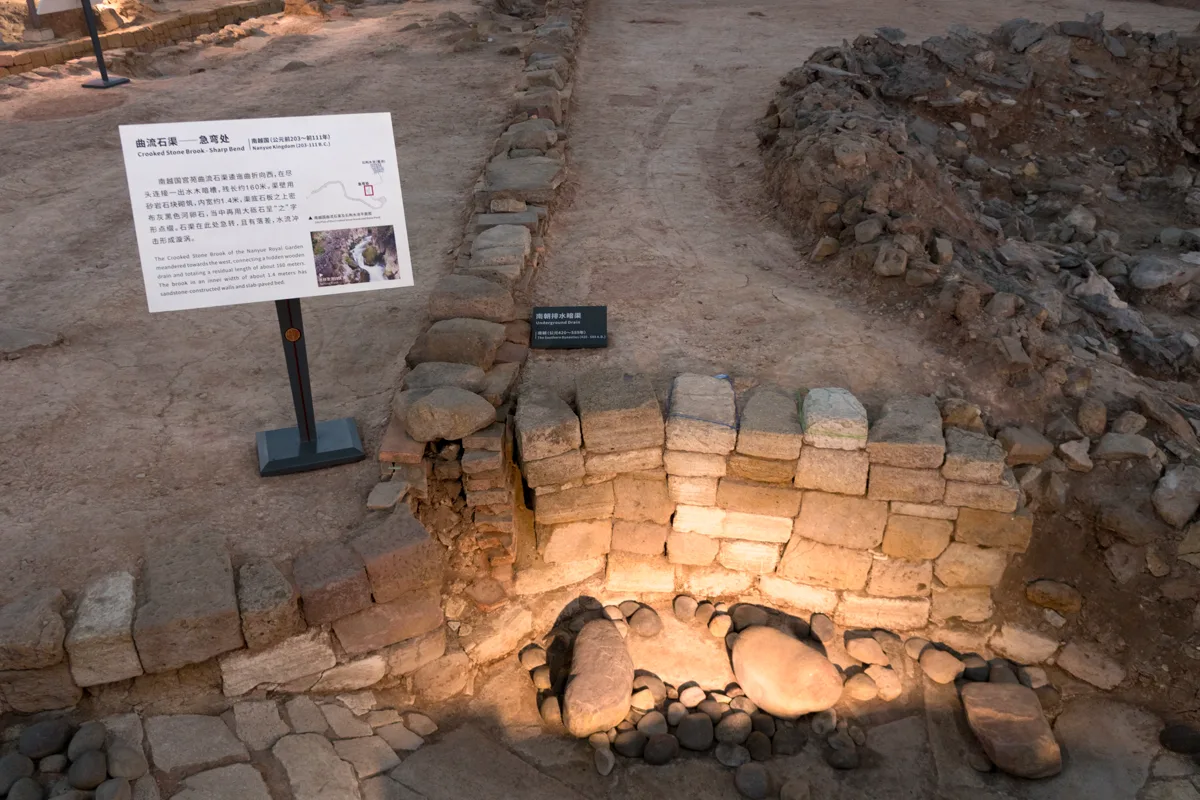
The primary jewel of the museum is an elaborate royal garden watercourse dating to the second century BC. Known to scholars as the Crooked Stone Brook, this 180-meter channel represents China’s oldest known imperial stone garden water feature. Red sandstone slabs line both the vertical walls and the channel floor.
Water once traveled from a freshwater spring through winding curves and stepped cascades into an expansive crescent pond. The hydraulic engineering exhibits astonishing technical sophistication. Designers placed smooth black river pebbles across channel sections to create ripples and bubbling soundscapes.
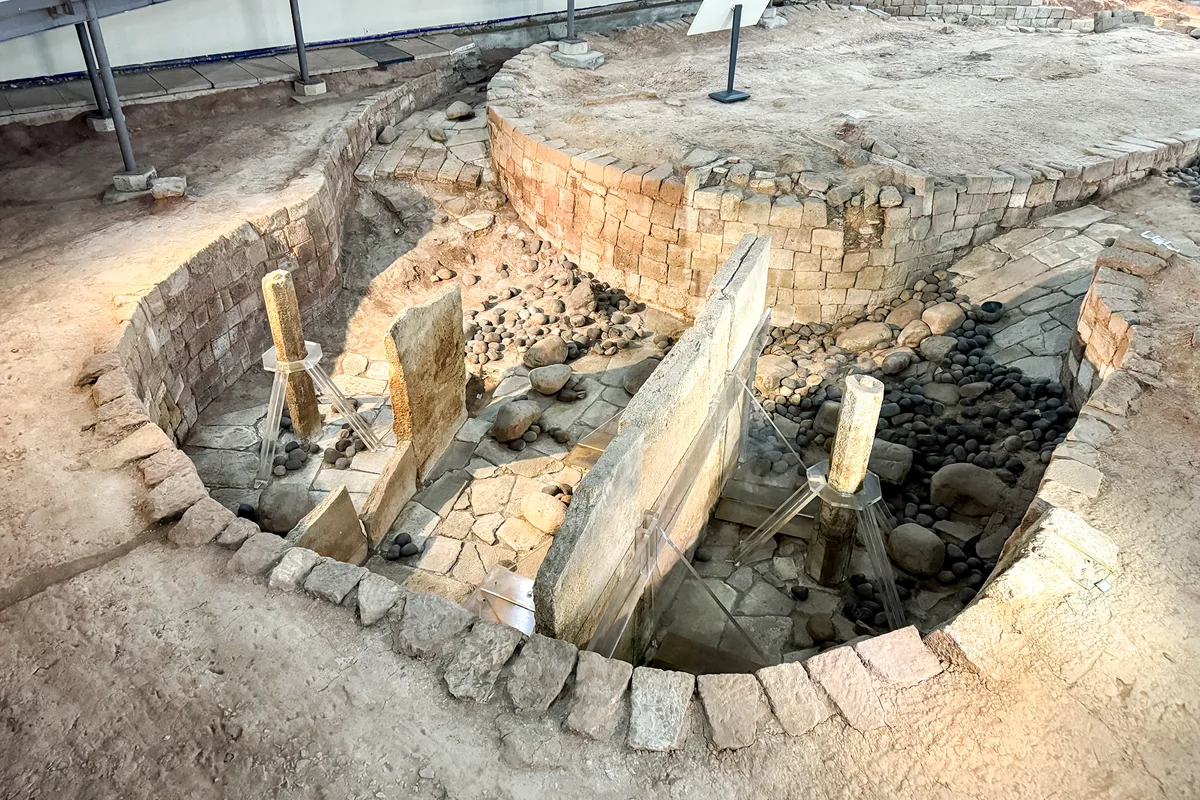
Octagonal stone pillars stand upright within the crescent pond basin to support wooden observation walkways. Masonry joints along the channel bends lock together tightly without mortar. Wooden sluice gates and underground conduits regulated seasonal storm runoff to prevent palace flooding.
This elaborate watercourse predates classic Jiangnan garden canals by over a thousand years. It proves that early southern rulers cultivated sophisticated aesthetic landscapes in harmony with subtropical monsoon rains.
Architectural Foundations and Inscribed Roof Tiles
North of the royal garden watercourse lie the massive rammed earth platforms of Palace Number One and Palace Number Two. While the timber superstructures burned during the Han conquest of 111 BC, the ground layouts remain clear. Symmetrical pillar bases indicate an expansive hall flanked by covered colonnades.
Excavators retrieved thousands of architectural tiles and ornamental bricks from the palace perimeter. Circular roof eave tiles bear stamped Chinese seal script proclaiming Wan Sui. This phrase translates to Long Live or Ten Thousand Years. Such imperial slogans demonstrated that early Nanyue sovereigns viewed themselves as autonomous monarchs equal to northern emperors.
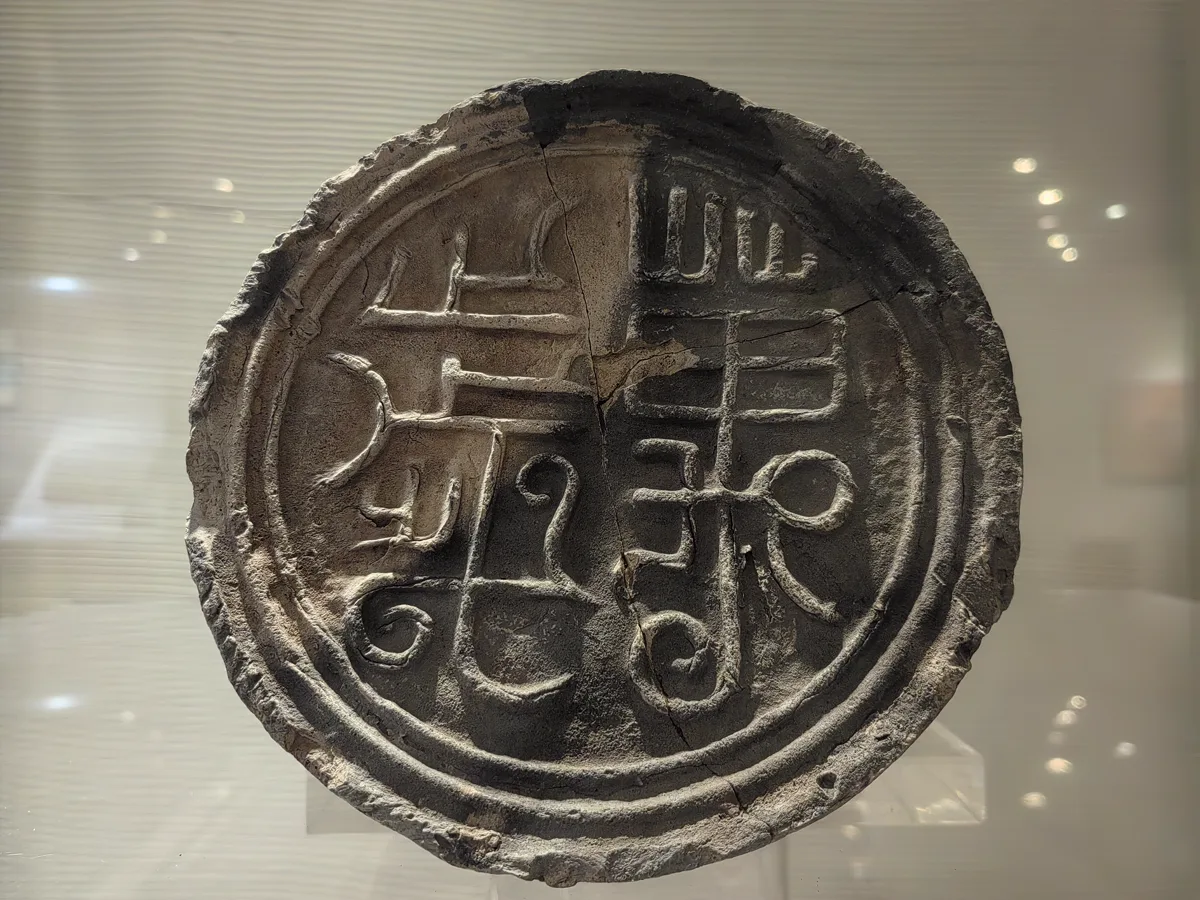
Ceramic vessels stamped with the name Huayin Palace reveal the internal nomenclature of individual royal pavilions. Heavy square floor bricks carry intricate stamped floral patterns designed to provide foot grip in damp weather. These durable clay components highlight the refined craftsmanship achieved by local Lingnan workshops over two millennia ago.
Ancient Shipyard Remains at Nanyue King Museum Palace Site
Another vital discovery preserved within the complex is an ancient shipyard dating back to the Qin Dynasty. Emperor Qin Shi Huang dispatched substantial military forces southward to incorporate Lingnan into the unified empire in 214 BC. Maintaining supply lines through rugged mountain passes proved nearly impossible by overland pack animals.
Imperial engineers established a major naval workshop on the low river terrace bordering the ancient Pearl River. The site retains three parallel wooden slipways constructed from massive timber sleepers. Ships sliding down these timber tracks launched directly into natural tidal channels.
Archaeologists recovered iron woodworking tools including adzes, chisels, and saws alongside wooden hull wedges. Analysis indicates that local workers constructed wide-hulled river transports capable of carrying dozens of metric tons of cargo. This shipyard supported early maritime commerce. It helped establish Guangzhou as a premier starting hub along the Maritime Silk Road.
Thirteen Historical Dynasties Stacked in One Place
Moving through the southern galleries brings travelers face to face with the remarkable stratigraphic cross sections. The museum functions as a vertical time capsule. Clear display panels trace cultural sediment lines from the Western Han period up to twentieth-century municipal pavements.
During the tenth century AD, the regional Southern Han Kingdom constructed its own imperial complex over the Nanyue ruins. Workers uncovered Southern Han Hall Number Two. The excavation revealed glazed dragon roof finials alongside polished stone column pedestals. The sheer scale demonstrates how southern kingdoms continually celebrated their regional power.
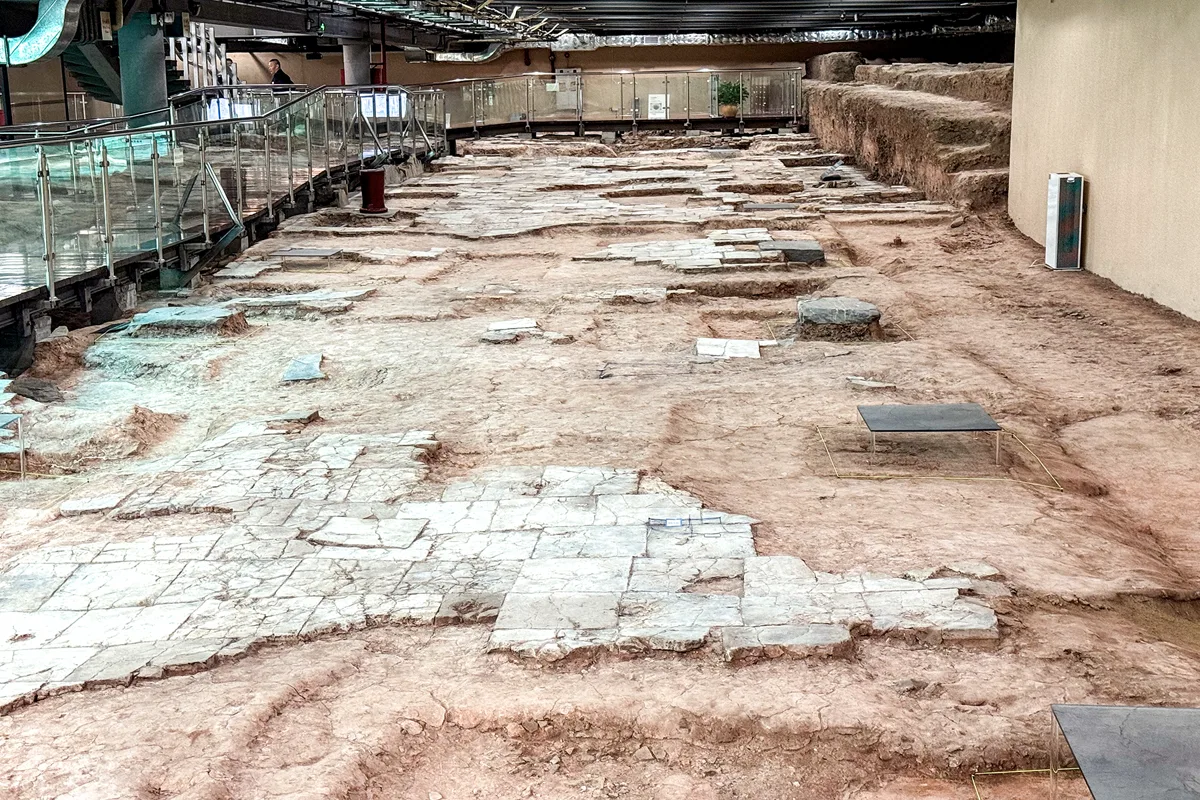
Nearby trenches contain brick-lined percolation wells from the Southern Dynasties and stone drainage culverts from the Song Dynasty. Interlocking curved bricks in the well shafts resisted lateral earth pressures for centuries. These overlapping hydraulic facilities illustrate the daily domestic water management that supported Guangzhou through successive golden ages.
Curated Walking Route Connecting the Nanyue Palace and Beijing Road
A visit to the Palace Exhibition Site integrates smoothly into a broader cultural exploration of the Yuexiu heritage quarter. Plan to spend two or three hours inside the archaeological shelter. This allows plenty of time to study both the large landscape models and delicate ceramic artifacts.
- Begin inside the main exhibition hall on the ground level to inspect the Crooked Stone Brook and its crescent collection basin.
- Follow the suspended catwalk across the ancient shipyard slipways and early Han architectural platforms.
- Descend to the lower gallery to observe the Southern Han palace floor and the thirteen dynasty soil profile.
- Ascend to the second floor artifact rooms to study the Wan Sui tiles, bronze weapons, and inscribed wooden administrative slips.
- Exit the museum entrance onto Zhongshan Fourth Road to admire the Qing Dynasty Zhongyou Archway of the adjacent Guangzhou City God Temple.
- Stroll westward along the colonnaded arcades for three minutes to reach the glass-covered ancient pavements of Beijing Road Pedestrian Street.
- Walk five minutes eastward along Zhongshan Fourth Road to explore the red perimeter walls of the Peasant Movement Institute.
This self-guided path connects royal antiquity, imperial worship, and modern city life in a compact half-day itinerary. Travelers seeking further historical depth can walk west toward the Five Immortals Temple. You can also ride subway Line 1 westward toward Guangxiao Temple.
Practical Visitor Guide for the Nanyue King Palace Site
Visiting the Palace Exhibition Site requires little logistical friction. The museum maintains free admission for all international and domestic travelers. Visitors register on site with a passport or reserve tickets in advance through the official WeChat mini-program.
| Category | Details and Practical Advice |
|---|---|
| Chinese Address | 316 Zhongshan Fourth Road, Yuexiu District, Guangzhou |
| Nearest Subway | Peasant Movement Institute Station on Line 1 via Exit D |
| Walking Distance | Approximately 200 meters west along Zhongshan Fourth Road |
| Alternative Transit | Gongyuanqian Station on Line 1 and Line 2 via Exit D, 600 meters east |
| Opening Hours | Tuesday through Sunday from 0900 to 1730, last entry at 1700 |
| Weekly Closure | Closed all day Monday except on national public holidays |
| Admission Fee | Free admission with passport verification at the entrance gates |
| Recommended Duration | Two to three hours for unhurried gallery exploration |
The interior halls feature reliable climate control and barrier-free access ramps. English signage accompanies every major archaeological feature and artifact display case. Photography without flash is welcome throughout the excavated pits and indoor galleries.
Frequently Asked Questions
How does this site differ from the Nanyue King Mausoleum?
The palace site on Zhongshan Fourth Road preserves the working royal residence and garden ruins where ancient rulers governed. The mausoleum on Jiefang North Road holds the intact tomb of the second king. It houses precious gold seals and jade burial garments. Visiting both campuses provides a complete picture of royal life and death in early Guangzhou.
Is photography permitted inside the excavation halls?
Non-commercial photography without tripods and without flash is permitted throughout all public galleries. The subtle amber spotlights illuminating the stone brook create atmospheric perspectives from the elevated walkways.
Are guided audio tours available in English?
English audio rental handsets are available at the central information desk near the security turnstiles. Travelers can also scan official QR codes located on gallery labels to access English audio commentary directly on their smartphones.
Can travelers combine this museum with nearby shopping and dining?
The museum sits directly beside the Beijing Road shopping precinct. Cantonese dim sum teahouses and specialty coffee roasters line the pedestrian avenues. Traditional herbal tea shops also operate within easy walking distance.