Guangzhou Attractions 8 min read
Five Immortals Temple and Lingnan First Building Guide
Discover the Five Immortals Temple in Guangzhou, the legendary origin of the City of Rams featuring the First Building of Lingnan and the Forbidden Bell.
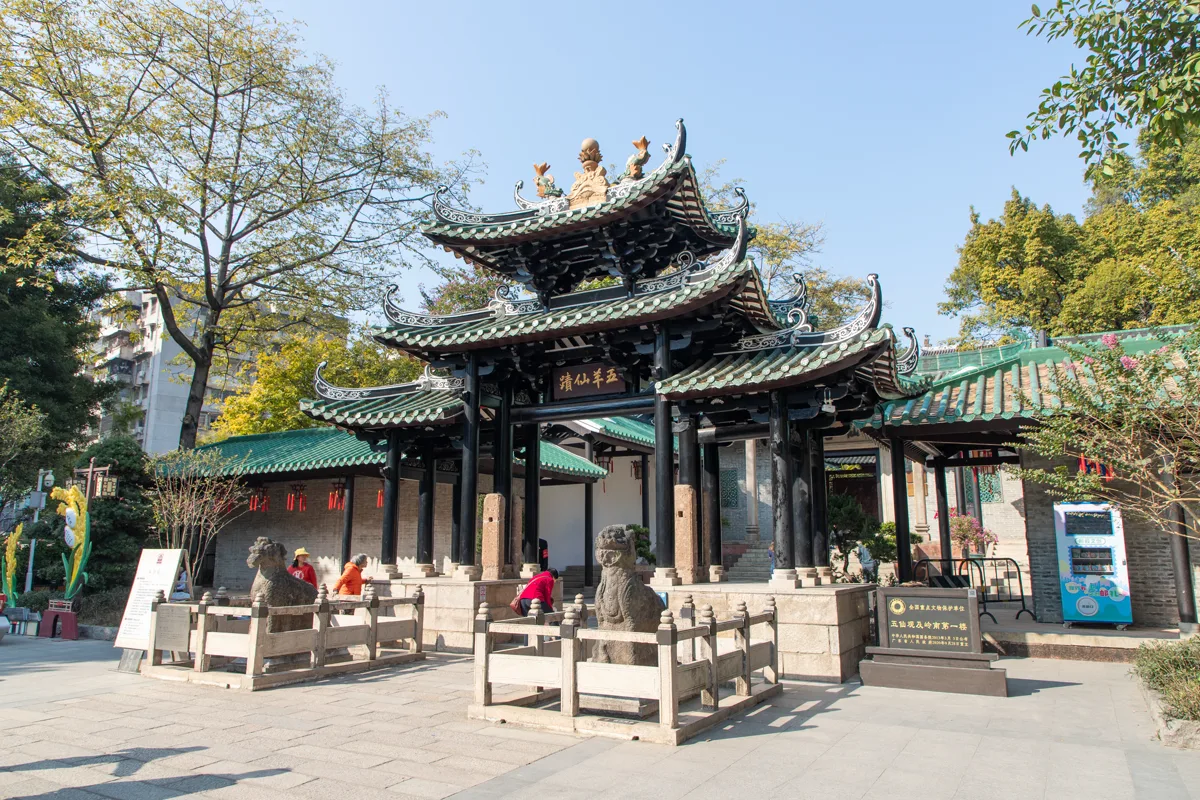
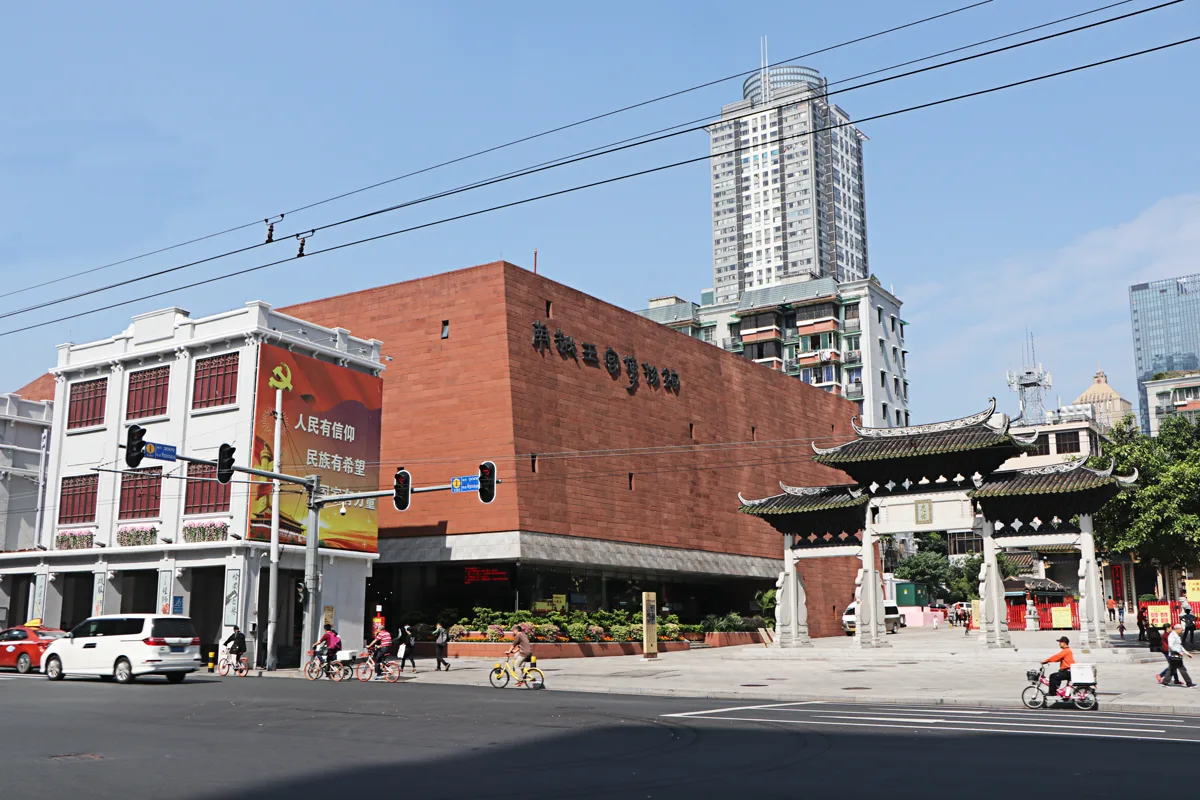
Along the bustling commercial stretch of Huifu West Road stands one of Guangzhou’s oldest religious complexes. The Five Immortals Temple preserves the very foundation myth of southern China’s greatest trading metropolis. Local residents often refer to Guangzhou as the City of Rams or the City of Ears of Grain. Both of these historic titles trace their origins directly to the ancient red sandstone terrace inside this quiet compound.
Beyond its mythological significance, the complex functions as the Yuexiu District Museum. It houses dozens of historical steles, weathered stone guardian beasts, and rare Ming Dynasty timber architecture. The crowning feature of the site is the First Building of Lingnan. This monumental double-eaved tower houses an enormous five-ton bronze bell that once served as the city emergency alarm.
Mythological Origins of the Five Immortals Legend
The chronicle of the Five Immortals dates back nearly three millennia to the Western Zhou Dynasty. According to ancient regional folklore, southern Lingnan suffered from brutal heat, pestilence, and chronic famine. Five celestial beings suddenly descended from the heavens riding five divine rams with coats of different colors.
Each immortal wore robes corresponding to the traditional elemental shades of red, yellow, blue, white, and black. Each ram carried stalks of rice bearing six clustered ears of grain within its mouth. The celestial beings presented this miraculous grain to the impoverished villagers. They offered a blessing that the land might remain free from starvation forever.
After delivering their blessing, the five immortals ascended back into the skies. Their five celestial rams remained behind and transformed into solid stone sculptures. Grateful local residents erected sacrificial shrines to commemorate the divine bounty. This foundational myth established the ram as the eternal civic emblem of Guangzhou.
Six Centuries of Architectural Evolution on Poshan Hill
The current temple precinct occupies a natural red sandstone knoll known historically as Poshan Hill. The institution did not begin at this specific municipal spot. Imperial records confirm that the initial temple stood near modern Shixian Lane during the Northern Song Dynasty.
Hostile military incursions during the late Yuan Dynasty burned the original timber halls to the ground. Surviving Daoist priests relocated the sacrificial complex to west municipal quarters. In 1377, the regional Ming administration selected Poshan Hill for permanent relocation. The complex has occupied this gentle slope continuously for over 640 years.
The architectural layout adheres to classic southern Chinese axial symmetry. Visitors enter through the southern ceremonial archway before passing the ceremonial gate and main worship halls. The structures display traditional Lingnan craftsmanship including fired ceramic ridge ornaments, unpainted sandstone pillars, and weather-resistant hardwood purlins.
Dense stands of native banyans and tall palms canopy the stone walkways. This mature foliage shields the temple interior from exterior traffic noise along Huifu West Road. The compound feels like a serene sanctuary tucked away inside a dense modern metropolis.
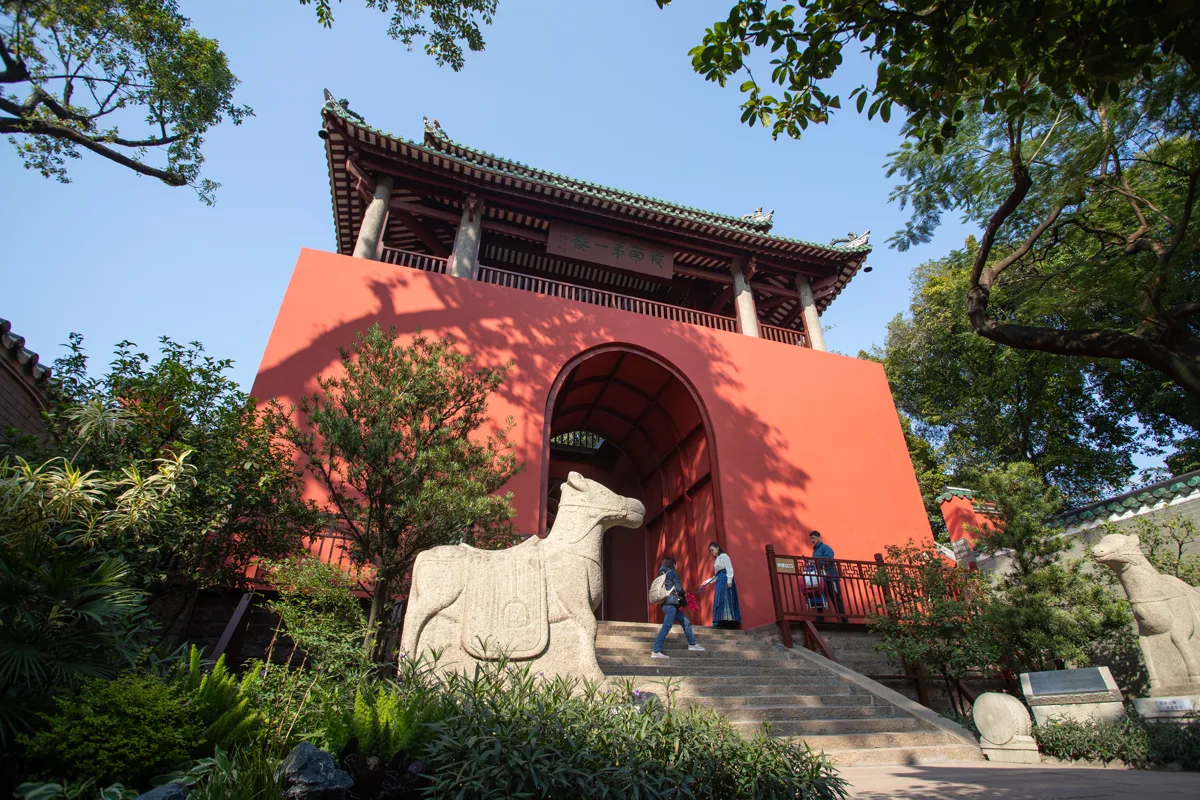
The First Building of Lingnan and the Five Ton Forbidden Bell
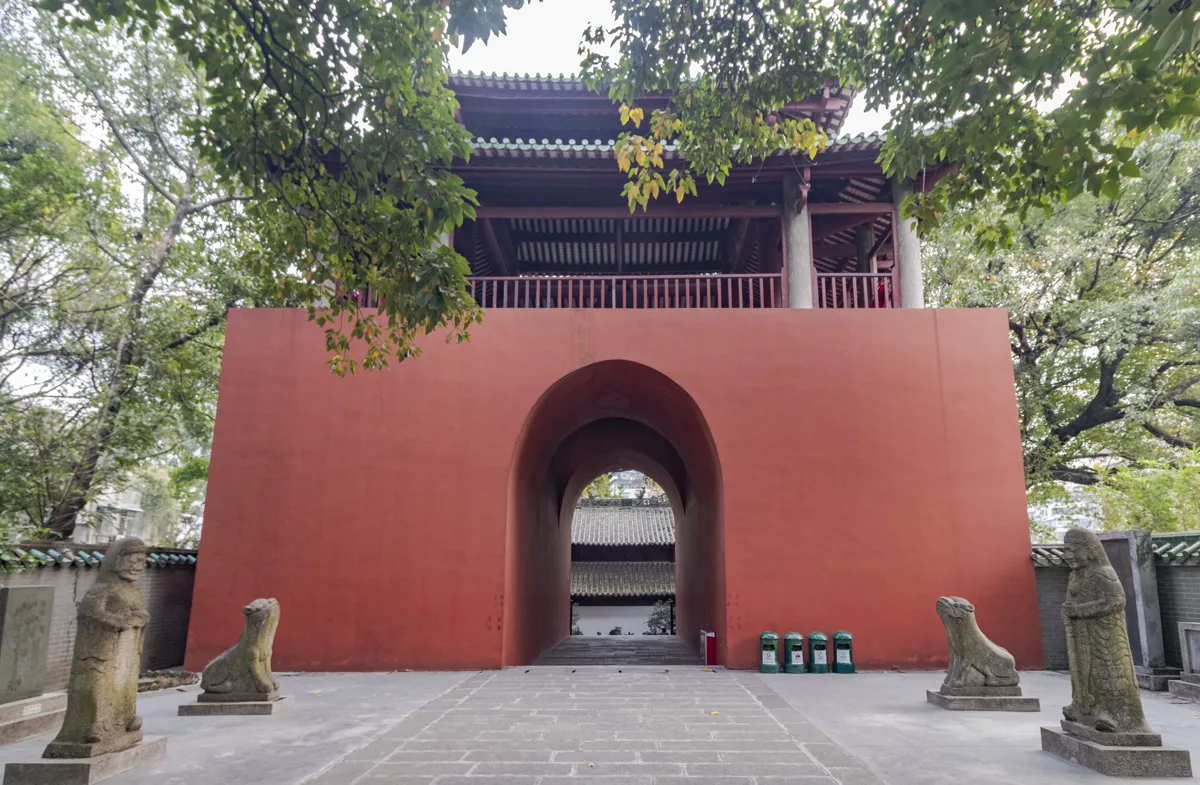
At the rear of the complex rises the massive red tower known as the First Building of Lingnan. Workers erected this fortress-like municipal structure in 1374. Its construction actually predated the relocation of the temple halls by three years.
The building rests on an enormous rectangular terrace of dressed red sandstone measuring over seven meters high. A wide vaulted archway pierces through the center of the masonry base. Above this imposing foundation sits a double-story timber pavilion crowned with a grand hip-and-gable roof.
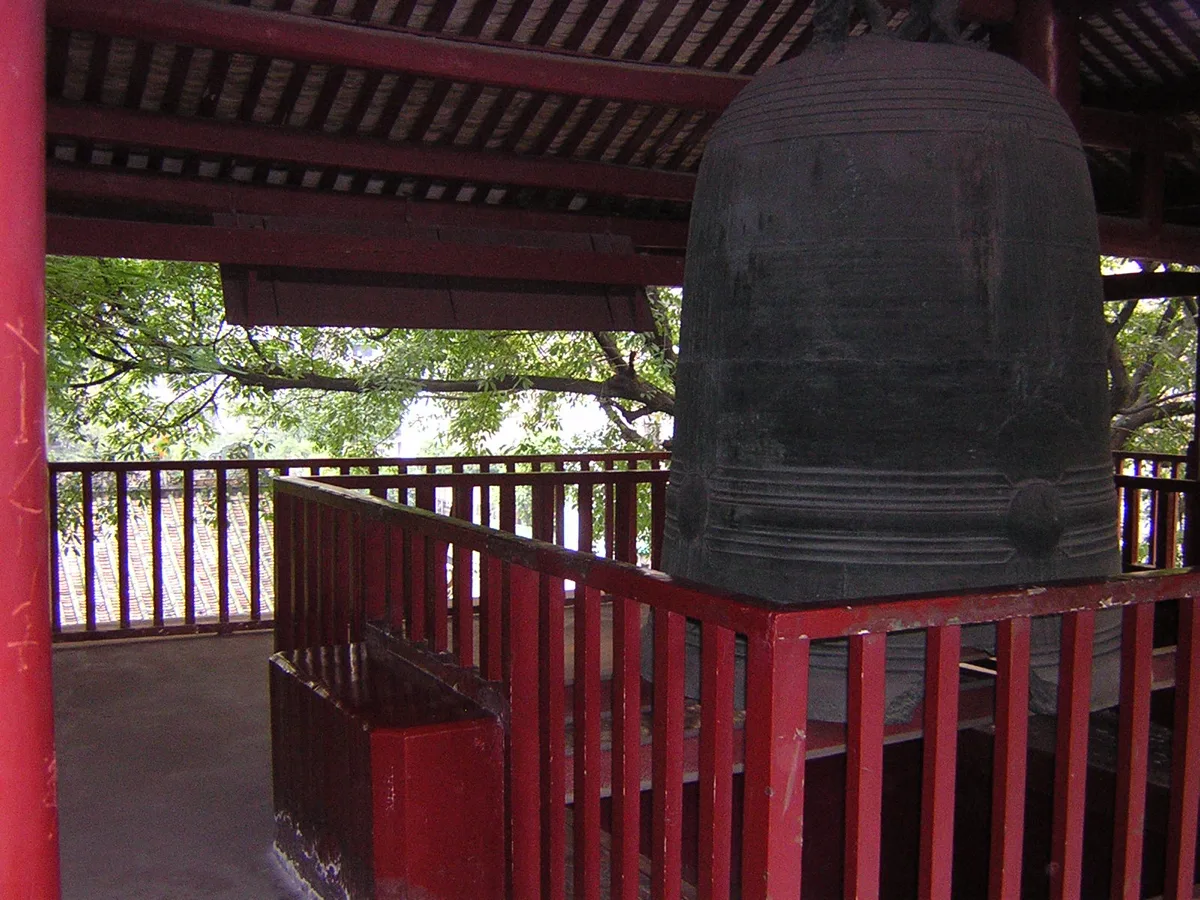
Suspended from heavy ceiling joists inside the upper chamber is the famous Ming Dynasty bronze bell. Craftsmen cast this monumental instrument in 1378. It stands over three meters tall with a mouth diameter exceeding two meters and weighs five metric tons.
Unlike conventional temple bells, this bronze giant possesses no internal clapper. Imperial magistrates reserved the bell exclusively for emergency warnings such as catastrophic fires or enemy invasions. The acoustic resonance was so powerful that local residents called it the Forbidden Bell. Citizens believed that any unauthorized strike would summon disastrous storms across the Pearl River Delta.
The Immortals Footprint and Prehistoric Sea Caves
East of the main sanctuary lies a secluded rock garden harboring a singular geological curiosity. An exposed outcrop of natural red sandstone features a deep, elongated depression shaped remarkably like a colossal human foot. Natural spring water seeps continuously through rock fissures, keeping the basin brimming with clear water even during winter droughts.
Devout pilgrims historically revered this hollow as the Immortals Footprint. Local folklore held that one of the five celestial beings stepped down firmly upon the hill before flying heavenward. Ming Dynasty poets celebrated this natural basin. They named it among the official Eight Sights of Guangzhou.
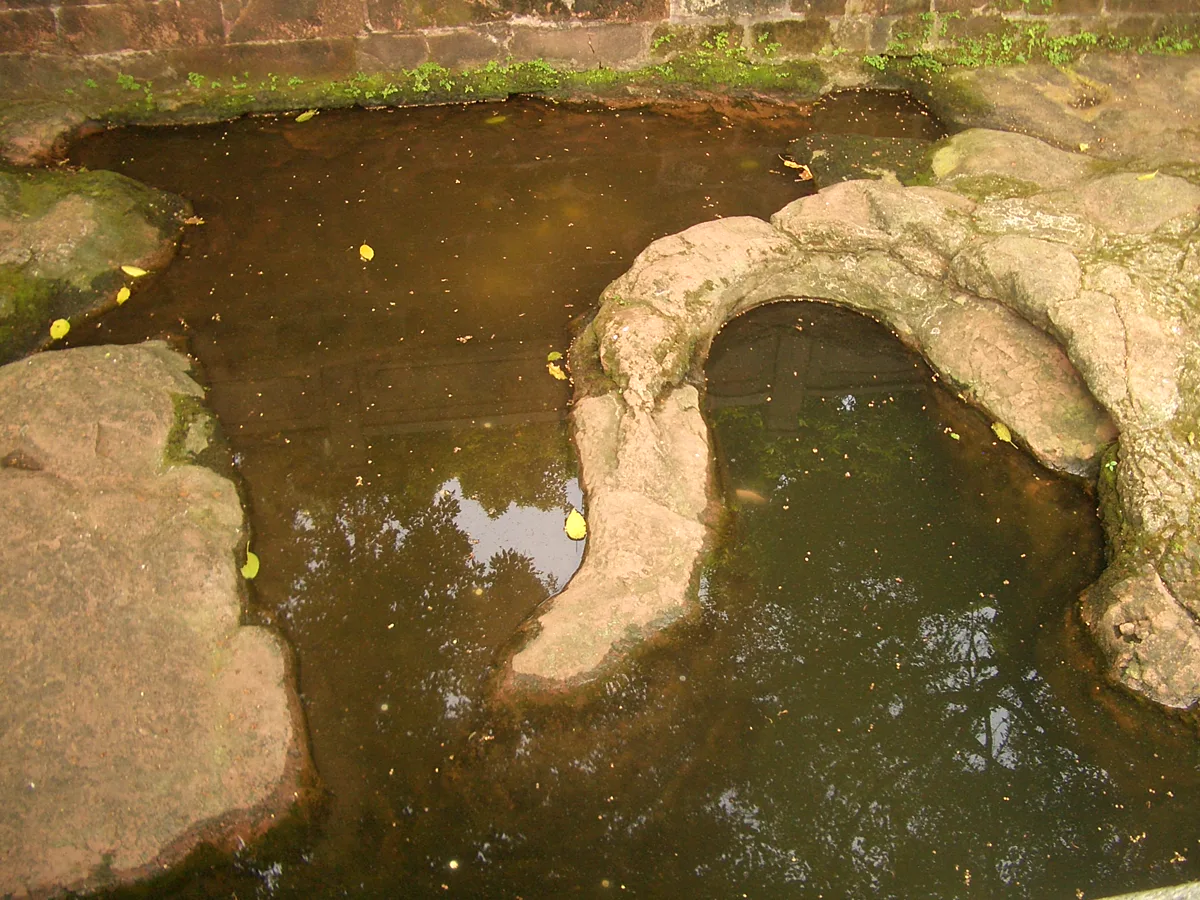
Modern geologists offer a far different scientific explanation for this distinctive stone formation. Thousands of years ago, the prehistoric Pearl River estuary extended much further inland. Powerful sea tides and whirlpools repeatedly eroded the sandstone bluffs along the ancient coastline. This depression represents an authentic sea-erosion pothole from that distant maritime era.
The adjacent cliff faces served as an ancient passenger ferry wharf before silt gradually pushed the river southward. The site stands as living physical proof of continuous coastal land reclamation over three millennia.
Ancient Stele Forest and Stone Guardians at Five Immortals Temple
Throughout the shaded verandas and open courtyards sits an impressive assembly of historic stone carving. The Yuexiu District Museum has gathered dozens of monumental steles rescued from old public buildings across Guangzhou. Inscribed calligraphy documents temple reconstructions, maritime trading edicts, and imperial tax exemptions spanning four dynasties.
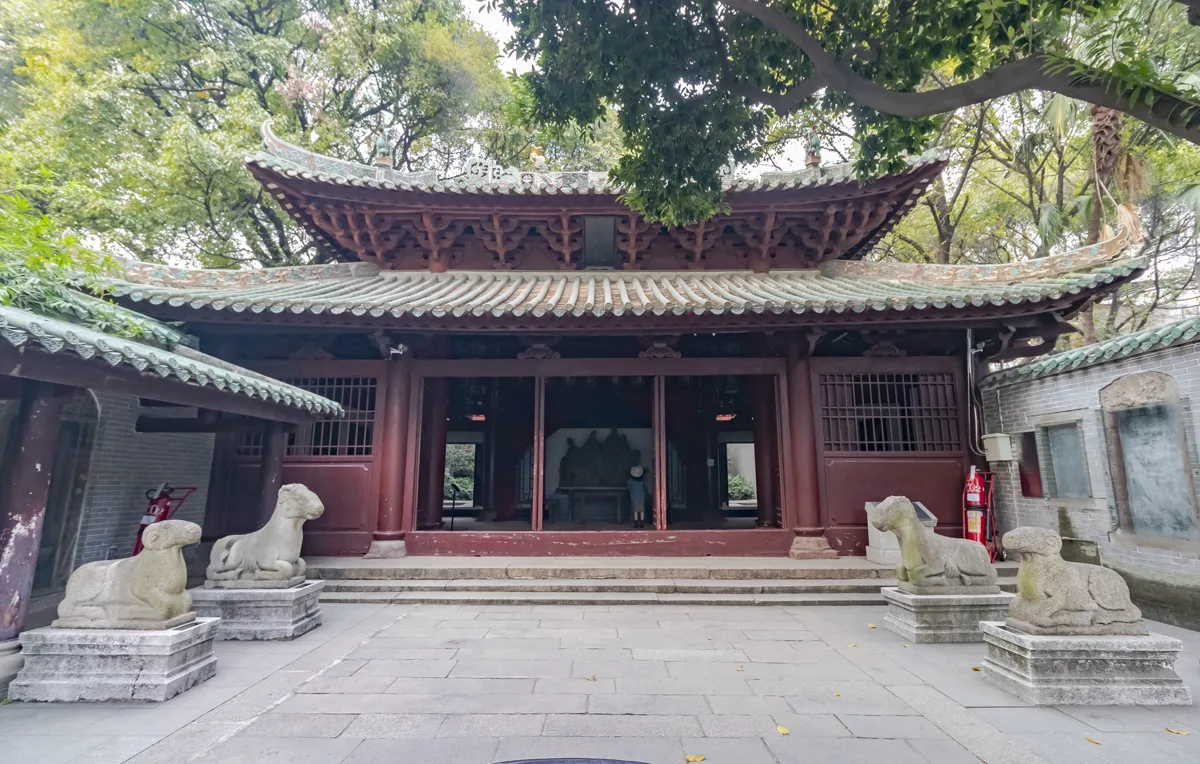
Flanking the entrance steps to the First Building of Lingnan are two sculpted stone horses dating from the Song Dynasty. Their saddles and harness trappings remain crisply defined despite centuries of tropical weathering. Sentry statues carved as civil magistrates and military officers stand quietly beside the garden paths.
These stone guardians once guarded the sacred avenues of regional dignitaries. Today, they form an open-air sculpture museum surrounded by lush ferns, potted bonsai, and fragrant flowering bushes. The artistic detail allows visitors to study historical costume changes from the eleventh century onward.
Curated Walking Route Through Old Yuexiu Neighborhoods
Exploring the Five Immortals Temple takes roughly one to two hours at an unhurried pace. Travelers can combine this landmark into a broader walking tour of the surrounding historic quarter.
- Begin at the street gate on Huifu West Road to photograph the green-glazed ceramic entrance archway.
- Enter the main courtyard to examine the Ming Dynasty stone rams rested outside the central worship hall.
- Turn into the eastern garden to view the Immortals Footprint and read the geological evolution plaques.
- Pass through the vaulted archway of the First Building of Lingnan to reach the rear garden stone forest.
- Climb the external stone stairs to inspect the five-ton bronze Forbidden Bell suspended inside the upper gallery.
- Exit onto Huifu West Road to sample authentic roast goose and traditional wonton noodles from legacy food shops.
- Walk ten minutes east along Huifu Road to reach Dafo Temple and Beijing Road Pedestrian Street.
For an extended historical day trip, travelers can take a short five-minute walk northward toward Huaisheng Mosque. Continue eastward toward the Nanyue King Museum Palace Exhibition Site to view ancient imperial garden canals. You can also head north toward Guangxiao Temple and the Temple of the Six Banyan Trees.
Practical Visitor Guide for the Five Immortals Temple
Visiting the temple requires minimal logistical preparation. The museum maintains free public admission year-round. Travelers can enter directly without reservation queues during standard operating hours.
| Category | Details and Practical Advice |
|---|---|
| Chinese Address | 233 Huifu West Road, Yuexiu District, Guangzhou |
| Nearest Subway | Ximenkou Station on Line 1 via Exit B |
| Walking Distance | Around 650 meters south along Haizhu Middle Road |
| Alternative Transit | Gongyuanqian Station or Haizhu Square Station on Line 2, 800 meters west |
| Opening Hours | Tuesday through Sunday from 0900 to 1700, last entry at 1630 |
| Weekly Closure | Closed all day Monday except on national public holidays |
| Admission Fee | Free admission for all domestic and international travelers |
| Recommended Duration | One to two hours for a leisurely visit |
The grounds provide flat paved walkways suitable for travelers of all ages. English signage explains the major architectural components and historical background. Flash photography is prohibited inside the upper bell chamber to protect fragile timber surfaces.
Frequently Asked Questions
Can visitors go up to the second floor of the First Building of Lingnan?
Visitors can climb the external stone stairs to inspect the upper pavilion gallery. From this elevated viewing platform, you can examine the underside of the massive bronze bell and gaze across temple gardens.
Is the Five Immortals Temple an active religious site?
The temple operates primarily as a cultural heritage site and the Yuexiu District Museum. While occasional traditional rituals occur during folk festivals, there are no resident monks or commercial incense sales inside.
What is the connection between this temple and Yuexiu Park?
The Five Immortals Temple commemorates the legendary landing of the five immortals in ancient Guangzhou. The famous Five Rams Sculpture located in Yuexiu Park honors the very same foundational legend in modern stone. Visiting both sites offers a complete appreciation of the city emblem.
What dining options are available near the temple?
Huifu West Road and nearby Haizhu Middle Road are renowned food streets. You can find authentic claypot rice, traditional Cantonese milk desserts, and hand-pulled beef noodles within a few minutes of walking.