Guangzhou Attractions 7 min read
Baietan Greater Bay Area Art Center Visitor Guide
Plan your trip to Baietan Greater Bay Area Art Center in Guangzhou. Explore Guangdong Museum of Art, intangible heritage halls, tickets, and metro.
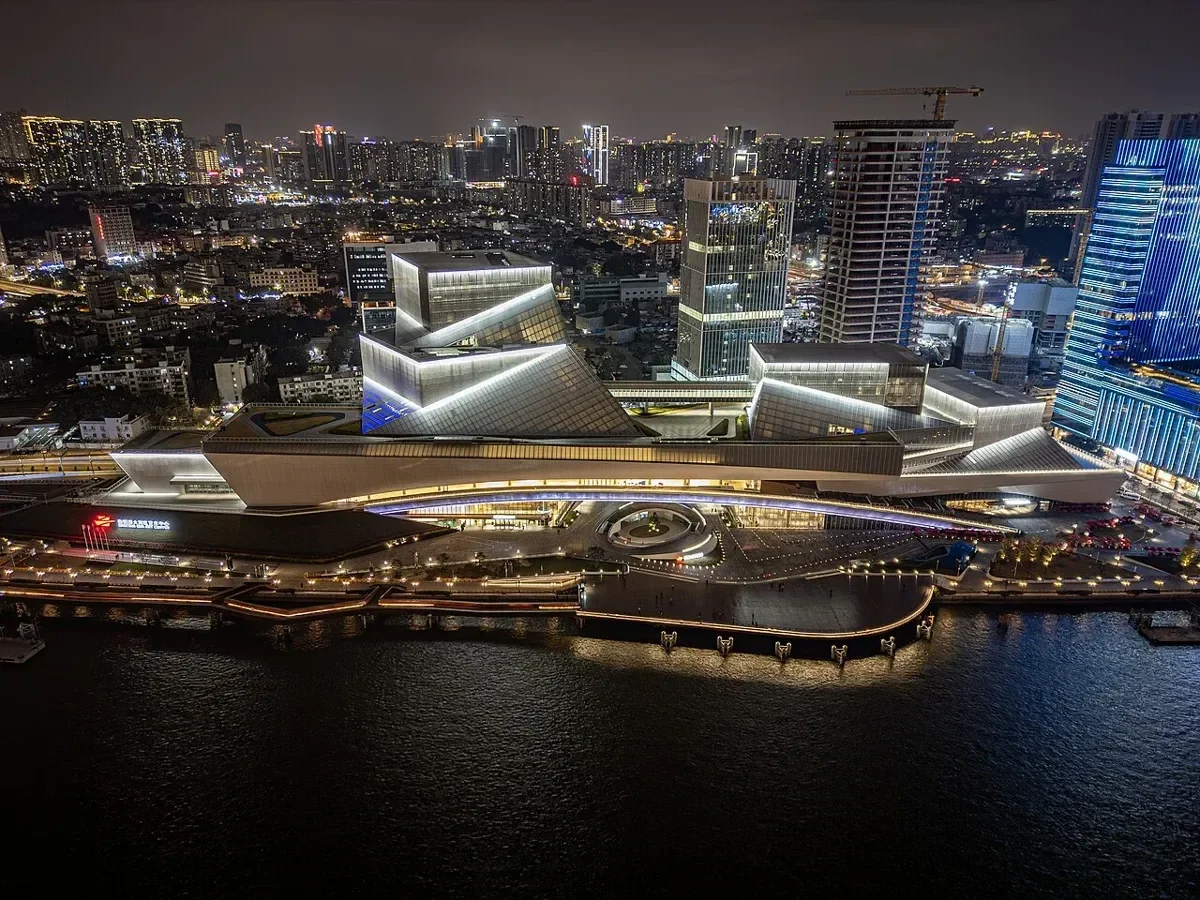
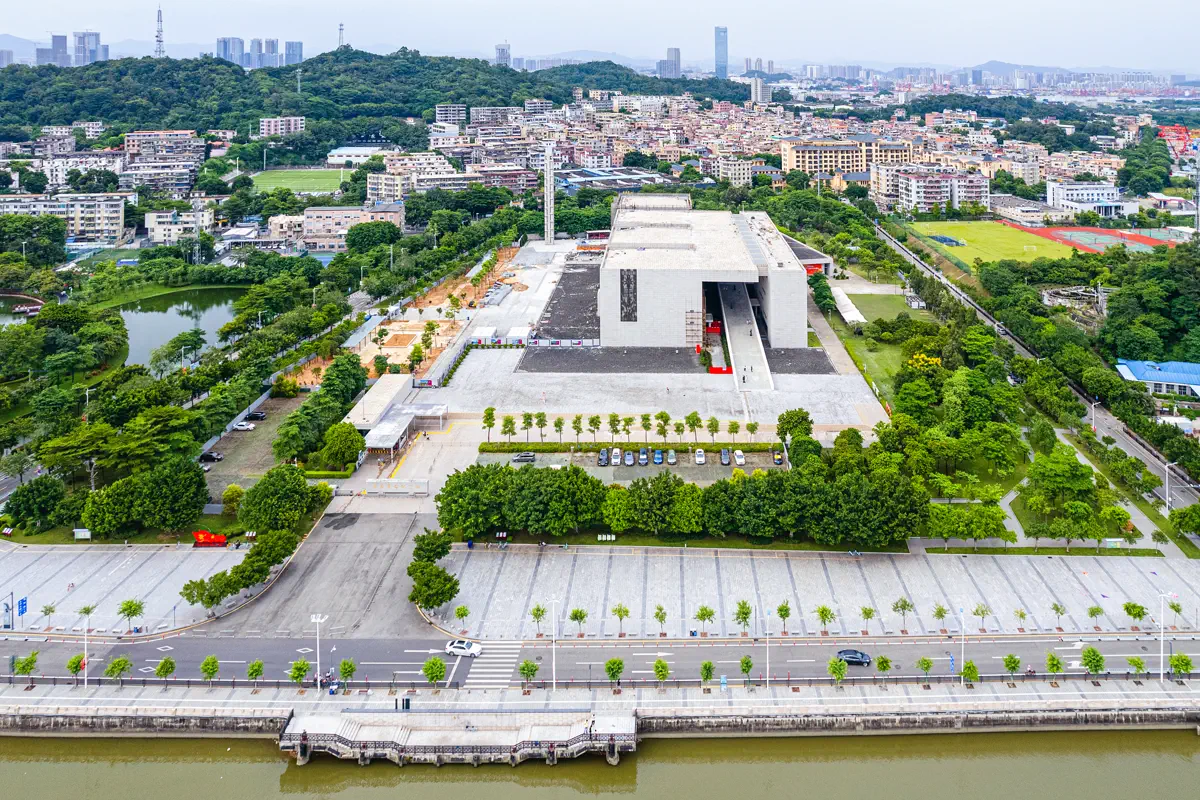
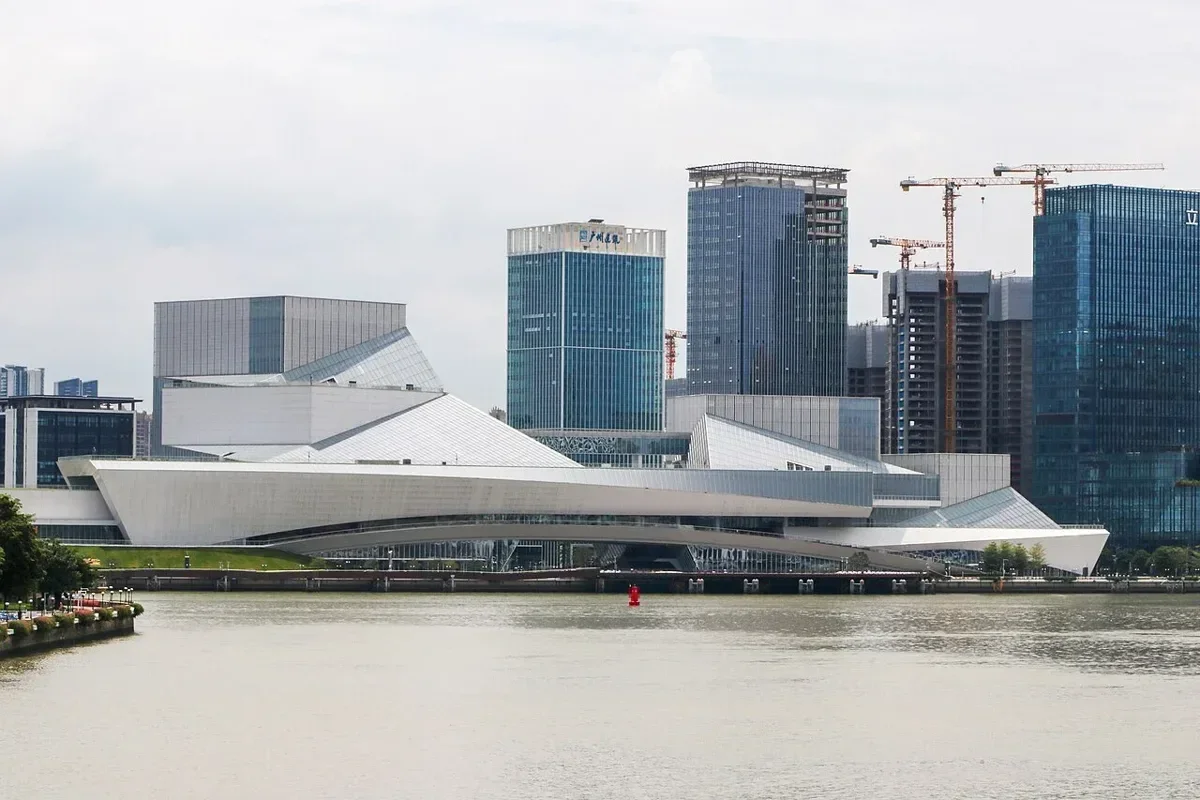
Along the southern bank of the Pearl River in Fangcun, the historic waters of Baietan expand into a broad nautical junction where three river channels converge. This aquatic basin was once the primary mooring ground for ocean-faring foreign merchant ships during the Canton System era. Directly across the river rests the banyan-shaded heritage quarter of Shamian Island, while along the southern embankment rises a sweeping three hundred and sixty meter white structure. Inaugurated in May 2024, the Baietan Greater Bay Area Art Center brings together three premier provincial institutions into a single cultural complex, reshaping western Guangzhou into a world-class arts destination.
Getting to Baietan Art Center by metro and ferry
Reaching the arts complex on the western waterfront is straightforward using Guangzhou’s municipal transit system.
Travelers using the underground railway take Metro Line 1 directly to Fangcun Station. Taking Exit B1 or Exit B2 brings passengers to street level. From there, walkers head northward along Luju Road toward the riverbank, arriving at the arts center southern gateway within ten minutes.
Water transport provides a scenic approach across the Pearl River. Visitors can board the municipal water bus ferry from Huangpu Ancient Port or Xidi Wharf near Shamian Island, disembarking at Fangcun Wharf. Stepping off the pier turnstiles places visitors right onto the pedestrian river promenade, two minutes on foot from the west wing of the complex.
For travelers planning a broader cultural itinerary across Liwan District, the arts center pairs naturally with the historic ancestral carvings of Chen Clan Ancestral Hall or the peaceful canals of Julong Village just two kilometers south in Fangcun.
Architectural vision of the cultural flagship
The architectural form of the complex was designed by a team led by Academician He Jingtang from the Architectural Design and Research Institute of South China University of Technology. Drawing poetic inspiration from maritime commerce and Lingnan waterborne traditions, the architects conceived the entire facility as a contemporary cultural flagship moored along the riverfront.
Covering a total building area of nearly one hundred and forty-five thousand square meters, the structure reaches eleven stories above ground. The facade is clad in warm white sculptural ceramic louvers paired with high-transparency glass curtain walls. By day, these ceramic panels diffuse harsh subtropical solar glare while creating rhythmic shadow patterns across the terraces.
At ground level, a continuous sheltered colonnade elevated on structural pillars stretches beneath the building. This design touch allows natural river breezes to flow unhindered from the water through to the surrounding neighborhood, creating an open promenade where local residents and art lovers stroll freely. The complex was awarded the national China Steel Structure Gold Award for its engineering precision.
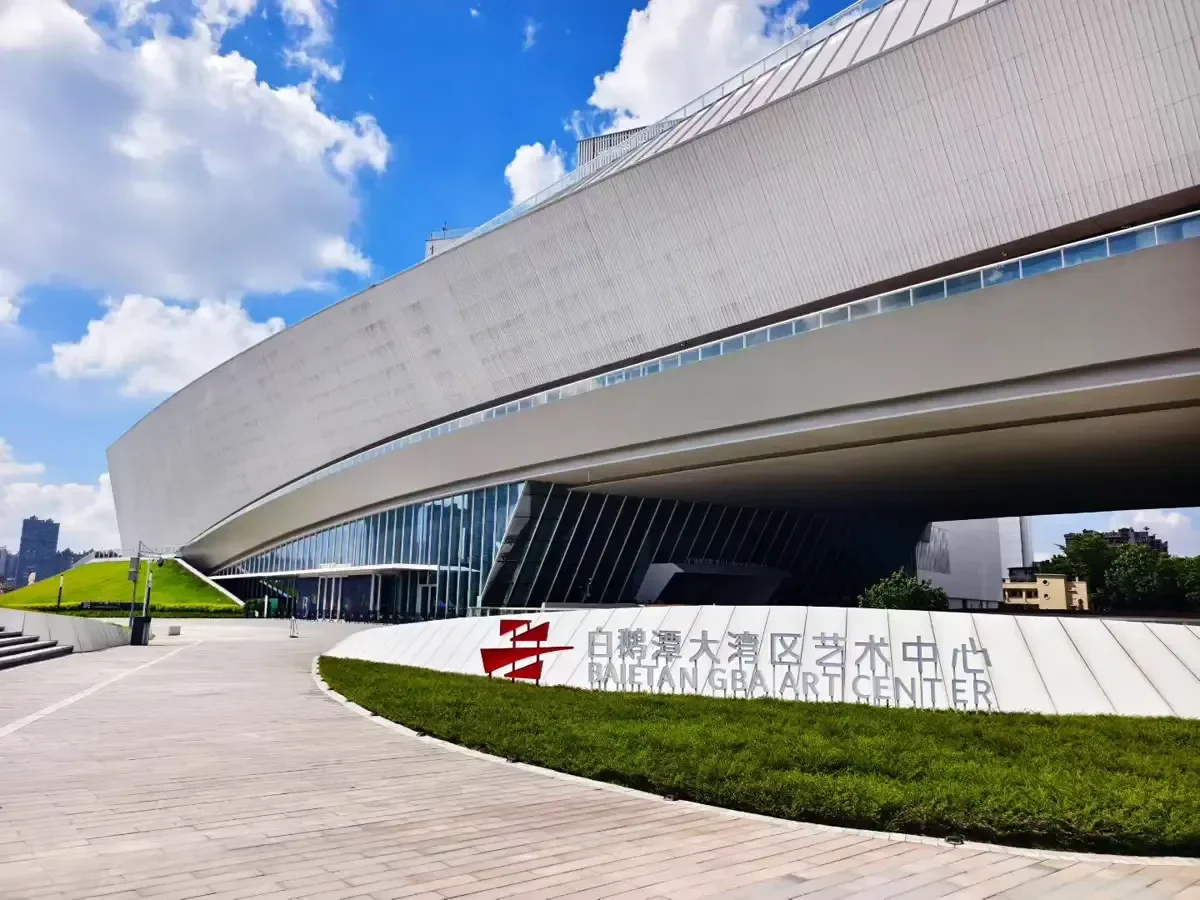
Guangdong Museum of Art Baietan venue
Occupying the eastern wing of the complex, the new Baietan home of the Guangdong Museum of Art expands exhibition capabilities significantly beyond the institution’s historic premises on Ersha Island.
The art museum encompasses twenty-one climate-controlled galleries spread across eleven floors, providing twenty-five thousand square meters of dedicated display space. While Guangzhou’s municipal counterpart in Haizhu focuses heavily on traditional Chinese scrolls as detailed in our guide to the Guangzhou Museum of Art, this provincial venue concentrates on the transition of modern Chinese fine arts and experimental contemporary practices across the Greater Bay Area.
Expansive gallery heights accommodate monumental contemporary sculptures, site-specific spatial installations, and digital video environments. The venue serves as the permanent host for major recurring international arts festivals, including the Guangzhou Triennial, the Guangzhou Image Triennial, and the Guangzhou Design Triennial. Dedicated international exchange wings have presented landmark masterpieces on loan from prestigious European collections, including Renaissance and Baroque paintings from the Borghese Gallery in Rome.
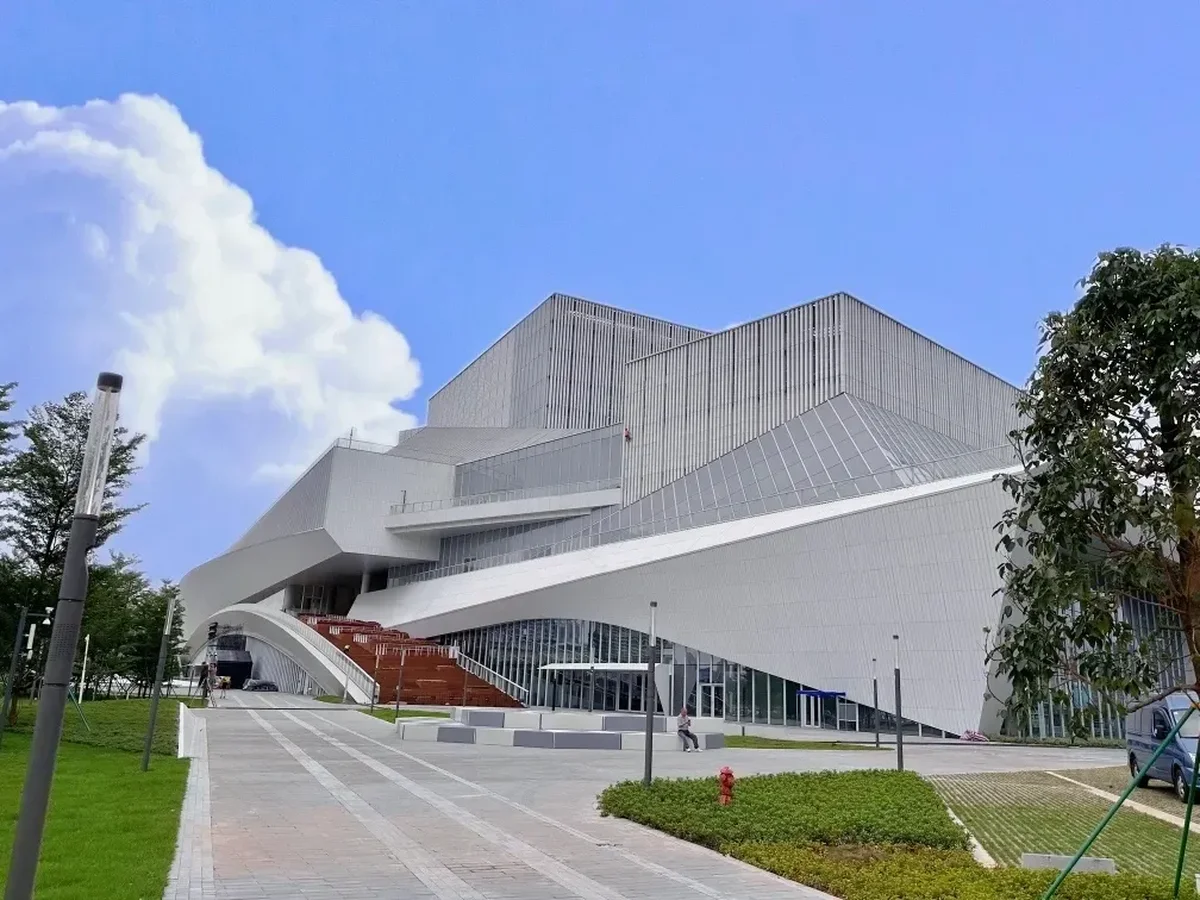
Guangdong Intangible Cultural Heritage Museum
Positioned in the western wing across five above-ground floors, the Guangdong Intangible Cultural Heritage Museum serves as a sanctuary for living folk crafts, festive rituals, and performative traditions from across southern China.
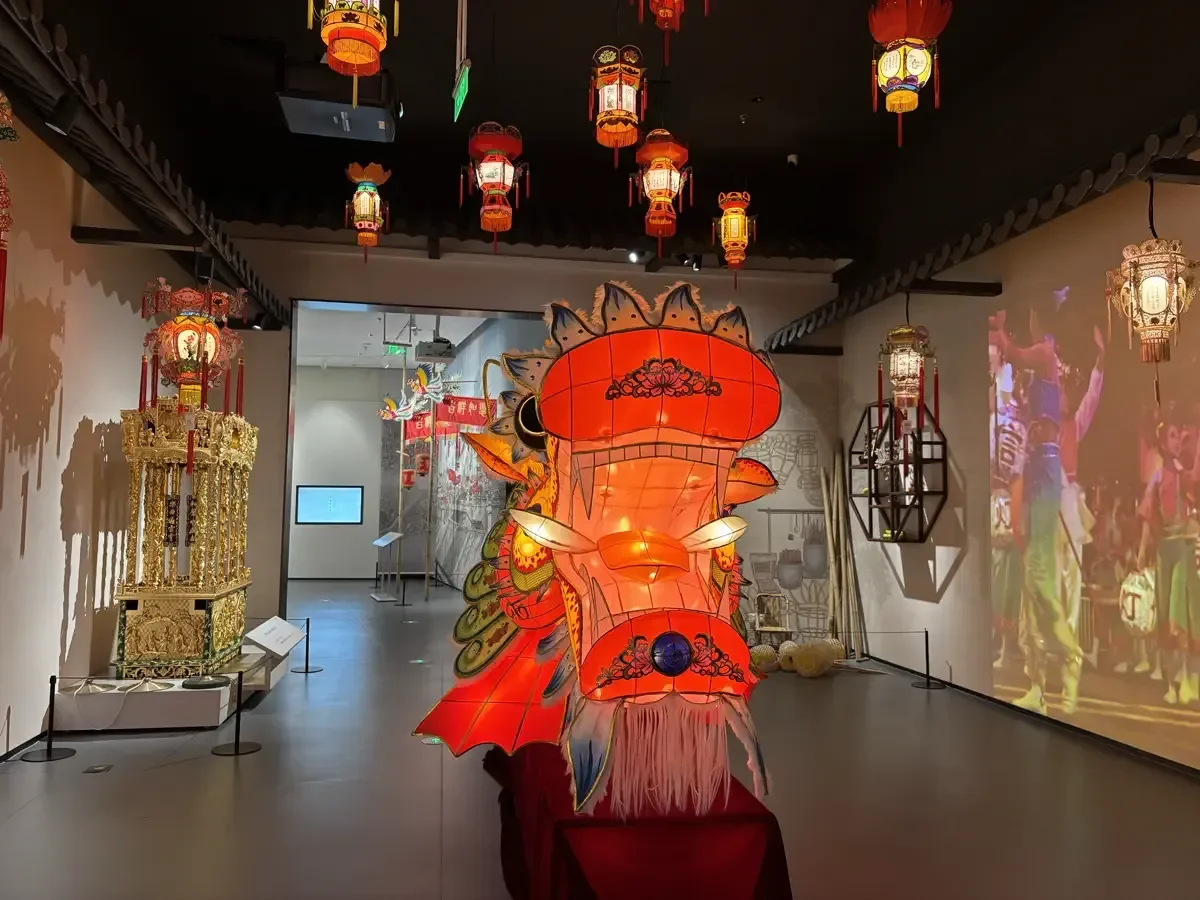
The central gallery makes an immediate impression with a towering traditional festive dragon head lantern, hand-crafted using bamboo armature, layered silk, and painted lacquer. Nearby stands a multi-tiered Chaozhou gold lacquer woodcarving shrine, glowing with layered fretwork coated in genuine gold leaf.
At the heart of the maritime gallery sits a full-scale physical reconstruction of a traditional Red Head Ship. These historic vessels carried hundreds of thousands of Cantonese and Chaoshan migrants across the South China Sea during the nineteenth century, establishing enduring cultural ties between Guangdong and Southeast Asia. Surrounding halls showcase Foshan woodblock prints, fine Duan inkstones, and Cantonese porcelain, while live workshops allow visitors to watch master embroiderers and porcelain painters demonstrating their delicate techniques in real time.
Guangdong Literature Museum and Lingnan letters
Rising through the central tower of the complex, the Guangdong Literature Museum traces two thousand years of written heritage from early classical poetry to modern literary movements and contemporary digital publishing.
Archival cases exhibit handwritten manuscripts, rare first editions, and historical periodicals documenting the reformist thinkers who reshaped modern Chinese thought, including Kang Youwei, Liang Qichao, and Huang Zunxian. A prominent section is dedicated to Lu Xun, reconstructing his pivotal teaching tenure at Sun Yat-sen University in 1927 alongside personal letters and published anthologies written during his residence in Guangzhou.
The upper floors house a riverfront reading lounge and academic seminar rooms. Art patrons can relax by panoramic floor-to-ceiling glass windows with a collection of regional essays, looking out directly over the gentle river currents where poet-scholars once traveled by boat.
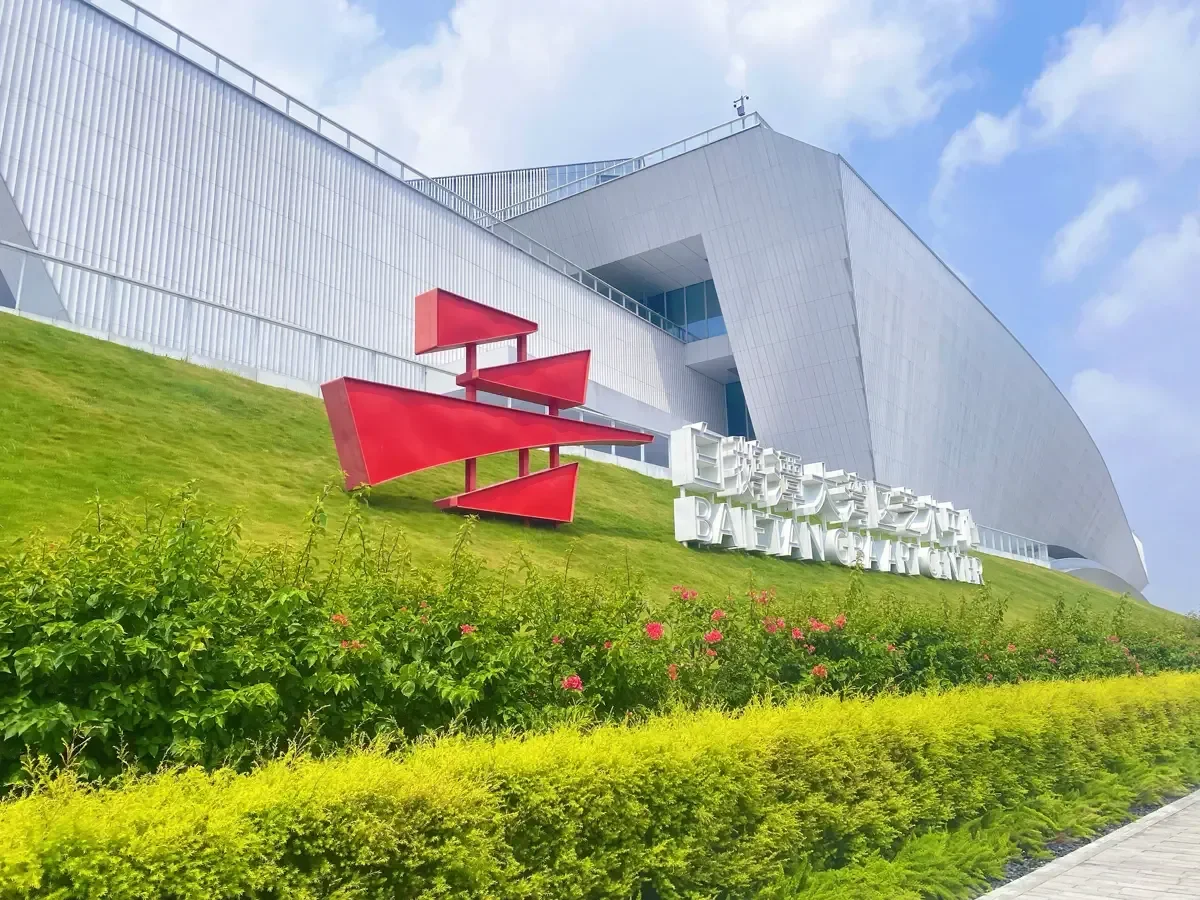
Waterfront promenade and skyline perspectives
The public spaces outside the exhibition wings offer some of the most serene riverfront walking in the western districts of Guangzhou.
A broad timber boardwalk extends along the river wall, connecting to stone terraces and curved observation decks overlooking the water. In the late afternoon, golden hour sunlight reflects off the white ceramic exterior, turning the building surface a soft amber hue. Across the water, the colonial banyans and Victorian mansions of Shamian Island stand out against the horizon.
After twilight, the building switches on its architectural lighting system. Pure white illumination highlights the vertical ceramic fins, while the elevated colonnade glows with soft cyan and lavender gradients. Watching evening water buses navigate past the lit complex against the dark water creates an evocative portrait of modern Guangzhou waterfront urbanism.
Practical visiting guide and reservation rules
Visiting the Baietan Greater Bay Area Art Center requires simple advance registration to ensure smooth entry.
General admission to permanent collection galleries and core exhibitions across all three museums is completely free. However, visitors must secure a free real-name booking pass through the official WeChat mini-program prior to arrival. Registration slots open several days in advance, divided into morning and afternoon entry windows. International guests can complete reservations by submitting valid passport details.
The complex welcomes visitors Tuesday through Sunday from 9 00 in the morning until 17 00 in the evening, with final admission at 16 30. The entire facility remains closed every Monday for facility maintenance, except when a statutory national holiday falls on that day.
Free digital luggage lockers, audio tour rentals, and barrier-free elevators are distributed conveniently through the ground-floor concourses. After touring the galleries, visitors can head south into the surrounding Fangcun neighborhood to savor local claypot braised beef brisket and warm ginger milk pudding, enjoying the down-to-earth food culture of traditional Liwan.
Frequently asked questions
Is admission to Baietan Greater Bay Area Art Center free
General admission across the Guangdong Museum of Art, the Intangible Cultural Heritage Museum, and the Literature Museum is entirely free of charge. Visitors only need to book an entry time slot in advance through the official WeChat reservation system.
How do I get to the center by metro
Take Guangzhou Metro Line 1 to Fangcun Station and walk northward from Exit B1 or Exit B2 along Luju Road toward the river for about ten minutes.
Which museums are housed inside the complex
The center integrates three provincial cultural institutions under one roof, namely the Guangdong Museum of Art Baietan venue, the Guangdong Intangible Cultural Heritage Museum, and the Guangdong Literature Museum.
Can visitors take photographs inside exhibition halls
Non-flash handheld photography without tripods, lighting rigs, or selfie sticks is permitted throughout common areas and permanent galleries. Special temporary loan exhibitions may post specific photography restrictions near their entrances.