Guangzhou Attractions 6 min read
Guangzhou Zoo and Ocean World Visitor Guide
Explore Guangzhou Zoo and Guangzhou Ocean World in Yuexiu, featuring giant pandas, red pandas, South China tigers, and 360-degree underwater tunnels.
Rising between the lively avenues of Huanshi East Road and Xianlie Middle Road, a lush subtropical canopy shelters forty-two hectares of rolling green knolls. Ancient Chinese banyans and towering kapok trees shade winding pathways. Hundreds of wildlife species roam within spacious natural habitats. Founded in October 1958, this beloved sanctuary is celebrated alongside Beijing Zoo and Shanghai Zoo as one of China’s top three municipal zoological gardens.
A modest twenty-yuan general admission has welcomed families for decades. Paired with the newly transformed Guangzhou Ocean World, the park offers an authentic window into southern Chinese urban life. Travelers can admire rare wildlife, discover pioneer breeding programs, and relax beneath centenary banyans without ever leaving the central city.
The Historic Origins of Guangzhou Zoo
Modern zoological history in Guangzhou began during the Republican era. A modest menagerie originally operated in the nearby garden district of Dongshankou. Municipal leaders relocated and expanded the animal collection to the current site in 1958.
Civil engineers made a conscious choice to preserve the natural topography. Rather than bulldozing the terrain flat, designers shaped enclosures along original valleys and wooded ridges. Natural red-soil mounds now cradle peaceful water basins and shaded glades.
Beyond public recreation, the institution plays a critical scientific mission. Specialized zoologists coordinate national studbooks and captive breeding protocols for critically endangered native fauna. Generations of local residents cherish memories of school field trips along these winding avenues.
Centenary Banyan Forest and Ecological Landscape
Walking through the entry gates leads directly into a dense botanical sanctuary. Tree canopy coverage exceeds eighty percent across the entire park grounds. Thousands of native trees form an emerald umbrella that significantly cools the ambient summer heat.
Massive weeping banyans stand as living monuments along the main avenues. Their thick aerial roots drop from heavy boughs like fibrous curtains, taking root in the fertile soil to create secondary trunks. These ancient trees offer nesting sites for wild egrets, bulbuls, and magpies that fly freely above the enclosures.
Landscaped rest zones dot every sector of the grounds. Paved stone plazas, timber pavilions, and tranquil lotus ponds offer quiet spaces to sip iced herbal tea. Unlike the commercial theme park rides at Chimelong Tourist Resort, this park fosters quiet contemplation of natural biodiversity.
Giant Pandas and Rare Primates at Guangzhou Zoo
Resting on a quiet central hill slope, the Giant Panda Pavilion attracts the largest daily crowds. The facility pairs indoor air-conditioned viewing parlors with sprawling outdoor botanical yards.
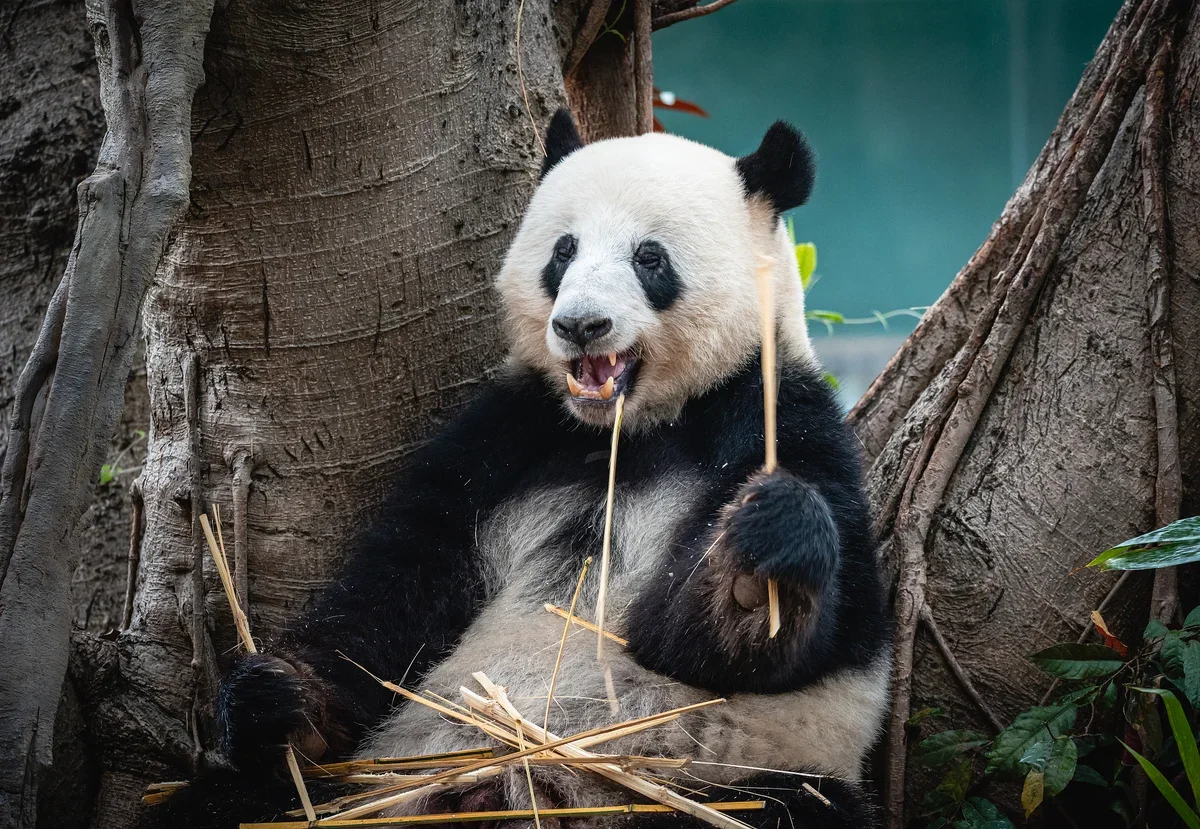
Star residents Xingyi and Yayi spend their days exploring this lush habitat. Sturdy timber platforms, elevated sunshades, and cooling water misting jets keep the bears comfortable throughout the subtropical seasons. Morning visitors can watch these gentle giants sit upright against ancient tree barks, expertly stripping bamboo sheaths with their pseudo-thumbs.
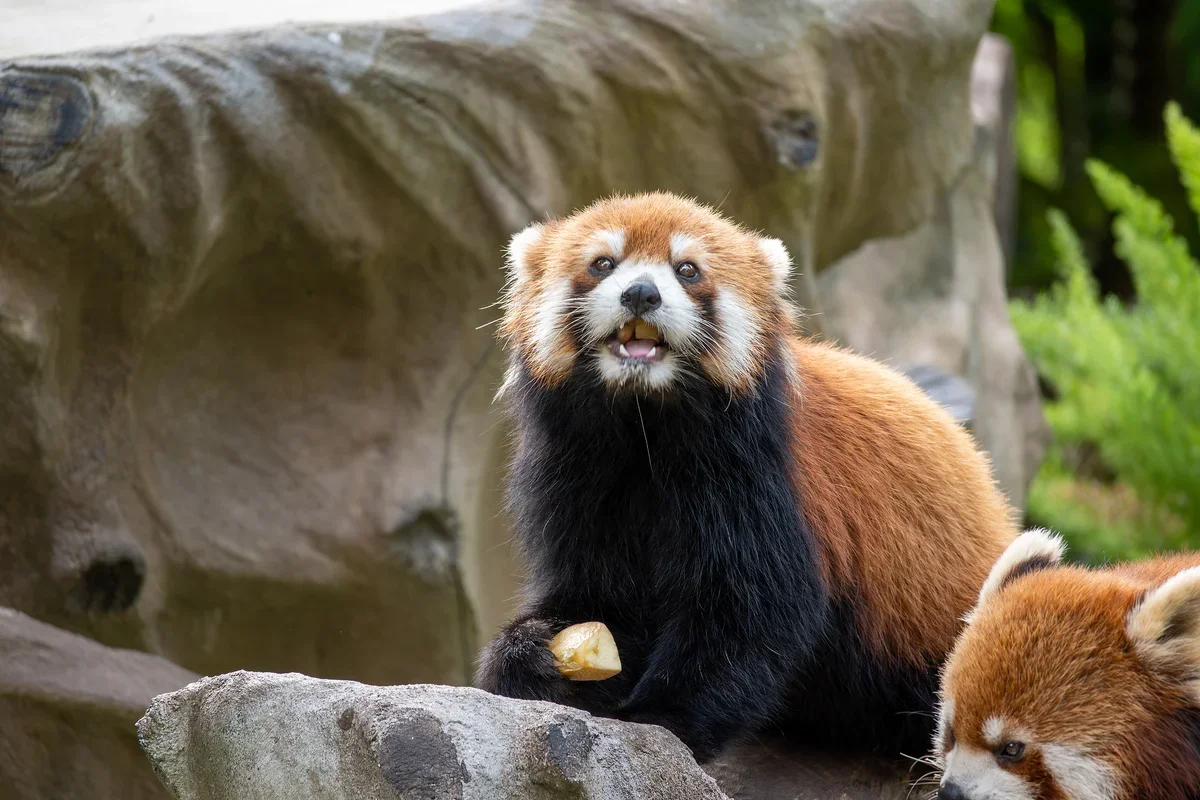
Just steps away lies the Red Panda Habitat. Wooden overhead skywalks connect leafy tree crowns across the sloped hillside. Visitors often pause to admire russet-furred red pandas nimbly balancing on branches or sitting on stone ledges while nibbling fresh fruit slices.
Further along the path, primate enclosures house rare native Chinese monkeys. Sichuan golden snub-nosed monkeys leap across intricate rope bridges, their golden coats gleaming under filtered sunshine. Neighboring habitats shelter François’ langurs, white-cheeked gibbons, and inquisitive ring-tailed lemurs.
South China Tiger Conservation and Ah Hang the Lion
Guangzhou maintains a pioneering reputation for big cat protection. The park established one of China’s most productive artificial breeding bases for the South China tiger. Scientists here have successfully raised dozens of cubs, safeguarding critical genetic lines for this nearly extinct predator.
The carnivore sector houses South China tigers, Amur tigers, spotted jaguars, and leopards within naturally planted rock grottoes. Moated viewing galleries allow safe observation without obstructive wire mesh fencing.
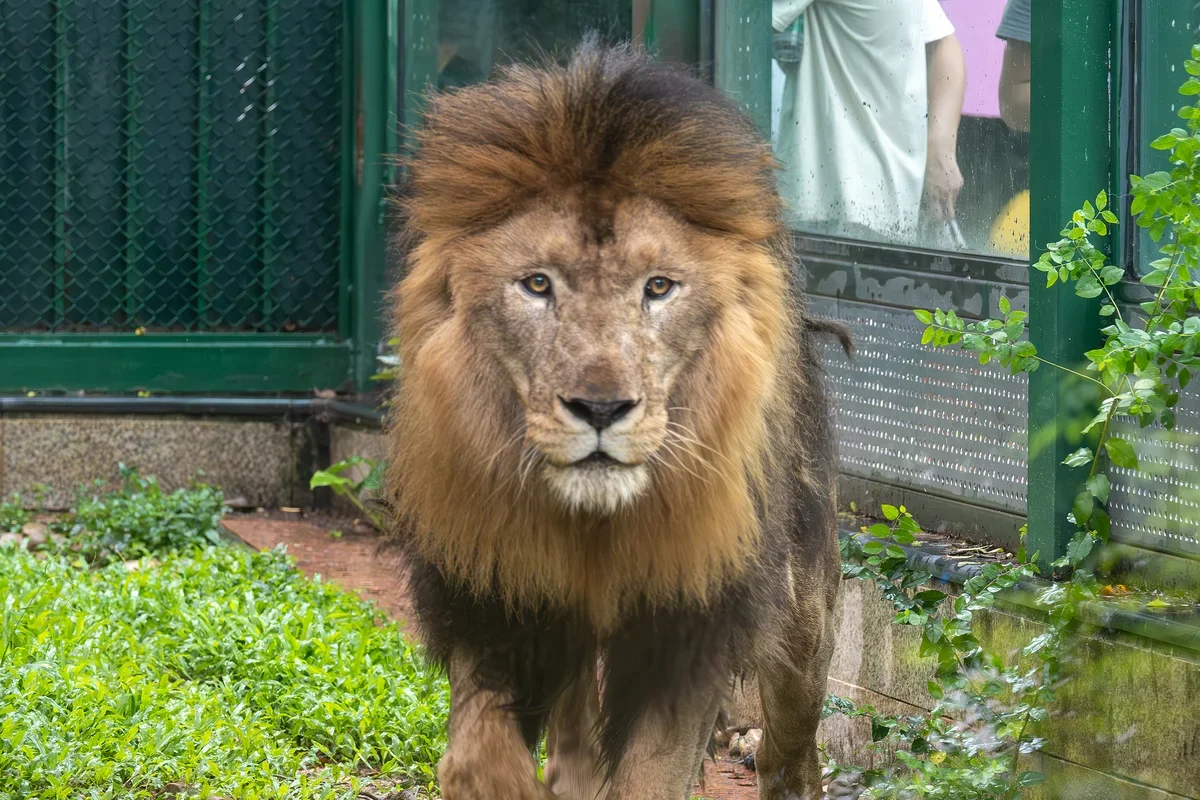
Among all the big cats, an African white lion named Ah Hang captured global internet fame. Guangzhou’s high subtropical humidity, combined with the lion’s daily habit of licking his front paws to clean his face, smoothed his golden mane into an impeccably straight fringe across his brow. Photographs of this accidental blunt bangs hairstyle charmed millions of fans across global social media.
Guangzhou Ocean World Marine Tunnels and Exhibits
Tucked inside the northeastern perimeter of the zoo, Guangzhou Ocean World first opened in 1997. After undergoing two years of thorough architectural redesign, the marine park reopened in June 2024 as a state-of-the-art interactive aquarium.
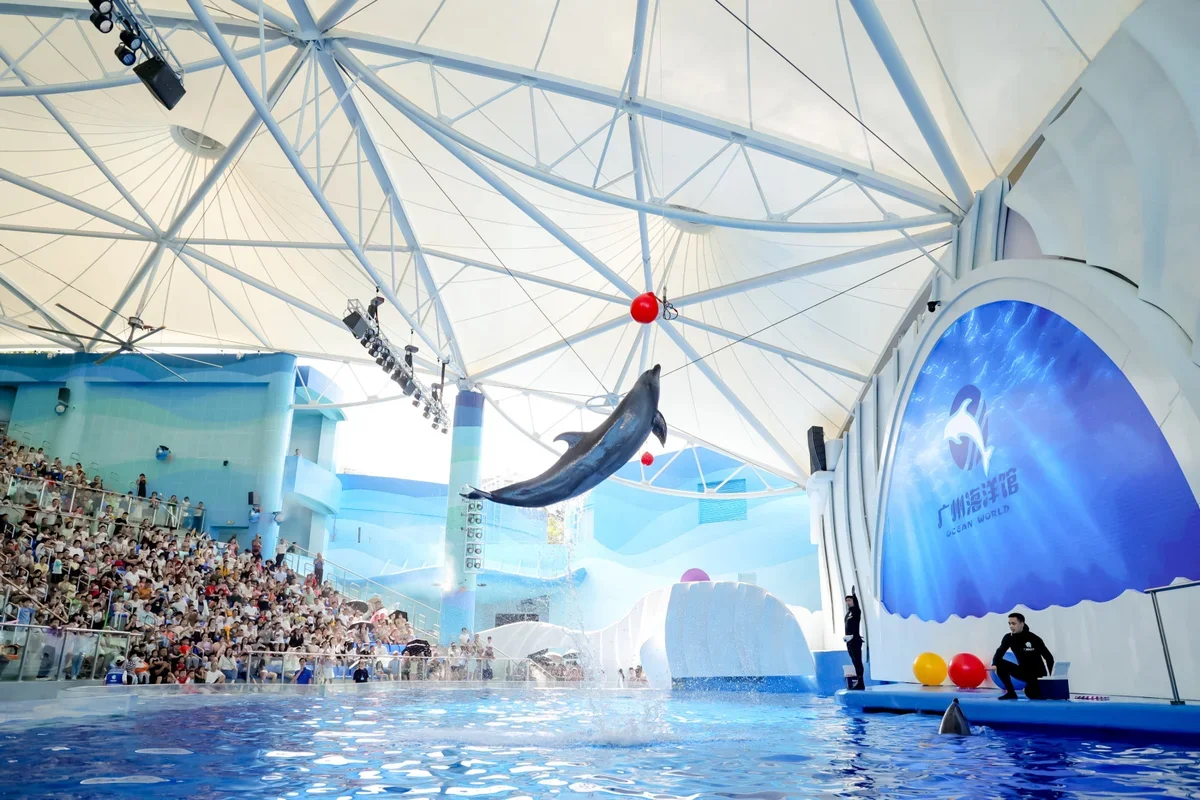
Exhibits span four distinct zones called Rainforest Expedition, Wonderland Realm, Ocean of Tomorrow, and Elfin Bay. Over three hundred saltwater and freshwater species glide through expansive glass tanks. The Elfin Bay amphitheater presents engaging dolphin and sea lion educational sessions that highlight marine plastic reduction and habitat conservation.
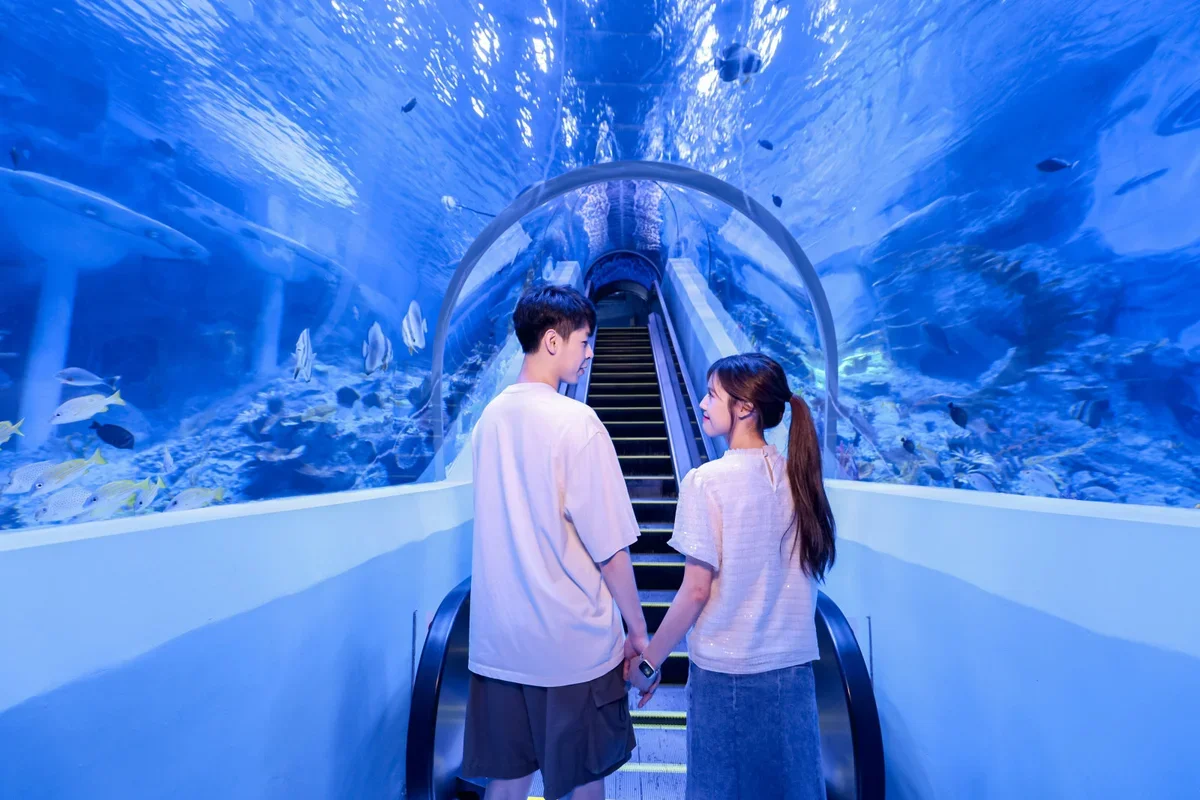
The crown jewel of the complex is the circular 360-degree underwater pedestrian tunnel. Visitors stand on gentle moving travelators while deep sapphire waters envelop them on every side. Giant leopard rays, nurse sharks, and thousands of shimmering golden trevallies swim directly overhead. Ethereal illuminated jellyfish displays, sub-Antarctic penguins, and live underwater mermaid theatricals round out the visit.
Curated Walking Route for a Rewarding Guangzhou Zoo Trip
Maximizing your visit requires a logical flow to avoid peak midday heat and touring groups. Follow this recommended step-by-step route for an enjoyable morning excursion.
- Enter via South Gate (0830). Arrive right after opening and walk directly along the shaded western path toward the Giant Panda Pavilion to observe the morning feeding.
- Explore Primate Valley and Carnivores (0945). Head downhill to see golden snub-nosed monkeys playing on aerial ropes, then inspect the tiger grottoes and meet Ah Hang the lion.
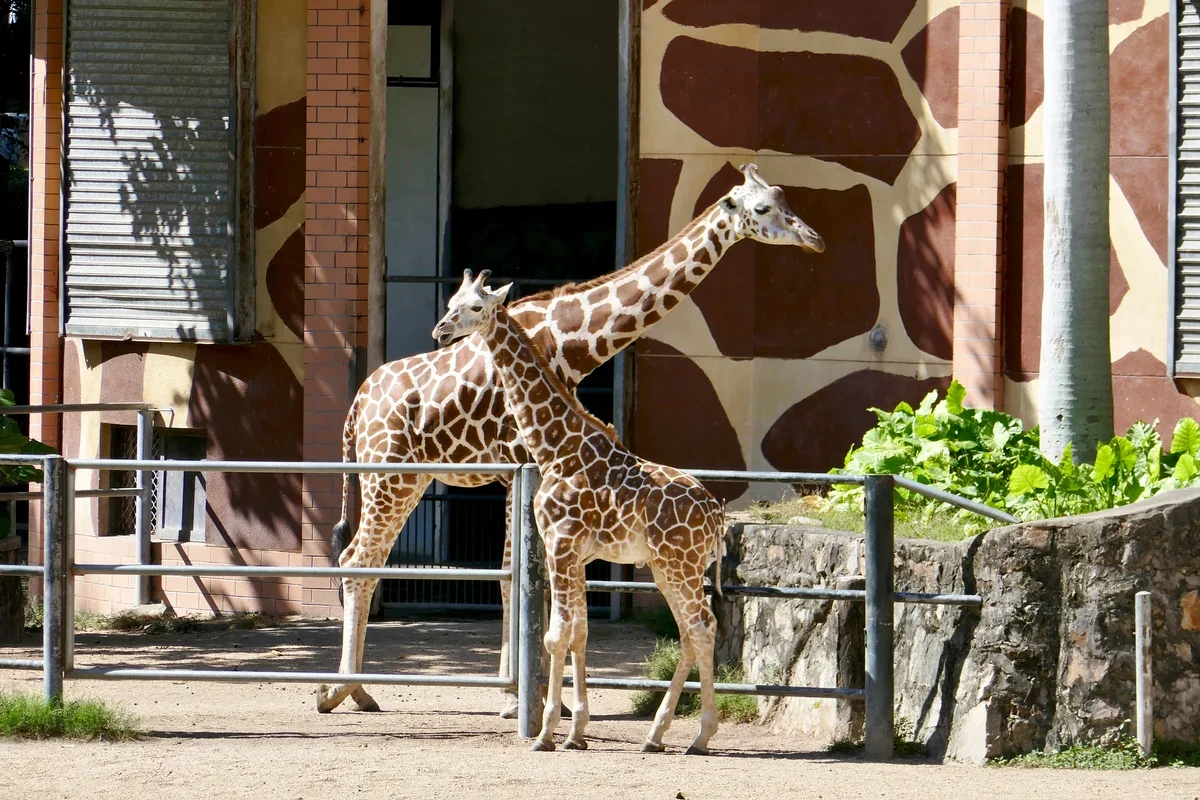
- Wander Yanming Lake and Herbivores (1100). Admire vibrant Caribbean flamingos resting along lake shallows before feeding giraffe herds in the savanna paddocks.
- Discover Guangzhou Ocean World (1230). Retreat indoors during the warmest hours to tour the air-conditioned deep-sea tunnels, penguin habitats, and marine shows.
- Exit via North Gate (1500). Conclude your walk at the North Gate on Xianlie Middle Road, which connects smoothly with nearby shopping and dining hubs.
Practical Visitor Guide for Guangzhou Zoo
Planning transportation, ticketing, and timing ahead ensures a hassle-free visit. Below is a structured reference table summarizing core logistics for international visitors.
| Visitor Category | Details and Logistics |
|---|---|
| Street Address | No. 120 Xianlie Middle Road, Yuexiu District, Guangzhou |
| Nearest Metro Station | Zoo Station on Line 5 (Exit B or C opens at South Gate) |
| Secondary Metro Access | Huanghuagang Station on Line 6 (walk west to North Gate) |
| Operating Hours | Open daily from 0800 to 1800 (ticketing closes at 1630) |
| Zoo General Admission | 20 RMB for adults (10 RMB for students and seniors) |
| Ocean World Combo Ticket | Approximately 140 to 160 RMB (includes zoo admission) |
| Recommended Duration | 2 to 3 hours for zoo only, 4 to 5 hours with Ocean World |
| Best Photography Hours | 0830 to 1030 for active pandas and soft morning light |
Ticketing booths at both gates accept mobile payments and cash. International credit card holders can purchase advance electronic tickets smoothly through the official WeChat miniprogram or recognized international travel booking platforms.
Frequently Asked Questions
Can visitors feed the animals inside the park
Public feeding of zoo animals using outside food is strictly forbidden to protect animal health. Certain herbivore stations offer staff-supervised feeding leaves for giraffes and sheep under controlled conditions.
Is the zoo accessible for baby strollers and wheelchairs
Most main corridors feature smooth asphalt paving and gentle ramps suitable for wheeled mobility. Strollers and manual wheelchairs can be rented near the visitor service desks at both the South Gate and North Gate.
Are there dining options inside Guangzhou Zoo
Several casual cafes, bakery kiosks, and snack stalls operate around Yanming Lake and near the Giant Panda Pavilion. For full sit-down Cantonese meals, exit through the South Gate onto Huanshi East Road or head toward [Yuexiu Park](/posts/guangzhou-yuexiu-park-guide) and [Dongshankou](/posts/dongshankou).
How does this park differ from Chimelong Safari Park
Guangzhou Zoo is a historic municipal park located in the urban core, featuring low admission prices, centenary trees, and the indoor Ocean World. Chimelong is a massive suburban resort in Panyu with drive-through safaris, luxury hotels, and amusement park rides.