Guangzhou Attractions 6 min read
Zhenhai Tower and Guangzhou Museum Visitor Guide
Explore Zhenhai Tower and Guangzhou Museum in Yuexiu Park, featuring 600-year Ming city walls, coastal defense cannons, and Maritime Silk Road relics.
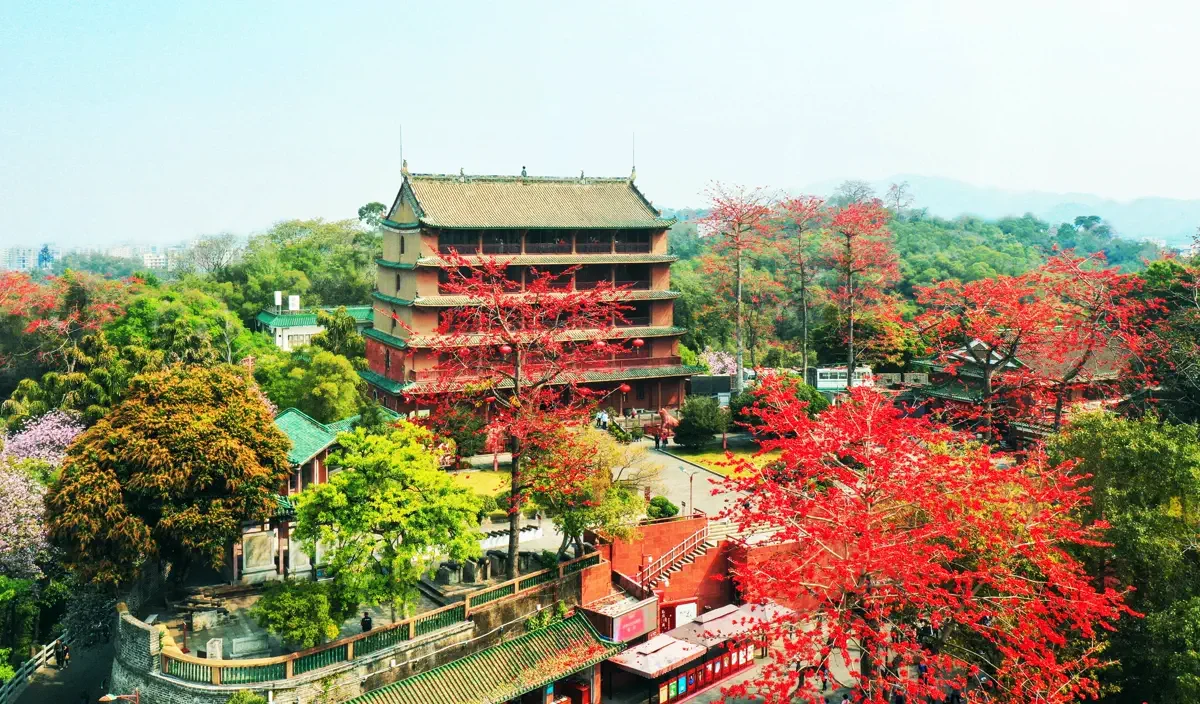
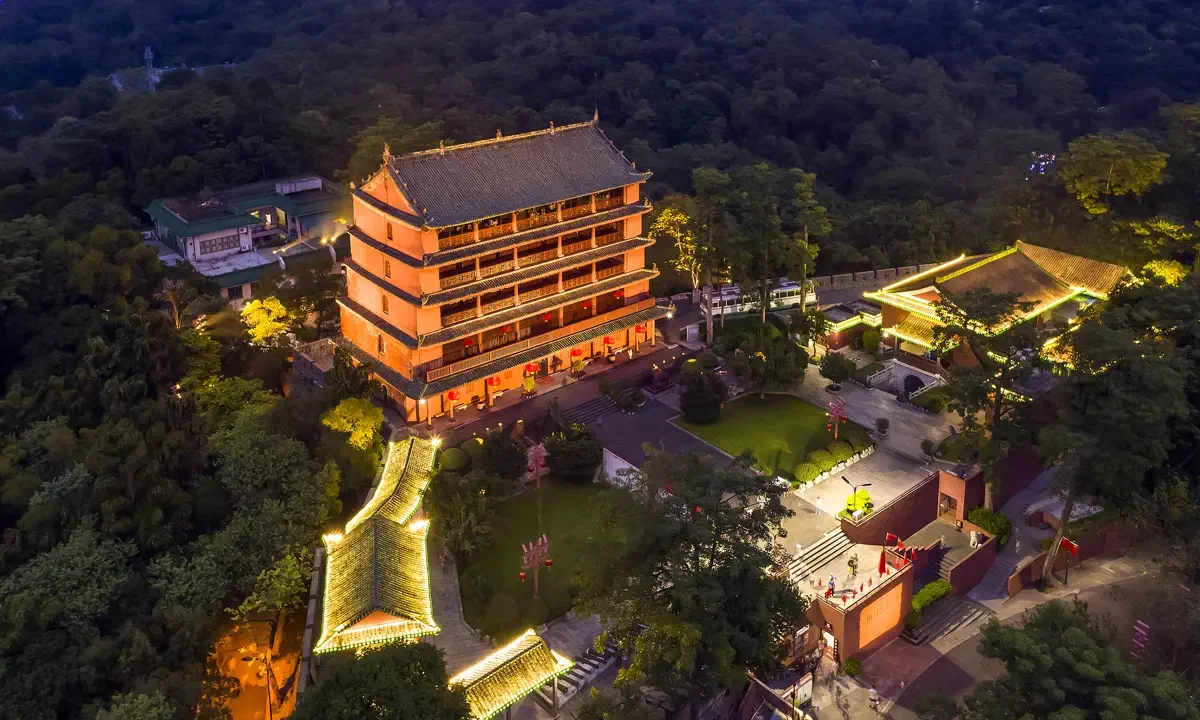
Perched prominently upon the Xiaopanlong ridge inside scenic Yuexiu Park, Zhenhai Tower stands as the undisputed historical watchtower of ancient Guangzhou. Known affectionately by locals across centuries as the Five-Story Pagoda, this red sandstone and emerald-tiled landmark has presided over the northern boundary of the city since 1380. Today the complex accommodates the permanent historical galleries of the Guangzhou Museum, offering travelers an extraordinary window into two millennia of southern Chinese urban civilization.
Architectural design and the five-story structure
Zhenhai Tower was constructed in the thirteenth year of the Hongwu reign during the Ming Dynasty by Marquis Zhu Liangzu. Tasked with fortifying the regional provincial capital, Zhu unified three disjointed Song Dynasty settlements into a single fortified city and extended the northern defensive perimeter up the ridgeline of Yuexiu Mountain. To survey troop movements and command the approaches of the Pearl River estuary, he erected this monumental twenty-eight-meter watchtower, christening it Zhenhai to signify guardian control over the southern seas.
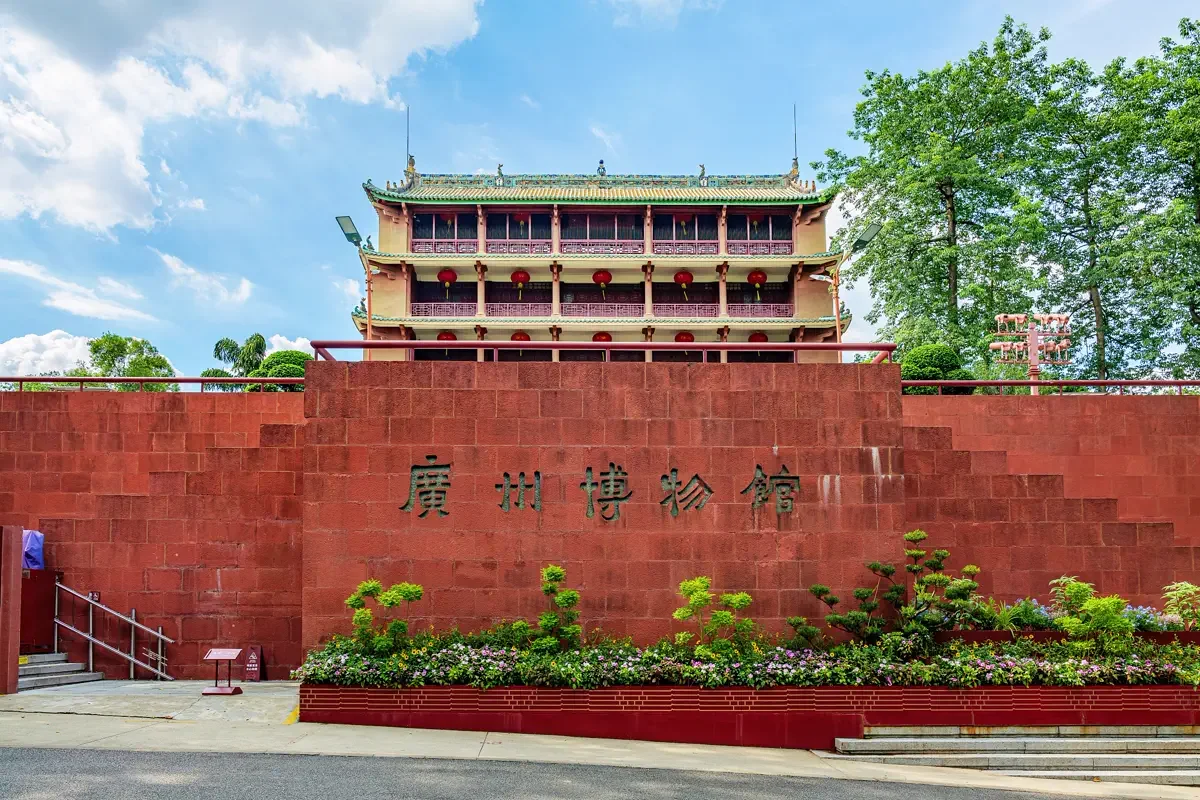
The tower measures thirty-one meters in width by sixteen meters in depth, gently tapering upward with each ascending floor. The lower two stories consist of thick red sandstone blocks quarried from local hills, showing rugged chiseled textures that provide a sturdy foundation against humid monsoons and summer typhoons. The upper three floors transition into timber framing and dense gray masonry, wrapped in wide covered verandas with decorative lattice railings that allow cool mountain breezes to ventilate every gallery.
Resting atop the fifth level is a magnificent hip-and-gable roof covered in glazed green ceramic tiles fired in the famous kilns of Shiwan. Having survived five catastrophic destructions and five subsequent rebuilds over six centuries, the structure underwent reinforcement in 1928 when municipal engineers replaced deteriorated internal wooden floors with reinforced concrete beams while preserving original Ming and Qing proportions. Reaching the fifth-floor balcony rewards visitors with a sweeping panoramic vista looking directly down Guangzhou’s ancient central axis, connecting the Sun Yat-sen Monument, the blue-tiled Sun Yat-sen Memorial Hall, and the gleaming modern skyscrapers that stretch south toward the river.
Centennial museum and chronological exhibits
On February eleventh in 1929, the Guangzhou Municipal Museum officially welcomed its first visitors inside Zhenhai Tower. This marked the opening of one of China’s earliest public museums founded by a municipal government, stewarded by distinguished historians and archaeologists who pioneered systematic preservation in Guangdong.
The permanent exhibition inside presents a comprehensive chronological survey of Guangzhou through five distinct levels, displaying more than one thousand archeological relics, maps, models, and archival treasures.
The ground floor introduces prehistoric settlements and the indigenous Yue tribes that inhabited the Pearl River basin before imperial integration. Moving to the second level, travelers encounter archaeological artifacts from the Qin, Han, and Jin dynasties, highlighted by intricate Eastern Han pottery houses, model rice paddies, and defensive farmstead towers. These funerary clay figures provide invaluable structural details regarding ancient Lingnan domestic engineering, demonstrating how agricultural pioneers adapted northern courtyard traditions into flood-resistant water-hamlet compounds that prefigured sites like Julong Village.
The third and fourth floors explore the golden ages of the Maritime Silk Road across Tang, Song, Yuan, Ming, and Qing dynasties. Gallery cases display imperial customs office stele rubbings, shipwreck celadon ceramics, and foreign coins.
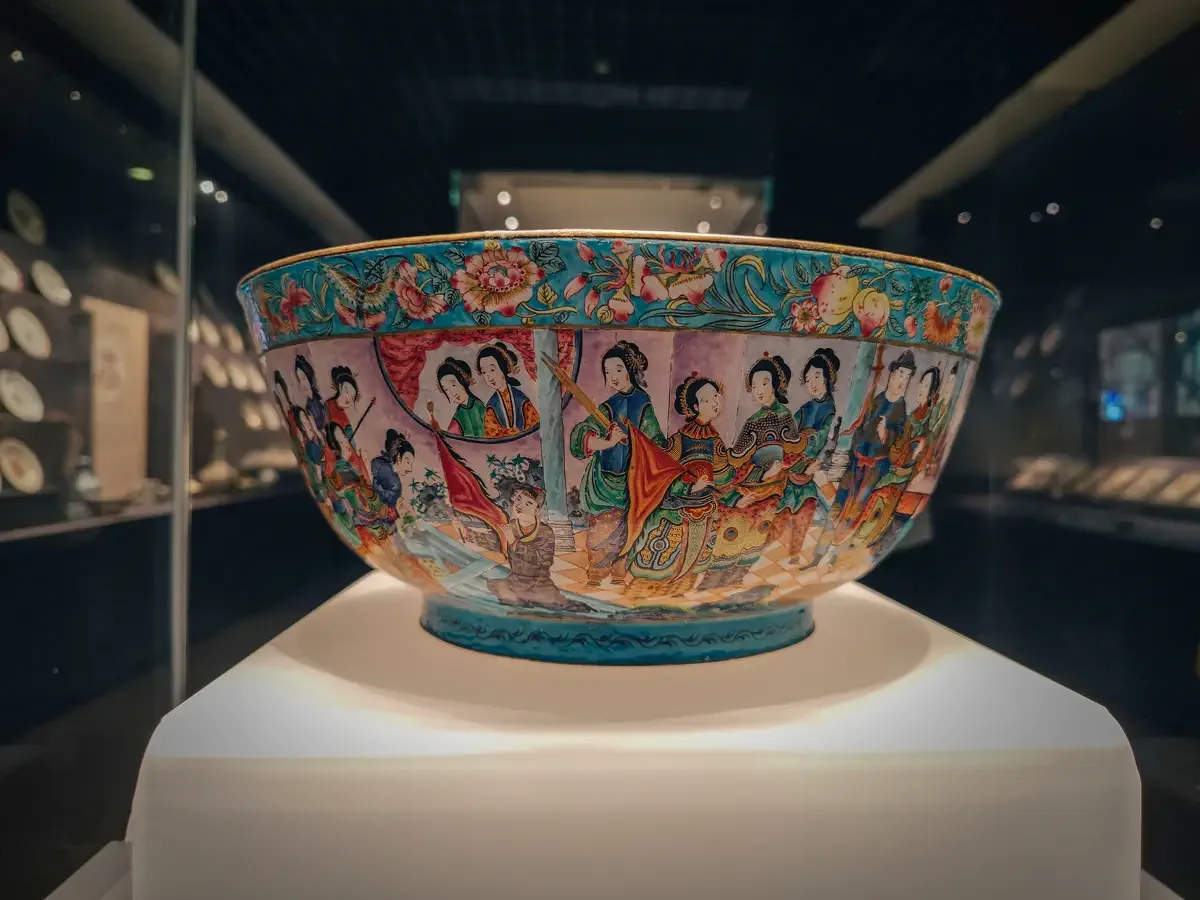
Export art objects from the thirteen factories era stand out with exceptional brilliance. Large Canton enamel porcelain punch bowls feature densely painted figures, rich gilding, and river harbor panoramas, reflecting the extraordinary craftsmanship that supplied royal courts across eighteenth-century Europe. The topmost level documents the dawn of modern industry and transportation in early twentieth-century Guangzhou, including antique railway carriage components, municipal boundary stones, and a towering nineteenth-century mechanical clock crafted in London.
Iron cannon batteries and the Ming city wall
Stepping out onto the stone terrace in front of Zhenhai Tower brings visitors face to face with an impressive battery of historical iron cannons.
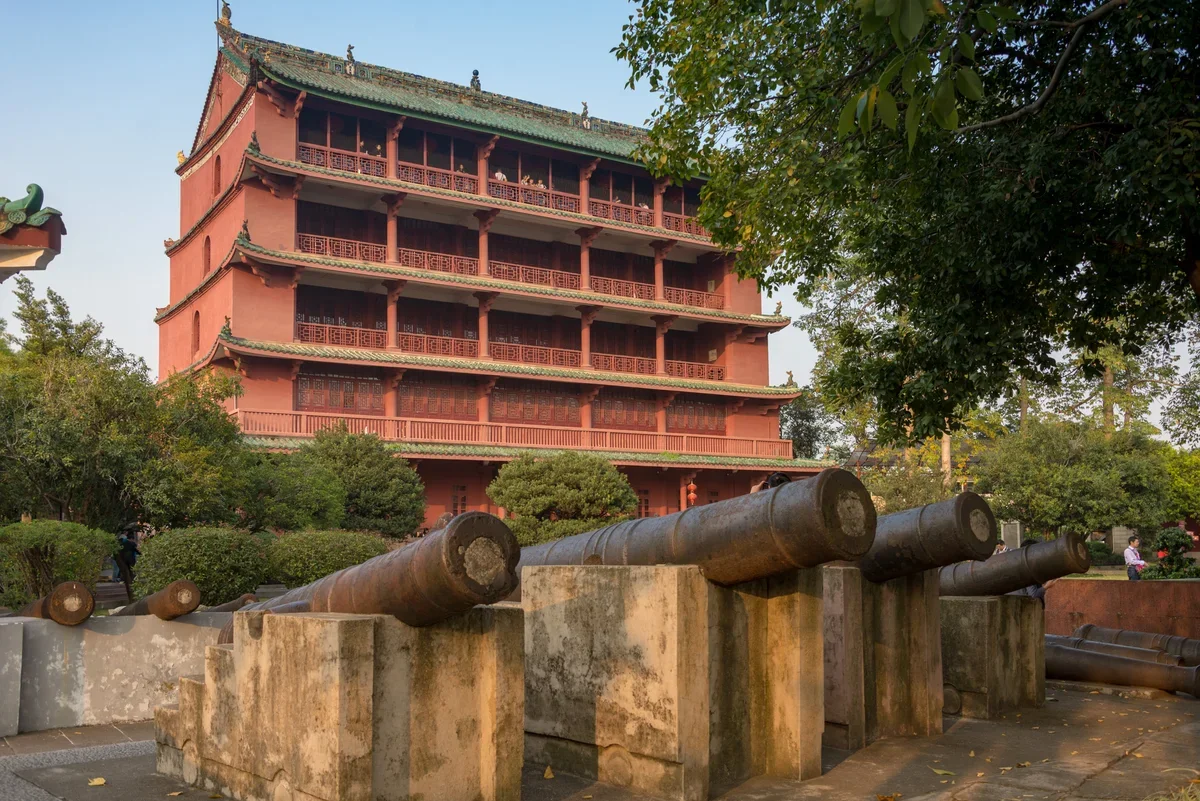
Ranging from early Ming pieces to heavy Qing coastal defense artillery cast during the Opium Wars, these weathered cannons bear incised regular script inscriptions recording the names of supervising governors, foundry masters, and precise foundry dates. Originally installed at strategic coastal fortresses like Humen and the approaches to Baietan, these heavy iron barrels withstood maritime shellfire before being relocated here to commemorate southern coastal defense history.
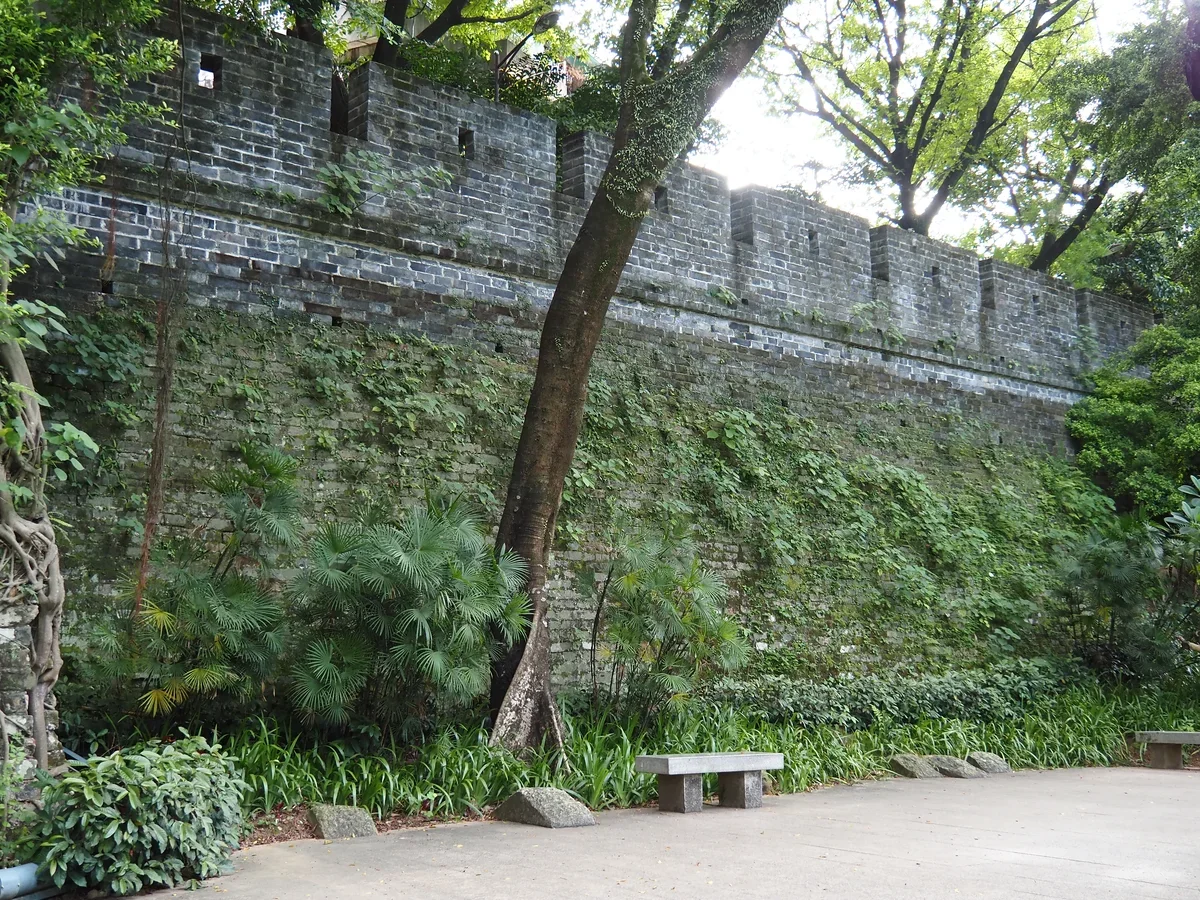
Adjoining the eastern terrace of the tower is the surviving section of the Ming Dynasty city wall. Stretching over one thousand meters along the mountain crest, this is the most intact ancient masonry fortification in Guangzhou. Massive red sandstone slabs form the subterranean foundation, topped by fired gray bricks laid in alternating bonds with defensive arrow crenels along the parapet. Centenary banyan trees and kapok branches have pushed deep into the brick joints, their aerial roots grasping ancient masonry like coiled dragons. Walking along the shaded stone trail beside the wall offers a peaceful, atmospheric journey through dense subtropical foliage.
Zhongyuan building and thematic art galleries
Just southeast of the main tower within the museum precinct stands Zhongyuan Building. Built in 1930 to honor Republican general Deng Zhongyuan, this graceful two-story red-brick pavilion exhibits an eclectic architectural style combining neoclassical colonnades with traditional glazed roof ornaments.
Today Zhongyuan Building serves as an auxiliary exhibition venue for the Guangzhou Museum. It regularly hosts curated temporary showcases dedicated to Lingnan pith paper paintings, antique Cantonese silverware, traditional jade carvings, and maritime trade photography. The rotating exhibits here complement larger contemporary art institutions such as the Baietan Greater Bay Area Art Center and the Peasant Movement Institute.
Practical visitor guide and walking itinerary
Zhenhai Tower welcomes visitors from Tuesday to Sunday between nine in the morning and five thirty in the afternoon, with ticket sales and admission concluding at five o clock. The museum remains closed every Monday for artifact conservation except during designated statutory holidays. While general entry to Yuexiu Park is entirely free throughout the year, admission to the Zhenhai Tower museum precinct requires a separate ticket costing ten RMB per adult, with half-price concession tickets available for students and seniors.
Tickets can be purchased directly at the entrance ticket booth or reserved through the official Guangzhou Museum WeChat mini-program. Overseas visitors can present their original passport at the service counter to purchase admission smoothly.
The most convenient walking route begins at Metro Line 2 Yuexiu Park Station. Leave via Exit B2, enter the park west gate, and stroll through the Sunset Red plaza before following the stone steps upward past Zhenhai Road to reach the museum entrance in approximately fifteen minutes.
After exploring the five floors and viewing the iron cannon battery, travelers can walk west along the Ming city wall path toward the Sifang Fort site and descend the Hundred-Step Staircase to the Sun Yat-sen Monument. Completing the park loop at the Five Rams Sculpture provides a memorable morning itinerary. For a full-day historical experience, exit the park south gate to tour the Sun Yat-sen Memorial Hall, or cross Jiefang North Road from the west gate to explore the royal underground tomb at the Nanyue King Museum.
Frequently asked questions
Is entry to Zhenhai Tower included with Yuexiu Park admission
While Yuexiu Park itself is free to enter, visiting Zhenhai Tower and the Guangzhou Museum requires an admission ticket costing ten RMB for adults and five RMB for students or seniors.
How much time should you allocate for touring the museum
Most visitors spend between one and two hours touring the five chronological exhibition floors inside Zhenhai Tower, examining the courtyard iron cannons, and walking along the Ming city wall.
Is the museum accessible for travelers with mobility challenges
Because Zhenhai Tower is a protected historical structure perched on a hilltop with stone staircases between floors, interior access relies on internal stairs without elevators. However, electric sightseeing shuttles within Yuexiu Park can transport visitors from the lower park gates up to the museum entrance plaza.